When you think of the perfect pair, some famous duos might come to mind. But for millions of fans around the world, the greatest friendship ever drawn wasn’t between two humans—it was between a mischievous six-year-old boy and his stuffed tiger. Calvin and Hobbes isn’t just a comic strip; it’s a masterclass in what it means to have a best friend. Created by the brilliant Bill Watterson, this iconic duo ran from 1985 to 1995 and still touches our hearts today .
What made their bond so special was its honesty. Calvin and Hobbes didn’t just have fun together—they argued, they forgave, they explored big ideas, and they were always there for each other. Whether Hobbes was pouncing on Calvin after a long day of school or the two were sledding down a snowy hill, their interactions captured the essence of true friendship. Let’s look at ten specific comics (and the themes behind them) that show us why this pair perfectly defines what it means to be friends.
10+ Calvin and Hobbes
Image Credit: Pintrest.com
#1
#2
#3
#4
#5
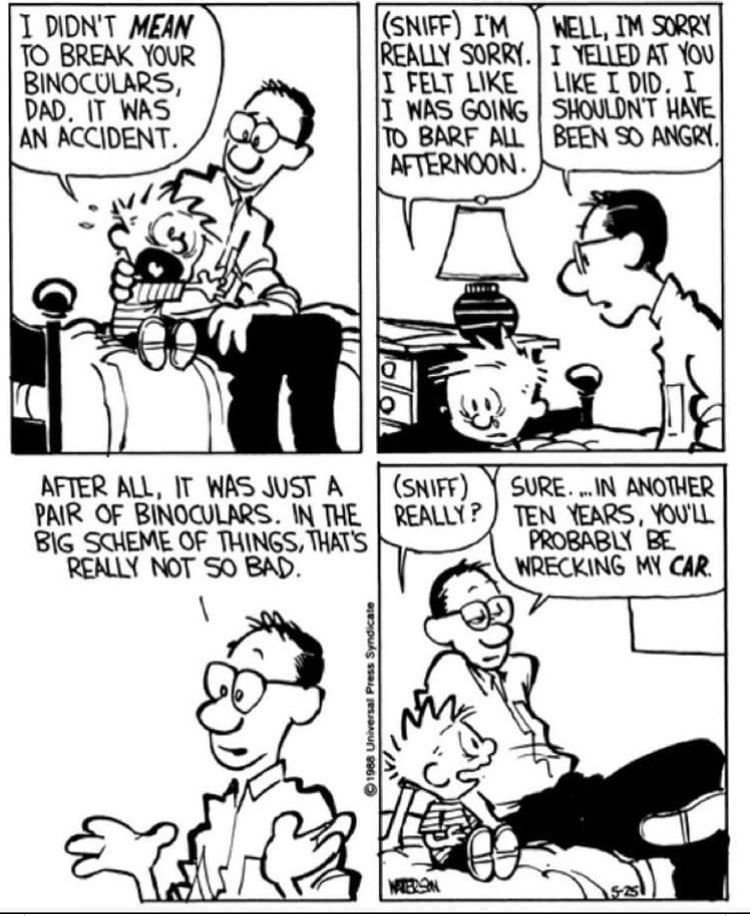
#6
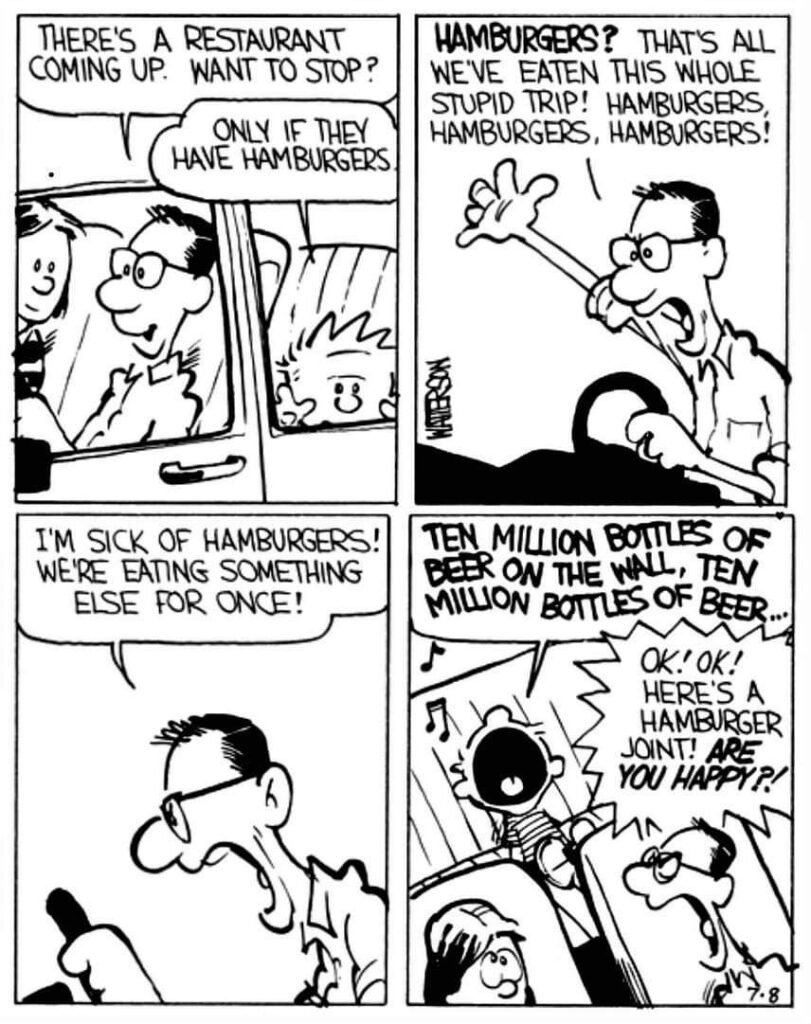
#7
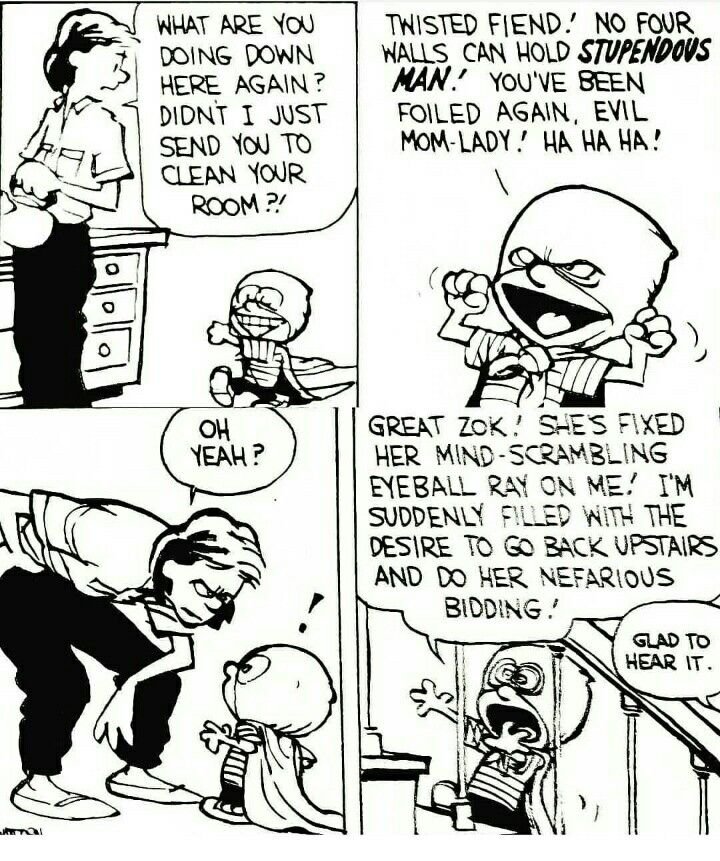
#8
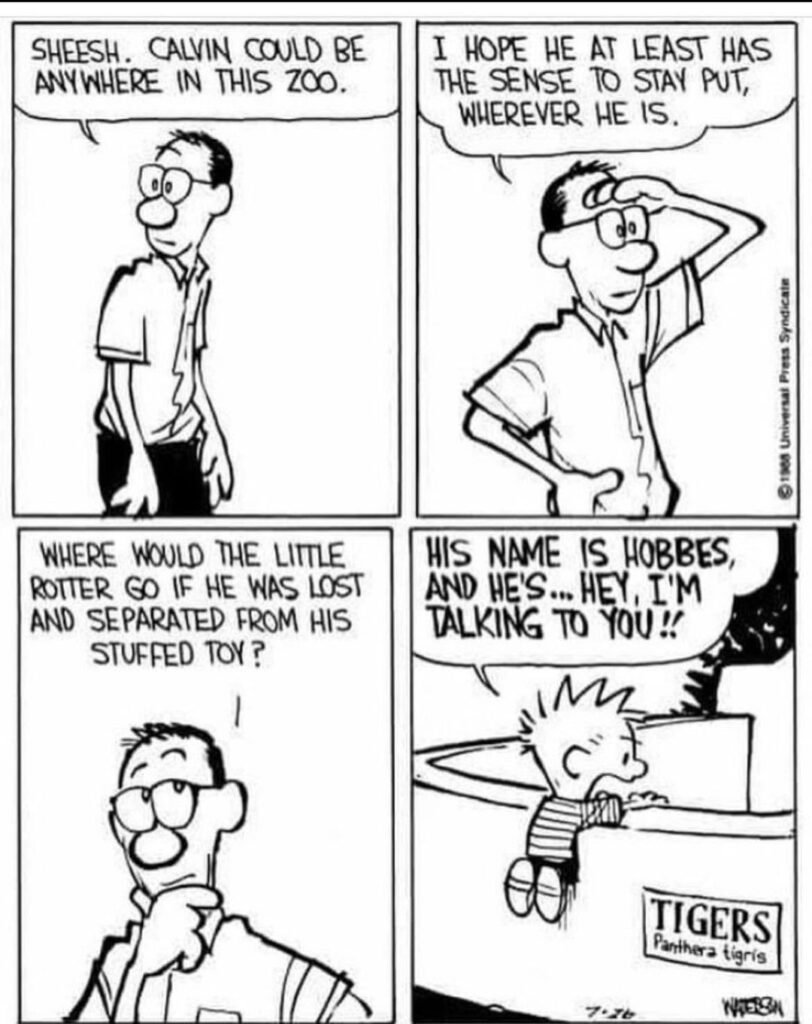
#9
#10
The Welcome Home Pounce: Friendship is Always Being Happy to See You
One of the most beloved running gags in the entire strip is the “welcome home pounce.” Time and time again, Calvin would burst through the front door after a long day at school, yell “I’m home!”, and get tackled by a grinning Hobbes who had been hiding behind the door . While Calvin usually ended up on the floor with scratches, the ritual speaks volumes about their relationship.
In these strips, Hobbes isn’t just idly waiting; he is actively excited for Calvin to return. No matter how bad of a day Calvin had dealing with bullies like Moe or enduring another boring lesson from Miss Wormwood, he had something to look forward to. That pounce was Hobbes’ way of saying, “I missed you, and you’re stuck with me.”
This dynamic is the bedrock of their friendship. It shows that true friends don’t just tolerate your presence; they celebrate it. Even though Calvin would complain about the bruises, you always got the sense he would be disappointed if Hobbes ever stopped. The pounce is a metaphor for the enthusiastic love that real friends share—the kind that knocks you off your feet in the best way possible.
Exploring the Great Outdoors: Shared Adventures Strengthen Bonds
Some of the most visually stunning Calvin and Hobbes strips involve the duo simply going outside. Whether they were hiking through the woods behind their house, building a fort, or just lying in a field watching clouds, Watterson often placed these characters in nature to highlight the depth of their connection . These moments are usually quiet, free from the usual chaos of transmogrifiers or snowball fights.
In these adventures, Hobbes often acts as the voice of reason and wonder. While Calvin is busy trying to assert his dominance over the wilderness or find something exciting to do, Hobbes is content to simply exist in the moment. He points out the beauty of a sunset or the feel of the grass, reminding Calvin—and the reader—that the best experiences are the ones shared with someone you love.
The famous final strip of the entire series, published on December 31, 1995, encapsulates this perfectly. With Calvin exclaiming, “It’s a magical world, Hobbes, ol’ buddy… Let’s go exploring!”, the two sled off into the unknown . It wasn’t just an ending; it was a declaration that friendship means facing the future together, no matter where the path leads.
Philosophical Chats Under the Stars: A Listener Who Understands
Despite Calvin being six and Hobbes being a stuffed tiger (or perhaps because of it), the pair shared some of the most profound philosophical discussions ever seen in a newspaper comic. Sitting in a wagon, lying on a hill, or waiting for a tuna fish sandwich, Calvin would often unload his thoughts about life, humanity, and the universe onto Hobbes .
What makes Hobbes the perfect friend is how he handles these rants. He doesn’t dismiss Calvin’s worries, nor does he feed into his panic. Instead, Hobbes offers simple, grounded wisdom. When Calvin obsesses over complex problems, Hobbes often brings it back to the simple joys—like the tuna sandwich he just ate. This balance shows that a true friend is someone who listens to your craziness and helps you see the light without making you feel silly.
In these moments, Hobbes acts as Calvin’s conscience and anchor . He represents the mature, thoughtful side of the partnership. Their friendship works because they balance each other out. Calvin provides the wild imagination and the drive, while Hobbes provides the heart and the wisdom. Everyone needs a friend who can laugh at your crazy ideas but also knows when to help you be still and think.
The Duplicity of GROSS: United in a Common (Silly) Cause
Friendship isn’t just about deep talks; it’s also about shared missions, even if those missions are completely ridiculous. This is best exemplified by G.R.O.S.S. (Get Rid Of Slimy GirlS) , the secret boys’ club Calvin and Hobbes run from their treehouse . With Hobbes serving as “President and First Tiger,” the club’s sole purpose is to exclude and antagonize their neighbor Susie Derkins.
While the club is obviously a failure (their meetings usually end in squabbling or a lack of actual strategy), the humor comes from how seriously the duo takes it. They dress up, demand passwords (which often involve long poems praising tigers), and hold intense “emergency meetings.” It’s a perfect example of how friends create their own little worlds with their own rules.
This shared fantasy shows that friendship is about having someone who will play along. Calvin doesn’t have to explain to Hobbes why G.R.O.S.S. is important; Hobbes is already in character. Whether they are fighting a common enemy (like a “slimy girl”) or just trying to make a fast buck selling a cardboard box as a product, they are co-conspirators. Having a partner in crime who validates your imagination, no matter how silly, is one of the greatest gifts of friendship.
The Art of Forgiveness: Fighting and Making Up
No relationship is perfect, and Calvin and Hobbes are no exception. They argue, they insult each other, and sometimes they even go their separate ways in a huff. Hobbes might get fed up with Calvin’s selfishness, or Calvin might get annoyed with Hobbes’s smug attitude. But these fights never last long.
The beauty of their dynamic is that they always find their way back to each other. Often, the fights end not with a grand apology, but with a quiet acknowledgment that things just aren’t as fun alone. Calvin might be trying to build something by himself, only to realize he needs Hobbes to hold the other end. Hobbes might be reading a book, but eventually, he looks up to see what Calvin is up to.
These strips are crucial because they show that friendship isn’t about never fighting; it’s about not letting the fight end the relationship. It’s about the silent agreement to move on and go back to playing. Their ability to bounce back from conflict teaches us that real friends see past the momentary anger and value the lasting bond underneath.
Conclusion: The Timeless Magic of an Ol’ Buddy
Looking back at the ten-year run of Calvin and Hobbes, it’s clear why the strip remains so beloved. It’s not just the clever writing or the beautiful artwork; it’s the heart. Bill Watterson created a friendship that felt real. Through the pounces, the sled rides, the philosophical talks, and the silly club meetings, Calvin and Hobbes showed us what we all look for in a friend: acceptance, loyalty, and a sense of wonder .
Hobbes is the friend who sees you at your worst (tantrums, homework procrastination, selfishness) and loves you anyway. Calvin is the friend who drags you out of your comfort zone and forces you to have fun. Together, they remind us that in a world full of grown-up rules and dull moments, a best friend makes everything an adventure.
As Watterson once noted, Hobbes represents the subjective nature of reality—he is real where it counts . And for anyone who has ever had a friend who feels like family, that makes perfect sense. So, here’s to Calvin and Hobbes. They may have stopped running in the newspapers, but their sled is still going, and their friendship continues to define what it means to have a partner to explore this magical world with.