For millions of readers, especially those growing up in the 1960s and 70s, flipping through the newspaper wasn’t complete without a visit to 37 Durham Street. Andy Capp wasn’t just a comic strip; he was a cultural institution. Created by Reg Smythe in 1957, the character with the ever-present flat cap and permanent five-o’clock shadow became the unlikely voice of the British working class. While it’s nearly impossible to compile a definitive “top ten” list from thousands of strips, certain recurring themes and classic gags became the building blocks of Andy’s world. These are the slices of life that resonated with readers, for better or worse, and defined the rogue from Hartlepool for an entire generation .
From his dodgy dealings at the pub to his tumultuous relationship with his wife Flo, Andy’s life was a mirror reflecting the social norms, struggles, and humor of post-war Britain. He was the man who never worked but worked harder than anyone at avoiding it. The strips that follow aren’t just drawings; they are time capsules. They show us a world where the weekly “dole” money was a lifeline, the local pub was a second home, and a trip to the football pitch was an excuse for a good-natured (or not-so-good-natured) ruckus.
10+ Andy Capp
Image credit: Reg Smythe
#1
#2
#3
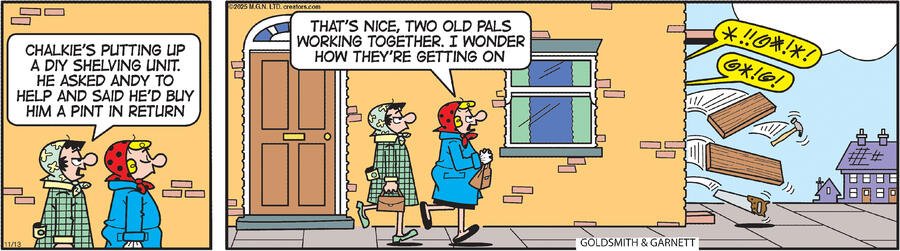
#4
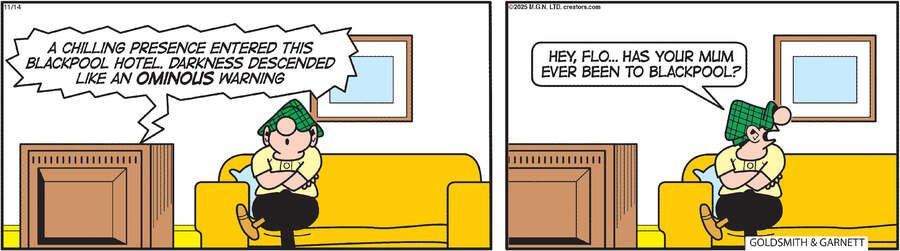
#5
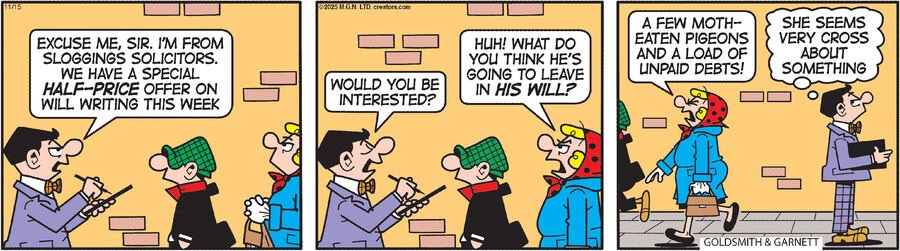
#6
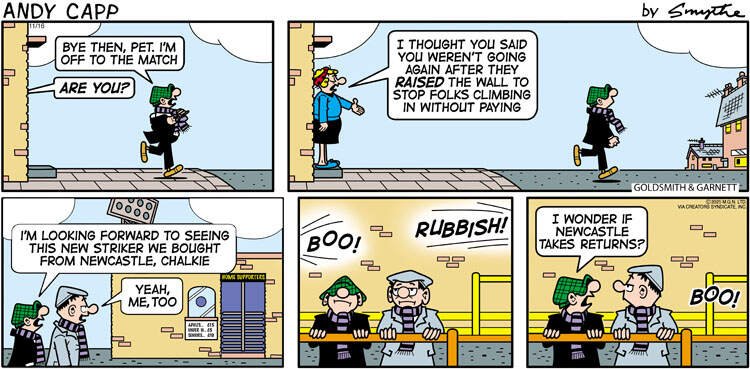
#7
#8
#9
#10
When Andy Met Flo: The Marriage That Defined a Era
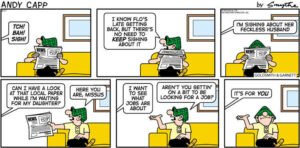
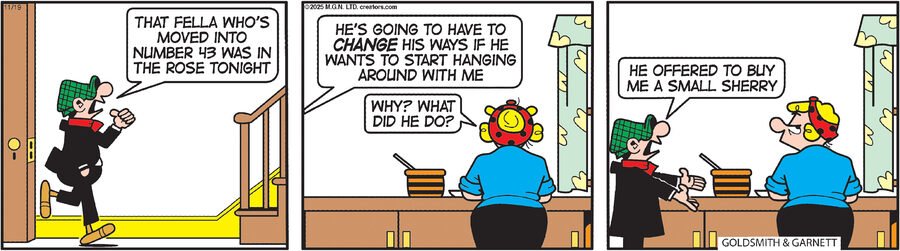
The core of the Andy Capp universe has always been the explosive, chaotic, yet strangely enduring marriage between Andy and his wife Florrie. Some of the most classic strips from the 1960s focus on this volatile relationship. In one memorable sequence, Flo demands that Andy get a job, to which Andy, stretched out on the sofa, responds by pointing out that if he got a job, she would lose her best topic of conversation with the neighbors. It was this kind of twisted logic that made readers both cringe and chuckle. Flo was not just a silent sufferer; she was the backbone of the household, often working as a “charwoman” (cleaning lady) to keep the bailiffs from the door while Andy spent his days at the “Rose and Crown” .
However, looking back through a modern lens, some of these classic strips are hard to stomach. The early comics were rife with depictions of domestic violence, which was, disturbingly, a mainstream source of humor at the time. As Nick Hiley from the British Cartoon Archive noted, some of the early cartoons are “really unpalatable nowadays” due to the vicious way Andy treated Flo . It’s important to remember that Reg Smythe later regretted this savagery, admitting Andy was “too savage, a proper bully” . Despite this dark side, the dynamic also showed Flo giving as good as she got, often chasing Andy out of the house with a rolling pin or a cricket bat. This push-and-pull, though extreme, defined the “slapstick” marriage that a generation grew up viewing.
The Pub, The Pitch, and The Pigeons: Andy’s True Loves
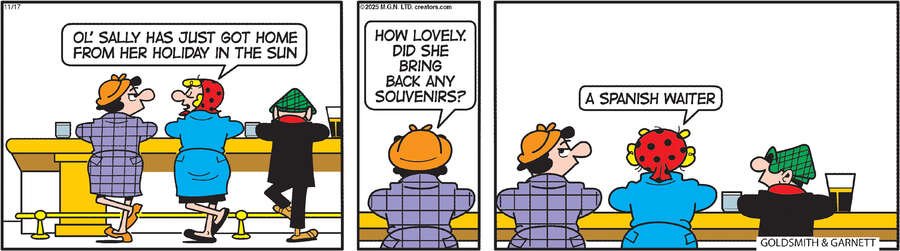
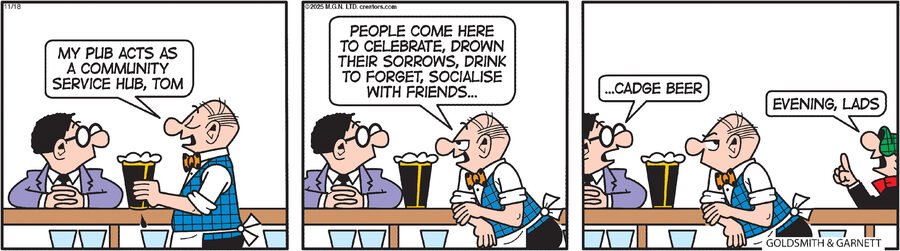
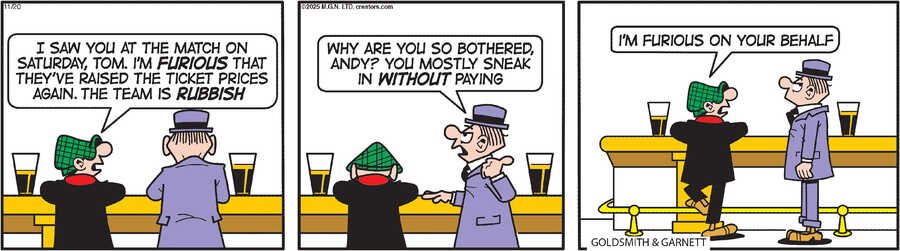
If Flo was the anchor keeping the household together, the pub was the anchor keeping Andy firmly planted on his barstool. Classic strips featuring Jackie the Barman are fan favorites. Jackie was the long-suffering bartender who had seen it all. One classic strip involves Andy trying to “run a tab” despite owing Jackie money from the previous decade. Jackie’s deadpan stare into the middle distance—breaking the “fourth wall”—was a signature move that told the reader everything without needing a word bubble . These strips defined the social hub of the working-class man. The pub was where Andy played darts, argued about football, and planned his (invariably losing) betting strategies.
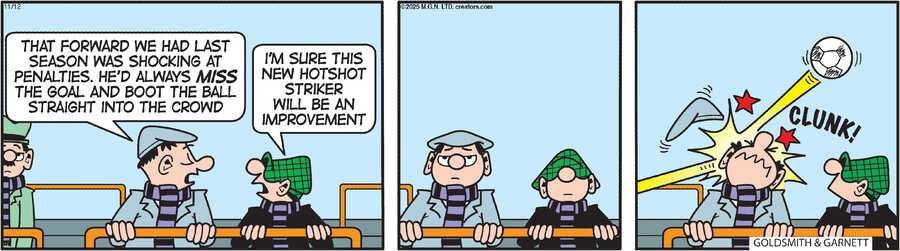
Beyond the pub, Andy had two other passions: football and pigeon racing. The football strips were pure chaos. Andy would take to the pitch not to showcase athletic skill, but to settle old scores. Classic gags often ended with the referee pointing to the penalty box or, more often, sending Andy off for fighting with his own teammates . Then there was the strange, quiet world of pigeon racing. For a man who seemed to hate effort, Andy dedicated surprising energy to his birds. A recurring classic involved Andy anxiously watching the sky for his pigeon to return home, only for it to land on the chimney of the pub, forcing Andy to buy a round of drinks to celebrate—or drown his sorrows.
The Art of Avoidance: The Job Centre and The Rent Man
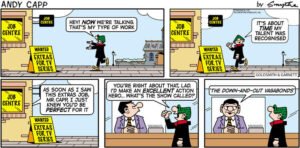
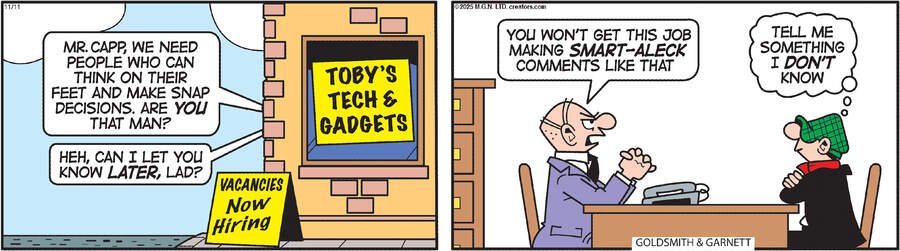
Perhaps the most defining characteristic of Andy Capp for an entire generation was his absolute refusal to work. This wasn’t just laziness; it was an art form. Classic strips often placed Andy at the Job Centre (or “Labour Exchange” as it was known). In one timeless example, a well-meaning clerk offers Andy a job that requires heavy lifting. Andy points to his back and claims he has a “bad disc.” The clerk then offers a desk job. Andy rubs his temples and claims he has “bad eyes.” The clerk, losing patience, asks what exactly Andy can do. Andy’s response? “I can be back here tomorrow to see if you’ve got anything else” . This wasn’t just a gag; it was a satirical look at the welfare state and the “work-shy” stereotype that some held about the northern working class.
Then there was the weekly dread of Percy Ritson, the rent collector. Percy was the man tasked with extracting money from the Capps for their terraced house, a task that was essentially impossible. Classic strips with Percy usually ended in one of two ways: either Andy would hide behind the sofa pretending not to be home, or he would try to borrow the rent money from Percy himself. It was also clear that Percy had a soft spot for Flo, believing he could treat her better than Andy ever did. This tension led to some of the more physically aggressive strips where the two would square up, with Andy defending his wife’s honor even if he couldn’t defend the housekeeping money .
The Evolution of a Rogue: When Andy Quit Smoking
One specific “classic” moment in Andy Capp history isn’t a specific joke, but a transition that occurred in the 1983 strips: Andy quit smoking. For decades, Andy was rarely seen without a cigarette dangling from his lip. It was as much a part of his uniform as his cap. When the cigarettes disappeared, fans were outraged, blaming the rise of “political correctness” . However, the real reason behind this shift defines the humanity of the strip. Reg Smythe, the creator, had given up smoking himself and famously declared that “there was no way Andy was going to carry on enjoying cigarettes when Reg couldn’t” .
This moment in comic strip history marked a turning point. It showed that even a static character in a daily newspaper could evolve. While Andy still loved his beer and his betting, this change signaled the beginning of the strip softening its edges. In later years, the violence faded and the couple even started attending marriage counseling . For a generation that had grown up with the rough-and-tumble Andy of the 60s, seeing him become a slightly more responsible (though still unemployed) citizen was a strange but welcome evolution. It proved that while the settings and societal norms change, the heart of Andy Capp—that stubborn, lovable, infuriating rogue—remains timeless.
To conclude, looking back at these classic themes reminds us why Andy Capp became a global success. He was syndicated in hundreds of newspapers worldwide because, despite being specifically from Hartlepool, his traits were universal. Everyone knew a guy who spent too much time at the pub, or a couple who bickered like an old married pair. The 10 classic strips we remember aren’t just about punchlines; they are about character. They defined a generation by showing us our own flaws, our communities, and our capacity to laugh at the struggles of daily life. Whether he was fighting on the football pitch or avoiding the rent man, Andy Capp remains a beloved icon because, deep down, we all understand the desire to just sit on the couch and let the world go by.