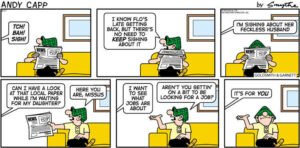
For millions of newspaper readers, Andy Capp was a beloved fixture of the daily comics page. With his trademark flat cap permanently perched on his head, a cigarette dangling from his lips, and a pint of beer always within reach, this workshy Northerner and his long-suffering wife Flo amused audiences for decades. So, it seemed like a sure thing when British television decided to bring him to life. In 1988, ITV aired a new sitcom simply titled “Andy Capp,” starring the talented James Bolam. While it only lasted for a single series, this adaptation remains a fascinating and often-discussed moment in British comedy history .
The show arrived with a solid pedigree. It was written by the acclaimed playwright and novelist Keith Waterhouse, who had a knack for capturing Northern English life and humor . With James Bolam, a star beloved for his role in The Likely Lads, stepping into Andy’s scuffed shoes, expectations were high. The result, however, was a mixed bag that pleased some, disappointed others, and ultimately became a short-lived but memorable experiment in bringing a two-dimensional icon into the three-dimensional world.
More than thirty years later, it’s worth taking a look back at this forgotten gem. Why did it fail to capture the magic of the cartoon? Was it really as bad as its reputation suggests, or is it a misunderstood classic waiting to be rediscovered? Let’s pull up a stool at the pub, order a pint, and revisit the 1988 adaptation of Andy Capp.
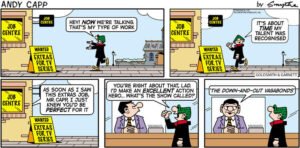
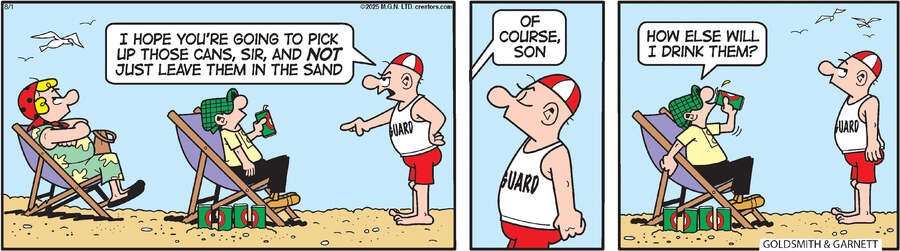
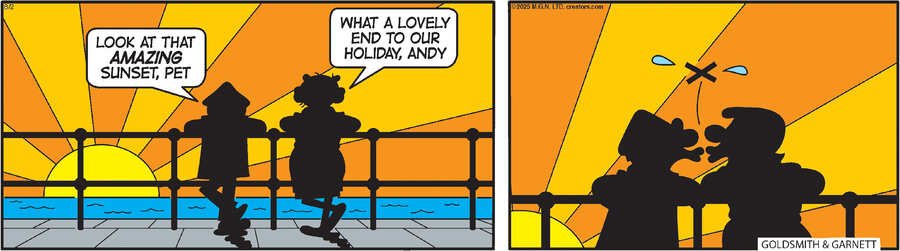
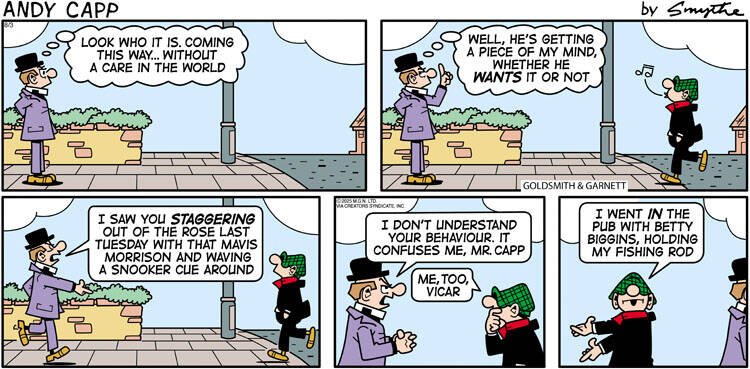
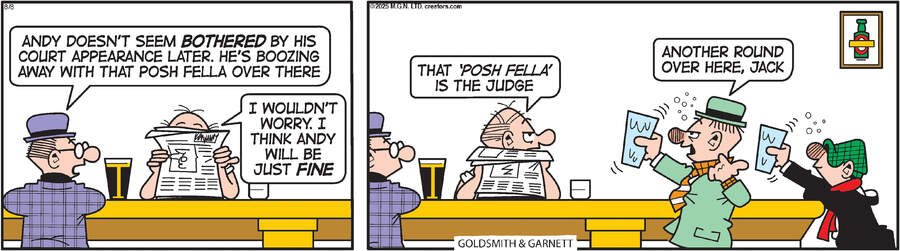
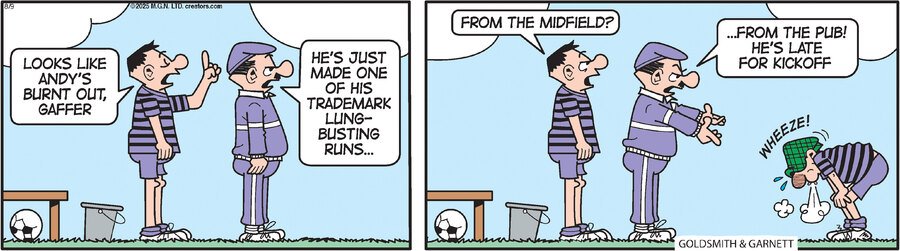
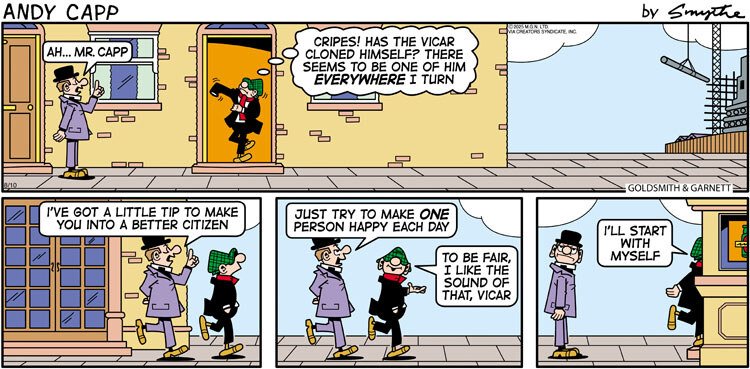
10+ Andy Capp comics
Image credit: Reg Smythe
#1
#2
#3
#4
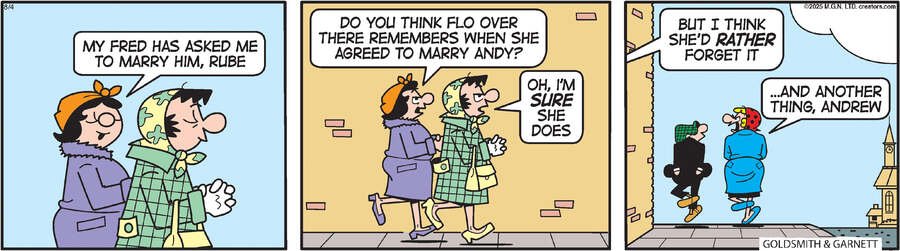
#5
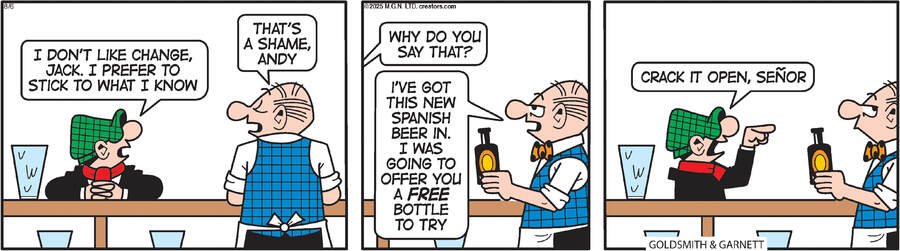
#6
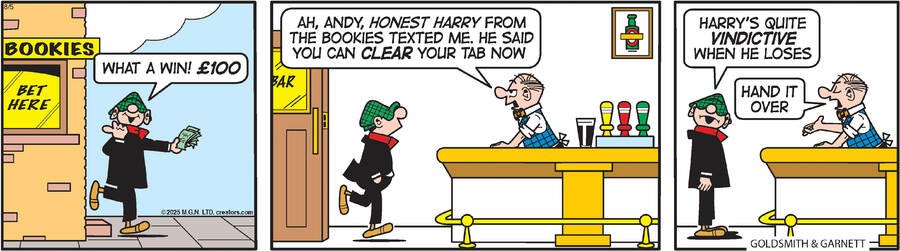
#7
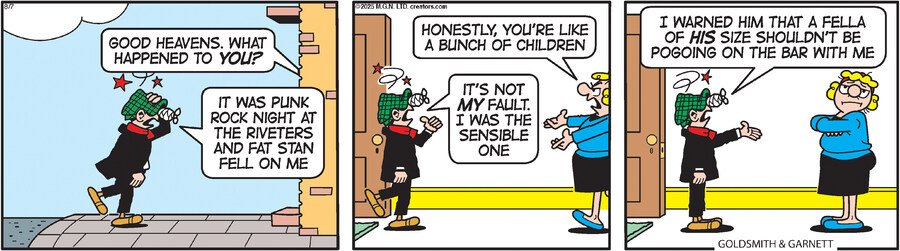
#8
#9
#10
Bringing a Cartoon Legend to Life: The Premise and the Cast
The central challenge for any adaptation is translation, and “Andy Capp” had a very specific hurdle to clear. The comic strip, created by Reg Smythe, was known for its simple, sharp gags and exaggerated visuals—think of Andy and Flo’s fights depicted as a cloud of dust with fists and rolling pins flying out . The 1988 series had to ground these characters in reality. The premise remained the same: Andy Capp (James Bolam) is an out-of-work layabout living in Hartlepool whose main goals in life are drinking at the local pub, placing bets on the horses, and avoiding any form of work . His wife, Flo, played by the wonderful Paula Tilbrook, is the sole breadwinner, and she keeps the household afloat despite Andy’s best efforts to drink away their meager earnings.
The casting was, on paper, inspired. James Bolam was a television heavyweight. He brought a naturalistic everyman quality to his roles, which was essential for making a character like Andy believable rather than just a caricature. He had to find the man behind the flat cap. Paula Tilbrook, who would later find fame as Betty Eagleton in Emmerdale, was perfectly cast as Flo. She brought a weary dignity to the role, portraying Flo not just as a nagging wife, but as a woman exhausted by her husband’s selfishness, yet still capable of love and fierce loyalty . The supporting cast was filled with familiar faces, including Kevin Lloyd (later of The Bill), populating the world of the Capps with neighbors like Chalkie and Ruby White, and the rent-collector, Percy Ritson .
Unusually for a sitcom at the time, “Andy Capp” was filmed entirely on location without a studio audience or a canned laugh track . This was a bold choice. The producers seemed to want a more naturalistic, character-driven comedy, closer to a drama with funny moments than a traditional, gag-a-minute studio show. This decision set the tone for the entire series and would be a major talking point for critics and viewers alike.
A Bold New Look: Why There Was No Laugh Track
One of the most distinctive and talked-about features of the “Andy Capp” TV series was what it left out: the laughter. In the 1980s, the vast majority of British sitcoms were filmed in front of a live studio audience or, at the very least, had a “laugh track” added in post-production to tell viewers when something was funny. It was a tried-and-tested formula. The makers of Andy Capp, however, decided to throw the rulebook out the window .
By filming entirely on location in real streets, houses, and pubs, and by omitting any laughter, the show aimed for a sense of realism that was very different from its contemporaries. The idea was to let the humor spring naturally from the situations and the characters, much like a comedic play or a drama. It allowed the actors, particularly Bolam and Tilbrook, to give more subtle and nuanced performances. You could hear the clink of glasses in the pub and the sound of doors slamming, which grounded the show in a believable, gritty Northern reality .
However, this creative decision was a risk that didn’t entirely pay off for all viewers. Comedy is often a communal experience, and the silence that greeted the punchlines could feel awkward. Without the cue of laughter, some viewers weren’t sure when to laugh, and the show’s slower, more observational pace could be mistaken for simply being dull . For every viewer who appreciated the realism, another missed the comforting familiarity of a studio audience’s reaction. It made “Andy Capp” a unique, if divisive, entry in the world of 80s sitcoms.
James Bolam as Andy: A Likable Lad or a Genuine Layabout?
At the heart of any successful adaptation is the central performance, and James Bolam’s portrayal of Andy Capp is the key to understanding the show’s mixed legacy. Bolam was, and is, a superb actor. He brought a certain charm and roguish twinkle to the role, trying to capture the “lovable rogue” aspect of the character from the comic strips . His Andy wasn’t just a drunk; he was a man with a sly grin and a quick excuse, always trying to charm his way out of trouble with Flo.
Yet, this interpretation ran into a fundamental problem. The “Andy Capp” of the 1988 TV series is, by modern standards, a deeply unlikeable character. He’s not just workshy; he’s described by some reviewers as a “bully, a liar, and a gambler” who philanders and leeches off his hard-working wife . In the comic strip, the simple, four-panel format made his antics seem more cartoonish and harmless. We laughed at the idea of the dust-cloud fight. But in live-action, seeing a man verbally mistreat his wife and shamelessly spend her money at the pub felt less funny and more uncomfortable .
This shift in tone was a major reason for the show’s failure to catch on. Bolam did his best with the material, but the writing, combined with the realistic format, stripped away the cartoon charm and left a portrait of a rather sad and selfish individual. Some fans of the comic felt Bolam “never felt like Andy Capp,” while others appreciated the attempt to stay true to the source material, even if it made for uncomfortable viewing . It was a no-win situation: make him too nice, and you betray the strip; make him too real, and you create a character audiences don’t want to spend time with.
A Short Run and a Lasting Legacy: Why Was It Canceled?
With a talented cast and a famous brand name, why did “Andy Capp” last only six episodes? The simple answer is that it failed to find an audience. Despite the hype, viewing figures quickly dwindled as the series progressed in February and March of 1988 . The show seemed to fall between two stools. It wasn’t broad enough for fans of traditional sitcoms, and it wasn’t sharp or dramatic enough to be a straight play. It existed in a strange, quiet middle ground that confused viewers.
The critics weren’t kind either. The series was described as a “misfire” that was “not funny” and “not good at all” . The decision to drop the laugh track was criticized, and the pacing was seen as too slow. The fundamental issue, as identified by many, was that the character of Andy Capp worked brilliantly in “small bites” but couldn’t sustain a half-hour narrative . A single comic strip delivers one punchline. A sitcom needs a story, character development, and a series of jokes. Stretching Andy’s one-note personality—drink, bet, avoid Flo—over six half-hour episodes proved to be a stretch too far.
However, time has been a little kinder to the show. Its legacy is now one of a curious footnote in TV history. For fans of 80s television or those interested in the careers of James Bolam and Paula Tilbrook, it remains a fascinating watch. The complete series was released on DVD in 2012, allowing a new generation to judge it for themselves . Some modern viewers have found it to be an enjoyable, if flawed, slice of period drama. They appreciate its faithfulness to the cartoon’s spirit and its depiction of a certain type of British working-class life, even if it doesn’t provoke roaring laughter . It serves as a valuable lesson in the challenges of adaptation: what works on the page doesn’t always work on the screen.
Conclusion
The 1988 television adaptation of “Andy Capp“ is a fascinating “what if?” in the history of British comedy. It was a bold experiment that brought together top-tier talent like James Bolam and Keith Waterhouse to translate a much-loved comic strip to the small screen . Its choice to film on location without a laugh track was ahead of its time, anticipating the more naturalistic comedies that would follow years later. Yet, it was this very boldness that may have contributed to its undoing, creating a show that felt tonally confused and featured a protagonist who was hard to root for in a live-action setting .
While it was a commercial and critical disappointment that ended after just one series, “Andy Capp” is far from being completely forgotten. For those who remember it, or for curious viewers who discover it on DVD, it offers a unique glimpse into a different era of television. It stands as a testament to the enduring appeal of Reg Smythe’s characters and a reminder that even the best-laid plans can go awry in the unpredictable world of TV. It may not be a classic sitcom, but as a piece of nostalgia and a time capsule of late-80s British television, it’s certainly worth raising a glass to.