
For over three decades, Brian Crane’s beloved comic strip Pickles has offered a gentle, hilarious look into the lives of Earl and Opal Pickles. Since its debut in 1990, this intergenerational comic has found a home in hundreds of newspapers worldwide, chronicling the retirement years of a married couple, their interactions with their grandson Nelson, and the antics of their dog Roscoe and cat Muffin . It is a strip that masterfully balances sharp wit with a whole lot of heart .
What makes Pickles so special is its ability to find humor in the ordinary. It doesn’t rely on wild adventures or high-stakes drama. Instead, it thrives on the quiet, funny moments of daily life—the miscommunications, the stubborn habits, and the love that holds a family together . Whether you are twenty-five or eighty-five, there is something in this strip that feels familiar. Here are the top five life lessons we have learned from spending time with the Pickles family.
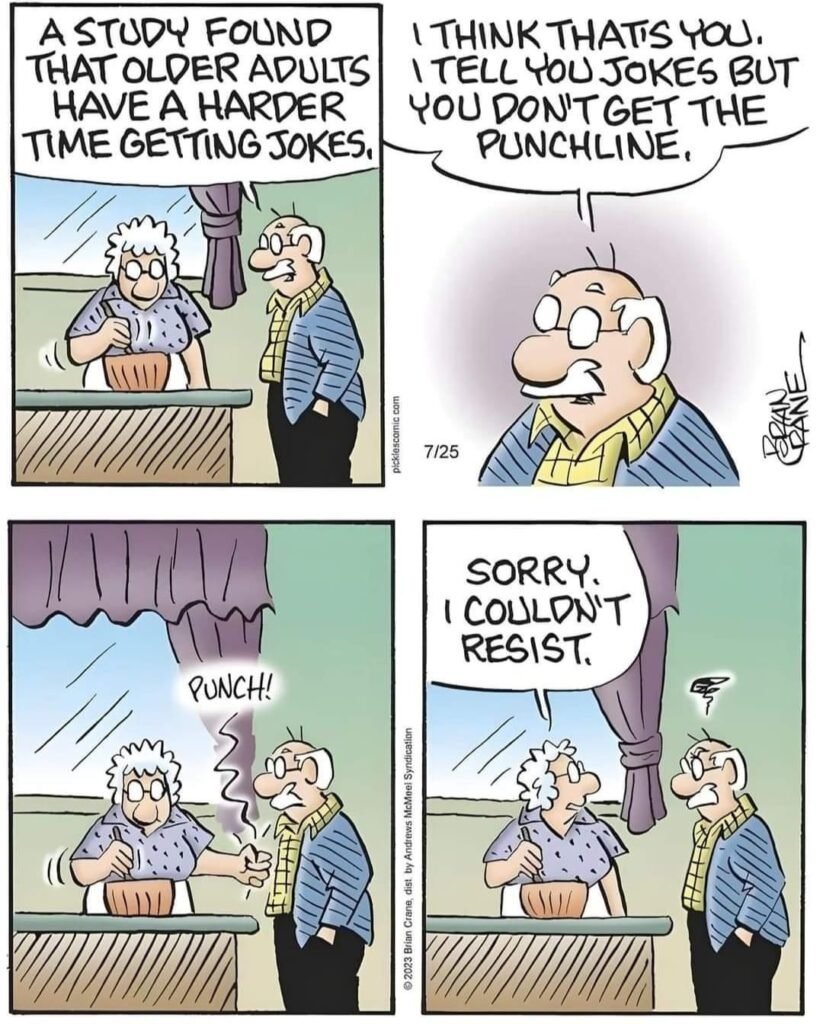
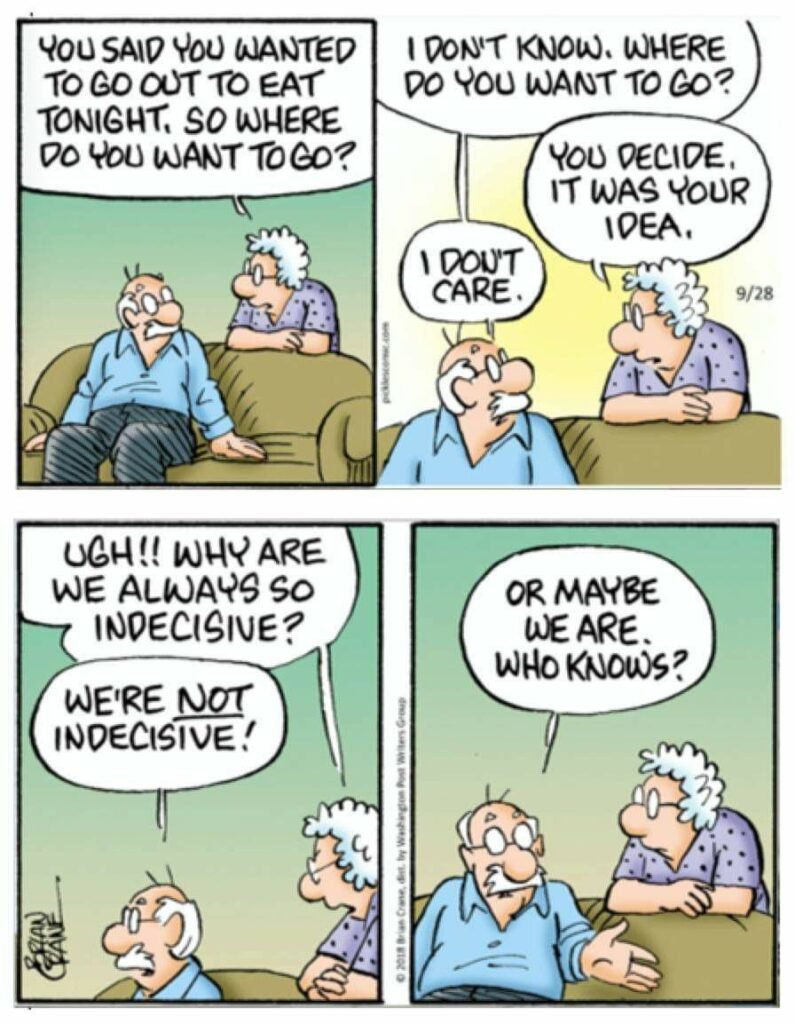
10+ Pickles Comics
Image Credit : Pintrest.com
#1

#2
#3
#4

#5
#6
#7

#8
#9
#10

1. Laughter is the Best Medicine for Growing Old
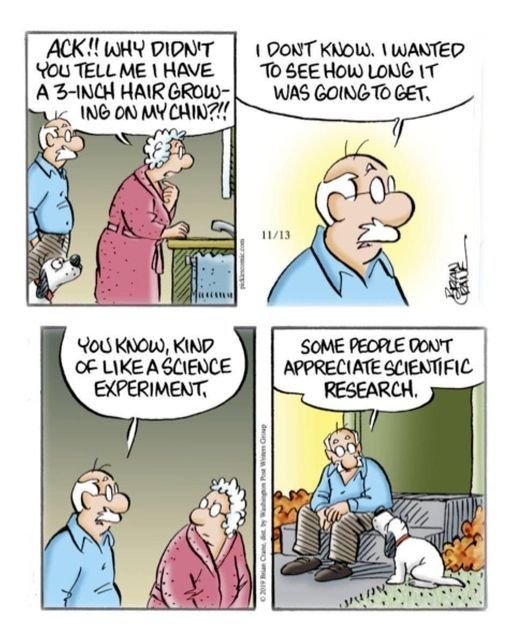
One of the most beautiful things about Pickles is how it tackles the realities of aging without ever becoming gloomy. Earl and Opal are in their seventies, and creator Brian Crane doesn’t shy away from the little frustrations that come with getting older—like aching backs, forgetting where you put your glasses, or the constant battle with new technology . However, the strip shows us that the best way to handle these moments is to simply laugh at them.
We’ve all had days where things don’t work the way they used to. Earl, the lovable “curmudgeon” of the family, often finds himself bewildered by the modern world, while Opal navigates it with a bit more grace and a lot of sass . The strip teaches us that while you might not be able to stop the clock, you can certainly control your attitude toward it. Finding the punchline in a frustrating situation is a survival skill.
Ultimately, Pickles reminds us that a sense of humor is essential for a long and happy marriage. Whether they are bickering over the volume on the TV or trying to remember a name, Earl and Opal always end up sharing a laugh . It is this shared laughter that gets them through the day and keeps their bond strong, proving that if you can laugh together, you can get through anything together.
2. Family is a Circle of Love, Support, and Quirkiness
The Pickles household is a wonderful mix of generations. While the strip centers on Earl and Opal, it also focuses heavily on their divorced daughter, Sylvia, and their curious six-year-old grandson, Nelson . This dynamic creates a rich tapestry of family life, showing how support flows in every direction—from grandparents to parents to grandchildren and back again. It highlights that “family” isn’t just about the people living under your roof, but the entire network of love that surrounds you.
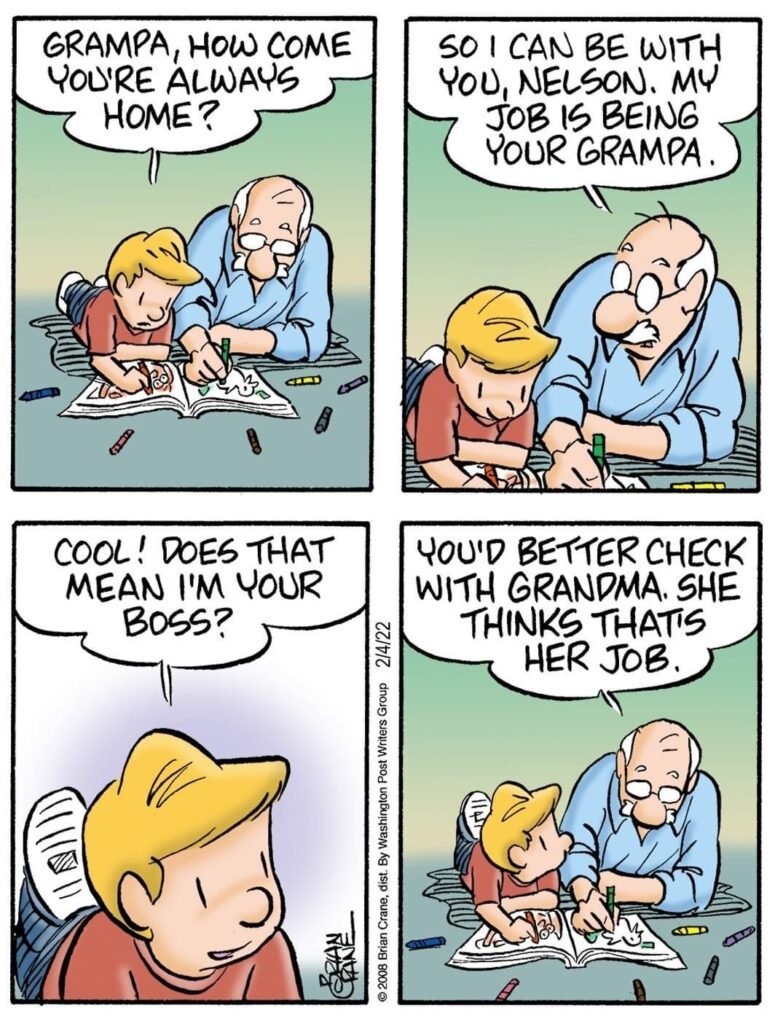
Opal often serves as the anchor of this extended family, providing wisdom and a listening ear to both her daughter and her grandson . Meanwhile, Earl offers a different kind of support, often bonding with Nelson over silly jokes or shared snacks. The strip captures the unique relationship between grandparents and grandchildren—a bond that is often less about discipline and more about pure, unconditional love and fun .
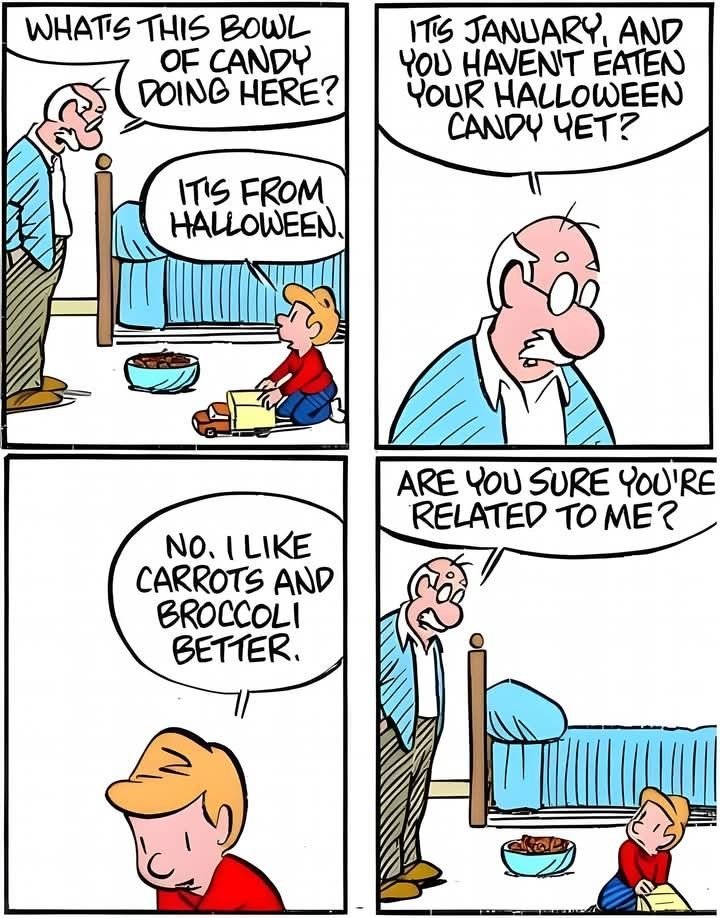
These interactions teach us that every family member brings something special to the table. From Muffin the cat’s “dictatorial” attitude to Roscoe the dog’s lovable confusion, each personality adds a unique flavor to the family dynamic . Pickles encourages us to embrace the quirks of our own family members, because it is those very quirks that make family life so colorful and interesting.
3. Patience is the Key to Bridging the Generation Gap
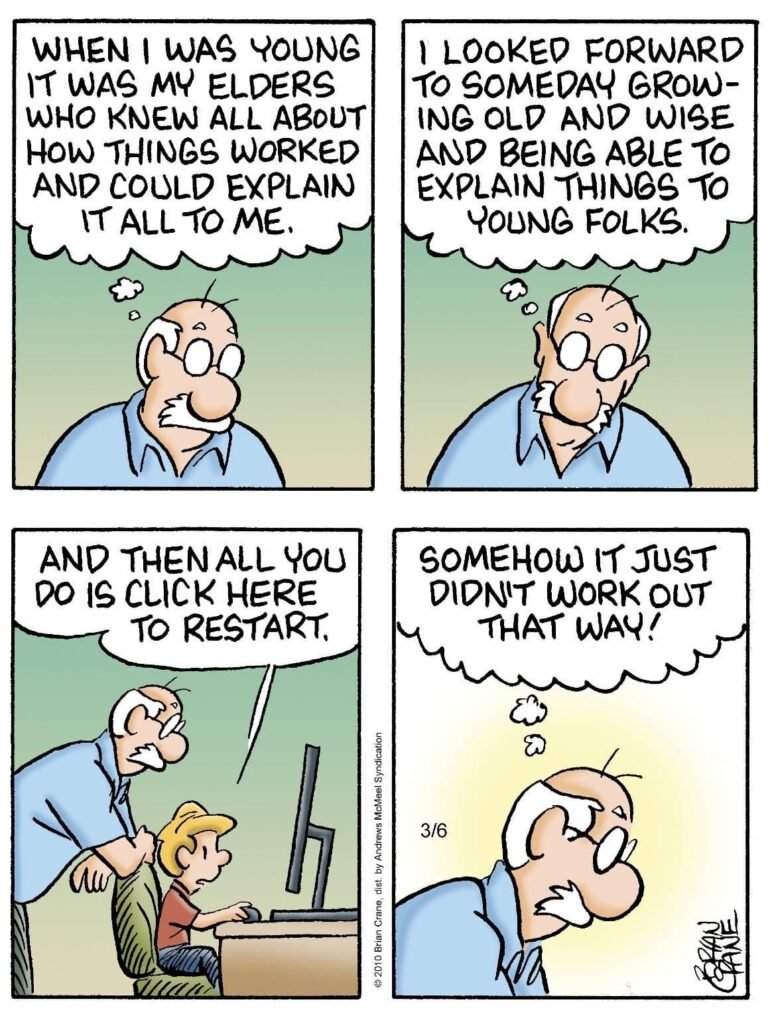
If there is one recurring theme in Pickles, it is the friendly clash between the older and younger generations, usually involving technology. Nelson, being a kid, is a natural with gadgets, while Earl and Opal often find themselves baffled by the simplest devices . However, instead of letting this gap cause frustration, the strip uses it as a source of gentle humor and a reminder to be patient with one another.
There is a classic Pickles moment where Opal can’t figure out her phone, and Nelson is baffled by her confusion. Her response? “I taught you how to use a spoon.” . It is a perfect comeback that reminds us that wisdom and knowledge are a two-way street. The younger generation might know how to navigate a smartphone, but the older generation holds the lifetime of practical skills and common sense.
This lesson is vital for families everywhere. Pickles shows that patience and respect are the bridges that connect these different worlds. By taking the time to explain things to each other—whether it’s how to send a text or how to bake cookies from scratch—families grow stronger. The strip encourages us to celebrate what each generation has to offer rather than getting annoyed by what they don’t understand.
4. Find Joy in the Simple, Everyday Moments
In a world that often tells us we need big events to be happy, Pickles is a refreshing reminder that joy is usually found in the small stuff. The strip rarely features vacations or major life upheavals. Instead, it focuses on the everyday: sitting on the porch, feeding the pets, or having a slow morning with a cup of coffee . It is in these quiet panels that the strip’s warmth truly shines.
Earl might find a moment of peace at the park, or Opal might share a sweet, quiet moment with Muffin on her lap. The comic finds beauty in the mundane. It teaches us to slow down and appreciate the here and now, rather than always looking for the next big thing. Happiness, according to Pickles, is often just a comfortable chair and a good book away.
These small moments are also where the characters show their love for each other. A knowing glance across the room, a shared memory, or even a simple act of making breakfast—these are the things that build a life together. Pickles inspires its readers to look around their own homes and find the magic in their daily routines, reminding us that a life filled with simple pleasures is a life well-lived.
5. It’s Okay to Be a Little Stubborn (as Long as You Have a Good Heart)
Earl Pickles is a retired philosophy professor who has been described as a “couch potato” and a “curmudgeon” . He is set in his ways, he grumbles about things, and he often resists change. On the surface, he might seem like a grumpy old man, but regular readers know that underneath that gruff exterior is a heart of gold. He teaches us that being stubborn isn’t always a bad thing, especially when it comes from a place of love.
Whether he is hiding cookies in his fanny pack or refusing to admit he needs help, Earl’s stubbornness is usually pretty funny . But when his family needs him, he is always there. This duality makes him one of the most relatable characters in comics. We all have our moments of wanting to do things our own way, and Earl gives us permission to laugh at that trait in ourselves.
Ultimately, Pickles teaches us that character is about what’s on the inside. Opal sees right through Earl’s grumpy acts, and their love is built on a deep understanding of each other’s true nature . The strip reminds us that it’s okay to have rough edges, as long as your heart is in the right place and you are surrounded by people who love you anyway.
Conclusion
Pickles is more than just a funny comic strip; it is a gentle guide to living a better life. Through the daily adventures of Earl, Opal, Nelson, and the pets, we are reminded to laugh at ourselves, cherish our families, and find happiness in the simple things. Brian Crane has created a world that feels like home—a place where love triumphs over frustration and where every day brings a new reason to smile . So, the next time you read Pickles, take a moment to appreciate the wisdom hidden within the humor. It just might make your own day a little brighter.