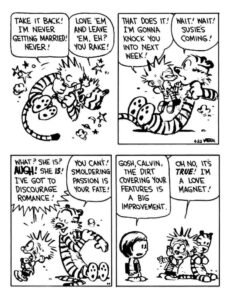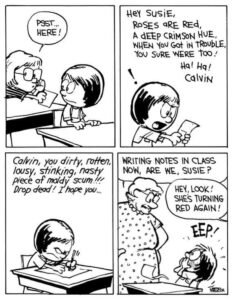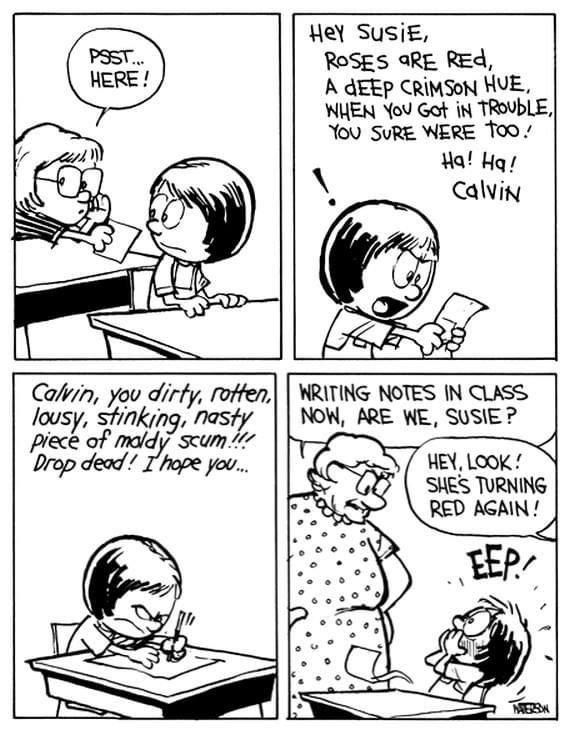
Bill Watterson’s Calvin and Hobbes isn’t just a comic strip; for millions of readers, it’s a cherished part of growing up. Running in newspapers from 1985 to 1995, this story of a mischievous six-year-old and his philosophical stuffed tiger has never really left the public heart . Even today, decades after the final strip ran, the comic continues to sell books and find new fans of all ages . It is a perfect blend of wild imagination, sharp humor, and unexpected wisdom that feels just as fresh now as it did thirty years ago. But what exactly makes this comic about a boy and his tiger so timeless? Let’s dive into the snowy, treehouse-filled world of Calvin and Hobbes and explore why it remains the perfect comic.
10+ Calvin and Hobbes
Image credit : Pintrest.com
#1
#2
#3
#4
#5
#6
#7

#8
#9
#10
A Friendship for the Ages
At its core, Calvin and Hobbes is a story about friendship. Calvin is a typical—if overly energetic—young boy with a dislike for school and a love for adventure. To everyone else, Hobbes is simply a stuffed animal, a lifeless tiger sitting around the house . But the magic of the strip is that the reader gets to see what Calvin sees. When it’s just the two of them, Hobbes springs to life as a witty, loyal, and sometimes sarcastic companion . This unique dynamic creates an intimate world where the reader is invited to share in the secret.
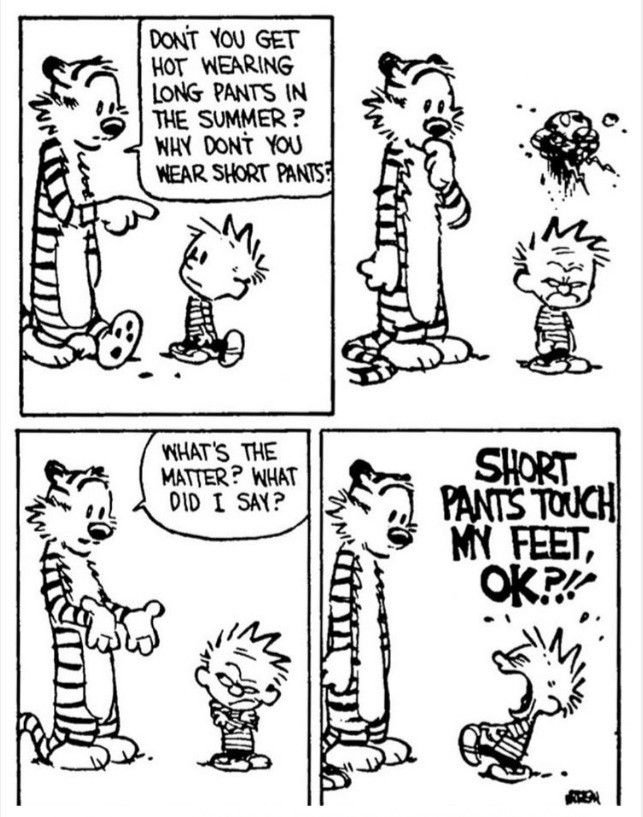
Hobbes is more than just a sidekick; he is often the voice of reason that Calvin desperately needs. While Calvin is impulsive and reckless, Hobbes is cautious and thoughtful. He might tackle Calvin when he walks through the door, but he also gently questions Calvin’s more outlandish schemes . This balance makes their relationship feel real. They bicker, they play, and they philosophize. They are best friends in the truest sense, showing readers that friendship isn’t about agreeing on everything, but about having someone to share the sled ride with when the hill gets steep .
This bond also teaches readers about loyalty. In a world full of school bullies and strict parents, Calvin and Hobbes have each other. They face the “monster” under the bed together, and they navigate the complex social rules of the playground as a team . It reminds us that having a true friend by your side can turn any ordinary day into an extraordinary adventure.
A Hilarious Take on Growing Up
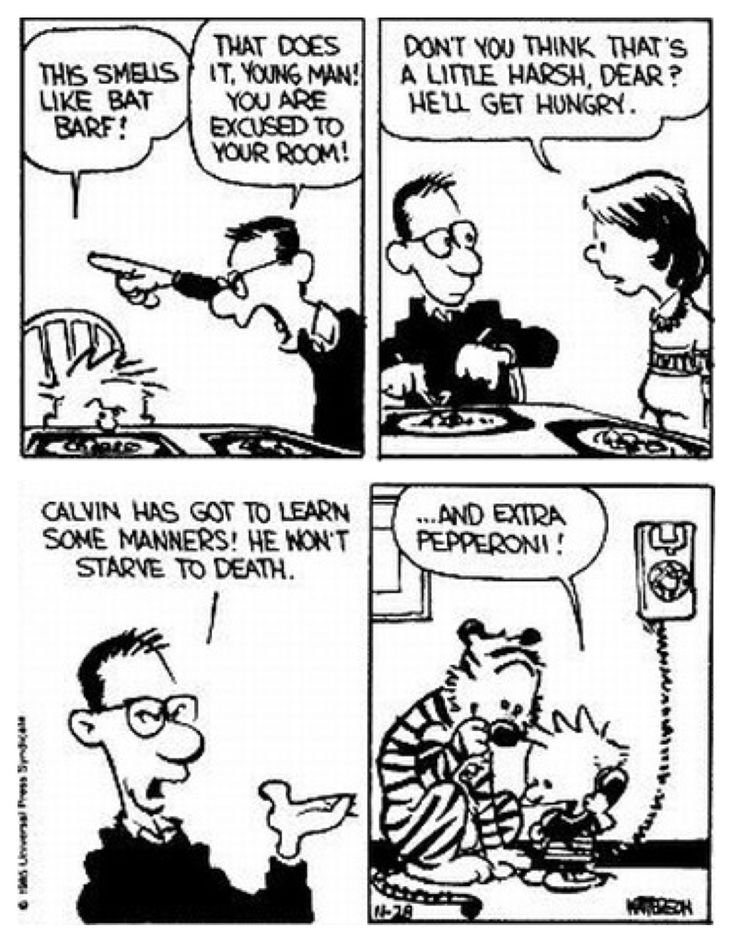
One of the main reasons Calvin and Hobbes connects with so many people is its perfect portrayal of childhood. Bill Watterson had an incredible knack for remembering what it actually felt like to be a kid. He captures the boredom of a rainy afternoon, the injustice of homework, and the confusing nature of girls. Calvin isn’t a perfect child; he throws tantrums, he tries to get out of taking messages for his dad, and he constantly complains about his mom’s cooking . He is wonderfully, hilariously human.
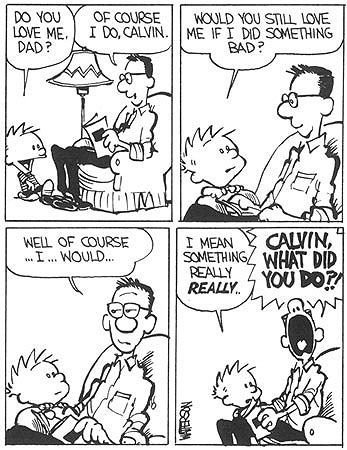
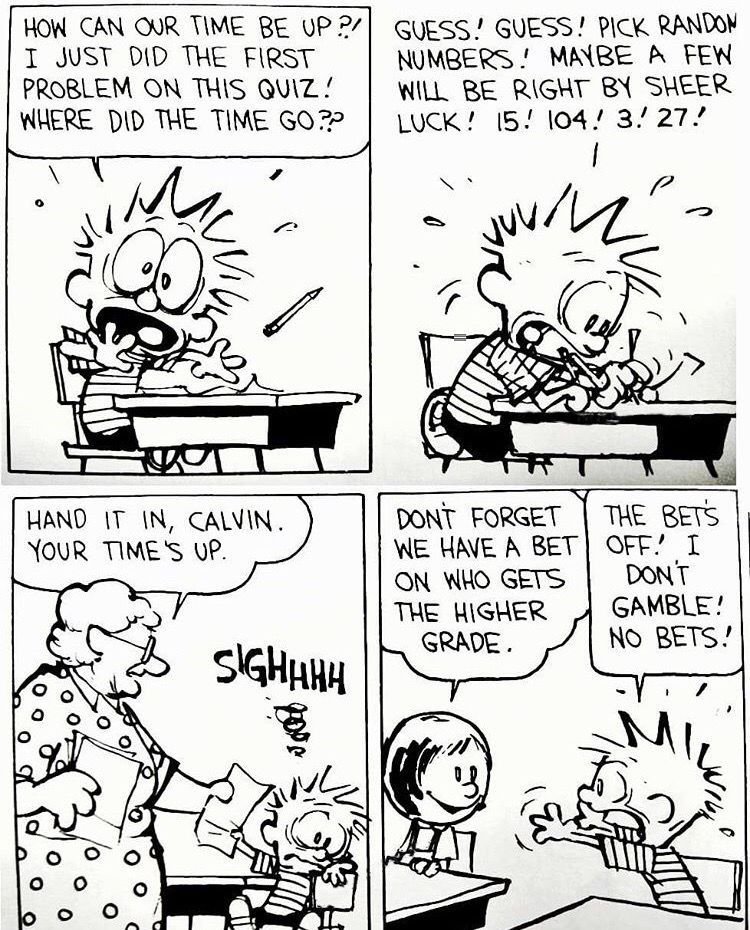
The humor often comes from Calvin’s attempts to navigate the adult world with his own childlike logic. Whether he’s trying to cheat on a math test by calling his dad at work or dictating how his mother should make his sandwiches, his plans always backfire in the most entertaining ways . His parents, who remain nameless throughout the series, are the perfect foils. They react to Calvin’s antics with a mix of exhaustion, patience, and quiet humor—like when Calvin’s dad convinces him that old photos are black and white because the world used to look that way .
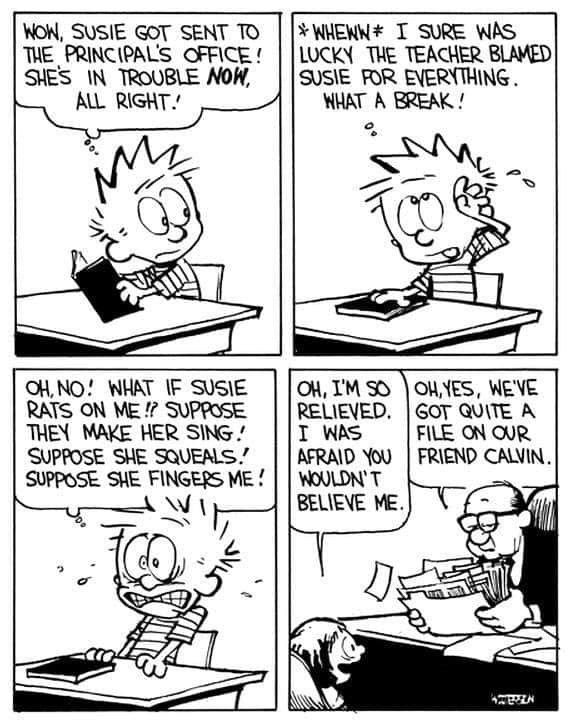
Yet, the strip also acknowledges the scary parts of being little. School bullies like Moe are a real threat, and the pressure to perform well in class is a constant source of stress for Calvin . By showing both the fun and the frustrations of youth, Calvin and Hobbes validates the experiences of its younger readers while reminding adults of the ups and downs they survived.
Imagination Without Limits
Perhaps the most visually stunning aspect of Calvin and Hobbes is the celebration of imagination. Calvin doesn’t just play in a cardboard box; he transmogrifies himself into an astronaut, a deep-sea diver, or a dinosaur. His wagon is not just a wagon; it’s a time machine. His backyard is not just a yard; it’s a dense jungle full of dangerous tigers (who also happen to be his best friend) . Watterson’s art shifts beautifully between these two worlds, allowing readers to see the “boring” reality and Calvin’s exciting fantasy side-by-side.
This imagination is a coping mechanism. Calvin uses his alter egos—Spaceman Spiff bravely battling the “dreaded teacher” or Stupendous Man fighting for justice—to escape the mundane tasks of life, like taking a bath or going to school . It’s a powerful message for readers of all ages. It suggests that even when life feels boring or unfair, we have the power to reinvent our reality. We can find adventure in our own backyards if we just look at things the right way .
The ambiguity of Hobbes’s existence is the ultimate testament to this theme. Is he real, or is he just a figment of Calvin’s lonely imagination? Watterson wisely never answers the question . By leaving it open, he invites the reader to believe right along with Calvin. In a world that constantly tells kids to grow up and stop pretending, Calvin and Hobbes gives them permission to keep dreaming.
Wit and Wisdom for the Real World
While Calvin and Hobbes is wildly funny, it’s also surprisingly deep. Named after theologians and philosophers, the characters often find themselves pondering life’s biggest questions . Calvin might wonder why humans are on Earth, only for Hobbes to darkly joke that we are “tiger food” . In one iconic strip, Calvin declares his own significance, only to be crushed when the vast, silent universe doesn’t answer back . These moments hit readers on a deeper level, touching on existentialism and the search for meaning.
Despite the heavy topics, the strip never loses its warmth. It offers a sharp critique of modern society without becoming mean-spirited. Watterson took aim at consumerism, art criticism, and the stress of modern life . Calvin famously declares that the best way to celebrate a religious holiday is with “frenzied consumerism,” a line that still stings with truth today . The strip encourages readers to value nature, solitude, and genuine human connection over material wealth .
But it always comes back to love. As one professor noted, the strip critiques the world but ends with a hug . It acknowledges that life can be tough, school can be unfair, and the future is uncertain. Yet, there is always time to go sledding. There is always time to watch a sunset. There is always time to be with the one you love. That balance of cynicism and sentimentality is what makes the strip resonate so deeply. It doesn’t pretend the world is perfect, but it insists that life is still magical.
Conclusion
Calvin and Hobbes is more than just a comic strip; it’s a philosophy of life wrapped in crayon and watercolors. It captures the pure joy of being a kid, the comfort of a true friend, and the courage it takes to use your imagination. Bill Watterson’s decision to end the strip at its peak, and his fierce protection of it from commercial licensing, ensured that it would remain pure and untouched . There are no cheap toys (unless you count the unofficial ones) or bad TV specials to ruin the memory. There is only the artwork and the words.
As the final strip shows Calvin and Hobbes sledding into a snowy, untouched landscape, Calvin says, “It’s a magical world, Hobbes, ol’ buddy… Let’s go exploring” . That invitation is always open. Whether you are six or sixty, picking up a Calvin and Hobbes collection is a chance to escape, to laugh, and to remember what really matters. It is, and always will be, the perfect comic.