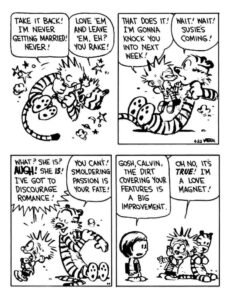
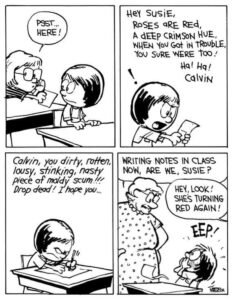
If you grew up in the late eighties or nineties, chances are you have a soft spot for a mischievous six-year-old with a spiky hair and his stuffed tiger. But Calvin and Hobbes was never just a funny comic strip about a boy and his pet. It was a deep, thoughtful look at the world through the eyes of a child. Created by Bill Watterson, the strip ran for ten years and continues to sell millions of books because it captures something timeless: the way kids think, feel, and question the world around them. While adults often see it as a trip down memory lane, reading Calvin and Hobbes is really an exploration of the philosophy of childhood itself .
Watterson didn’t just write jokes; he wrote about life. He used the everyday adventures of Calvin and his friend Hobbes to ask big questions. Why do we have to grow up? What is the point of rules? Is the world really as serious as adults make it out to be? By looking at the strip closely, we can see that it offers a powerful message: maybe children understand the world better than we give them credit for . Let’s dive into the magical, thoughtful, and hilarious world of Calvin and Hobbes and see what it teaches us about being young.
10+ Calvin and Hobbes Comics
#1
#2
#3
#4
#5
#6
#7
#8
#9
#10
The Power of Imagination: Seeing the World as a Place of Wonder
The most obvious thing about Calvin is his incredible imagination. To him, a cardboard box is never just a box. It’s a time machine, a transmogrifier, or a duplicator. A trip to the bathtub is a deep-sea diving adventure, and walking out the front door means entering a dinosaur-infested jungle or a distant planet. This is the first big lesson the strip teaches us about childhood: kids have the amazing ability to turn the ordinary into the extraordinary. While adults see a boring, snowy yard, Calvin sees a vast landscape full of possibility for epic sledding adventures or creating bizarre snowman art .
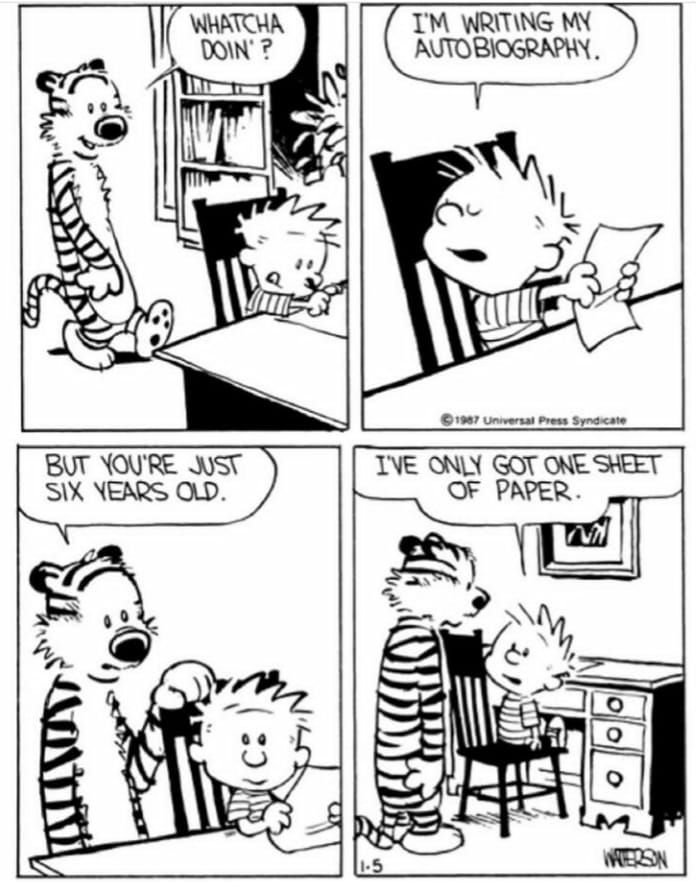
This isn’t just cute behavior; it’s a philosophical stance on how we experience reality. Watterson shows us that the world is only as dull as we allow it to be. Calvin chooses to live in a world full of magic, and because of that choice, his life is never boring. For him, imagination is a shield against the mundane. It’s how he survives a long walk home from school or gets through a dull lecture from his teacher, Mrs. Wormwood. He doesn’t just wait for time to pass; he fills it with stories where he is the hero .
His imaginary games also highlight how children process information. By pretending to be Spaceman Spiff fighting aliens, Calvin is really just dealing with the frustration of a pop quiz. By turning his wagon into a race car, he is experiencing the simple joy of speed and freedom. The strip reminds us that for children, play isn’t a break from learning—it is learning. It’s how they test boundaries, act out their fears, and make sense of a world that is largely controlled by grown-ups . Through Calvin, we remember that a rich inner life is a gift we should never lose.
Questioning Everything: How Kids See Through Adult Nonsense
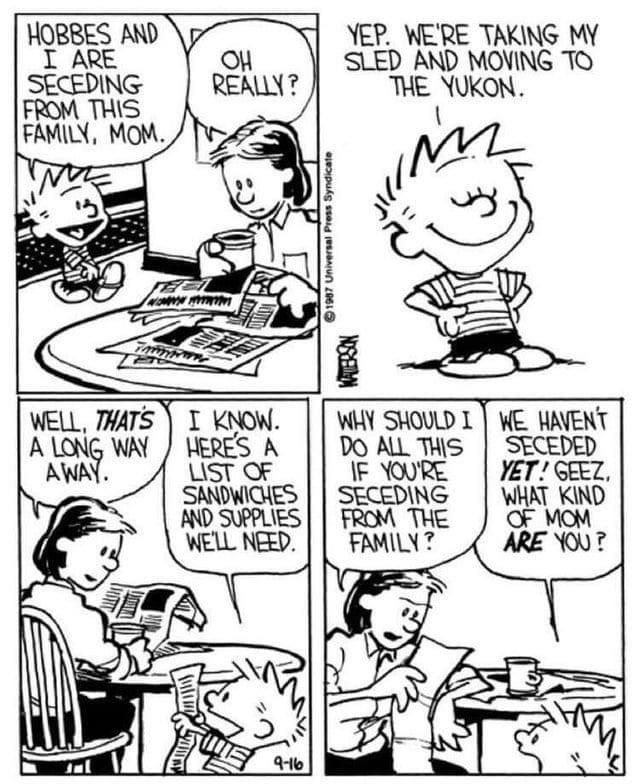
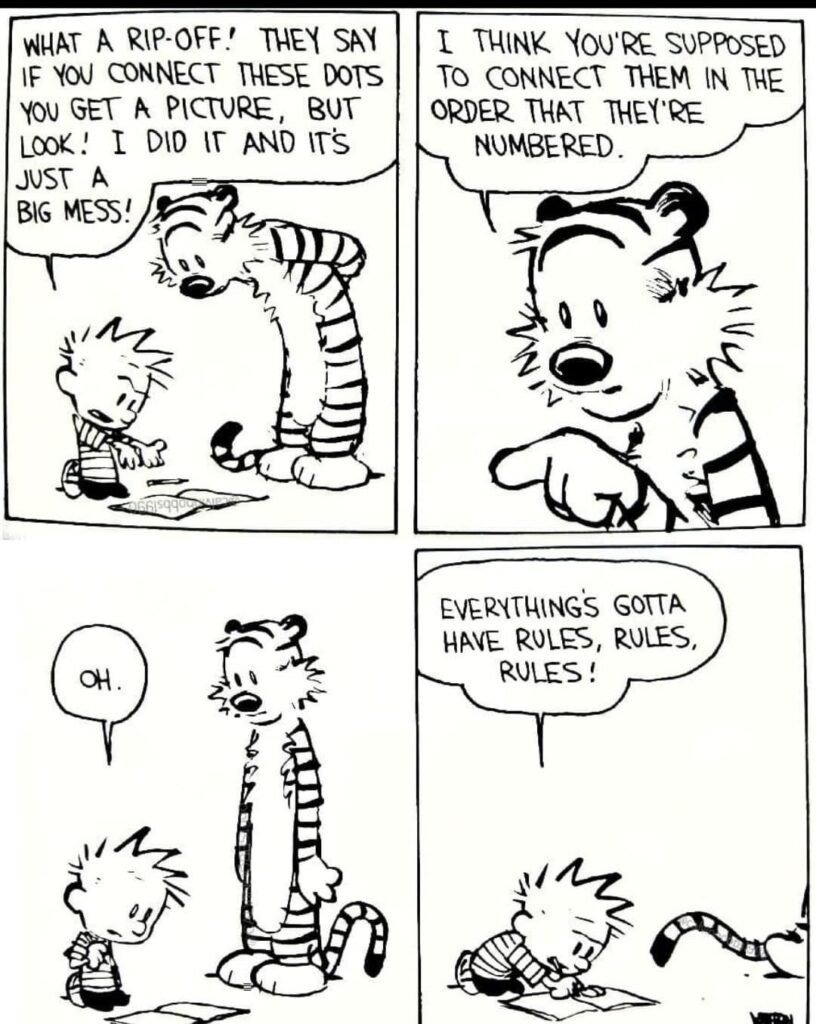
Calvin might be young, but he has a sharp eye for hypocrisy. One of the funniest and most thoughtful parts of the strip is when Calvin questions the rules and routines of the adult world. Why do we have to spend six hours a day in school? Why does he have to eat food that looks disgusting? Why is it that adults can stay up late, but he can’t? By asking these simple questions, Calvin often points out how silly some of our grown-up habits really are. He acts as a tiny philosopher, questioning authority and refusing to accept “because I said so” as an answer .
Watterson uses Calvin to critique real-world issues like consumerism, environmental damage, and the mindlessness of modern life. Calvin often begs his parents for money to buy cheap plastic toys or sugary cereal, only to be disappointed when they don’t make him happy. In one famous strip, he demands a shirt with a logo because he wants to be a “walking corporate advertisement,” mocking how brands try to define who we are. He also worries about the planet, wondering why humans are so quick to destroy the forests and fields he loves to play in. Through his rants, we see the world as a place that often puts profit before people and happiness .
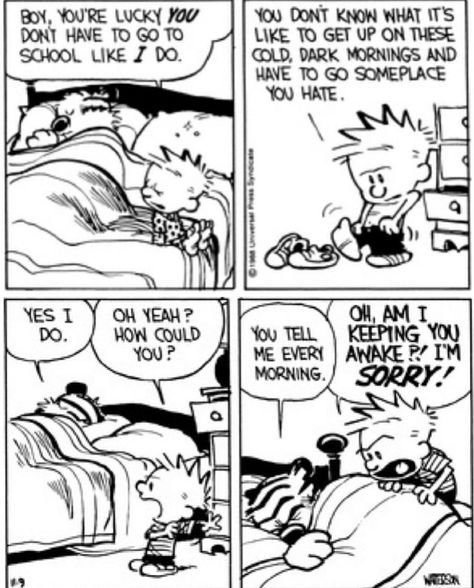
This constant questioning is a key part of the philosophy of childhood. Kids haven’t yet been trained to accept things the way they are. They look at the world with fresh eyes and often notice when things don’t make sense. Calvin and Hobbes encourages us to look at our own lives and ask if we are just going through the motions. Are we doing things because they matter, or just because that’s how they’ve always been done? Calvin’s rebellion against bedtime and homework is really a rebellion against the idea that life has to be dull and serious just because you get older .
The Role of Hobbes: Friendship, Conscience, and Reality
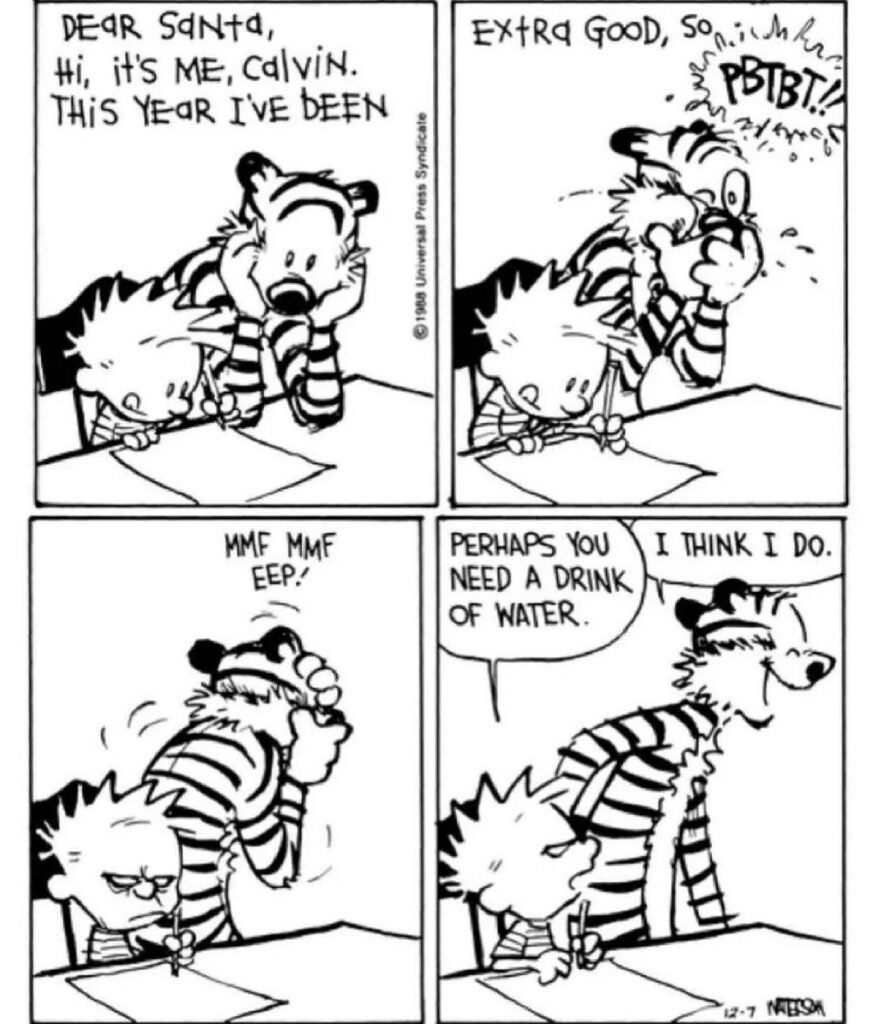
No discussion of childhood philosophy is complete without talking about Hobbes. Is he real, or is he just a stuffed tiger? The magic of the strip is that Watterson never gives us a clear answer. To Calvin, Hobbes is a wise, playful, and sometimes sarcastic friend who tackles him when he comes home from school. To everyone else, he is just a doll sitting on the couch. This clever trick shows us the depth of a child’s emotional life. Hobbes represents the inner voice that every child has—a best friend who is always there to offer advice, share a laugh, or point out when Calvin is being stupid .
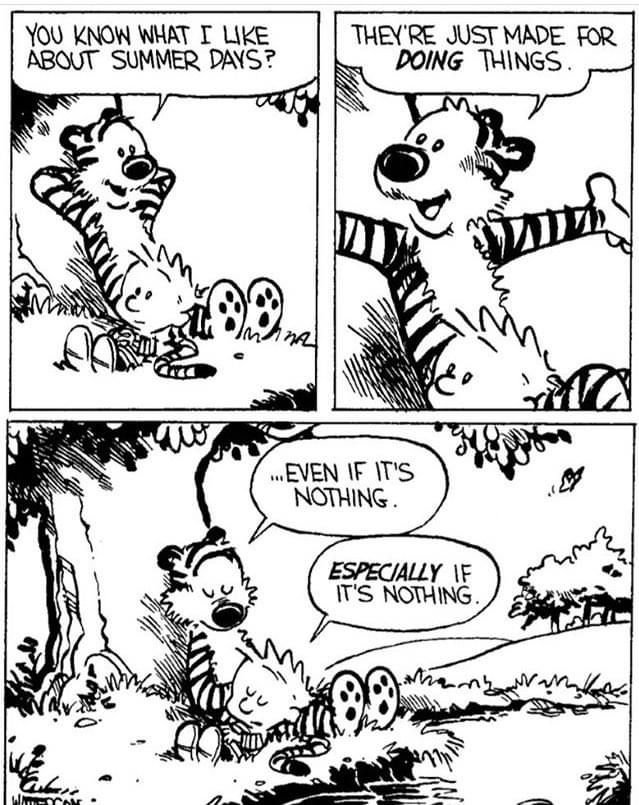
Hobbes is often the voice of reason. While Calvin panics about the future or schemes to get out of work, Hobbes is calm and grounded. He asks the simple questions that bring Calvin back to earth. When Calvin worries about his place in the vast universe, Hobbes is the one who suggests they just go outside and enjoy the day. This dynamic shows us how important friendship is during childhood. A true friend helps you navigate the scary parts of life. He doesn’t judge you, and he’s always ready to play, no matter what .
The ambiguity of Hobbes’ existence is also a profound statement about perception. Watterson once said that he shows two versions of reality, and both are true for the person experiencing them. For Calvin, Hobbes is real, so the adventures they have are real. This teaches us that reality isn’t always a fixed thing. The love, trust, and fun that Calvin shares with Hobbes are genuine emotions. Whether Hobbes has fur and batteries or fur and a pulse doesn’t really matter. What matters is the relationship. In this way, the strip honors the deep, meaningful connections children form, whether with people, pets, or imaginary friends .
Facing Big Feelings: Wonder, Fear, and the Meaning of Life
Despite all the fun and games, Calvin and Hobbes isn’t afraid to get serious. Calvin often stares up at the night sky and wonders what it’s all about. He asks Hobbes if our lives mean anything or if we are just “specks of dust” in the universe. For a six-year-old, he has a lot of anxiety about the future, death, and his purpose in life. This might seem heavy for a comic strip, but it’s actually a very real part of being a kid. Children feel things deeply. They get scared, they feel small, and they wonder why they are here .
Watterson handles these heavy topics with a gentle touch. Calvin’s existential crises usually last a panel or two before he gets distracted by a butterfly or a snowball. But those moments of reflection are important. They show that philosophy isn’t just for college professors. It’s for everyone. By putting these thoughts in the mind of a child, Watterson reminds us that the big questions are universal. Calvin isn’t afraid to admit that he doesn’t know the answers, and that’s okay. The important thing is that he keeps asking .
In the end, the philosophy of Calvin and Hobbes is one of optimism. The final strip shows Calvin and Hobbes sliding down a snowy hill on their sled, ready for a new adventure. Calvin’s last line is, “It’s a magical world, Hobbes, ol’ buddy… Let’s go exploring!” This is the ultimate lesson from the comic. Life is confusing, scary, and often unfair. Adults can be boring, school can be a drag, and the world can be a mess. But it is also full of magic, wonder, and beauty. The philosophy of childhood, according to Bill Watterson, is to hold onto that sense of wonder. It’s to keep exploring, keep asking questions, and keep your best friend by your side, no matter how old you get .