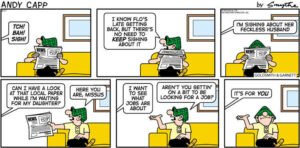
For over six decades, readers around the world have woken up and smiled at the antics of a loveable layabout with a flat cap pulled down over his eyes. Andy Capp, the quick-witted and lazy comic strip character created by Reg Smythe, first appeared in the British newspaper the Daily Mirror on August 5, 1957 . What started as a simple cartoon to boost readership in Northern England quickly turned into a global phenomenon. His brand of humor, rooted in working-class life, proved that laughter truly has no boundaries. Today, Andy is not just a comic strip; he is a cultural icon known from Hartlepool to Honolulu.
The journey of Andy Capp is a fascinating story about how a local character with a strong accent and specific hobbies like pigeon racing and darts managed to win the hearts of millions worldwide. He became a symbol of the likeable rogue, a man who does absolutely no work but somehow always has time for a pint at the pub. This article explores how this “horrible little man,” as his creator once called him, became one of the most successful and enduring comic characters in history.
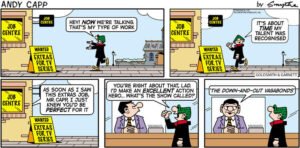
10+ Andy Capp Comics
Image credit: Reg Smythe
#1
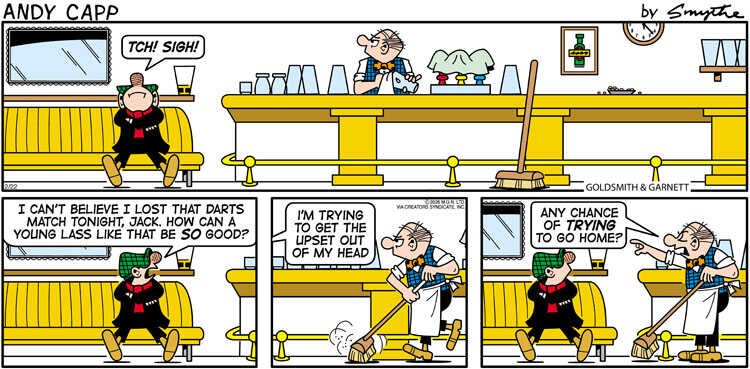
#2
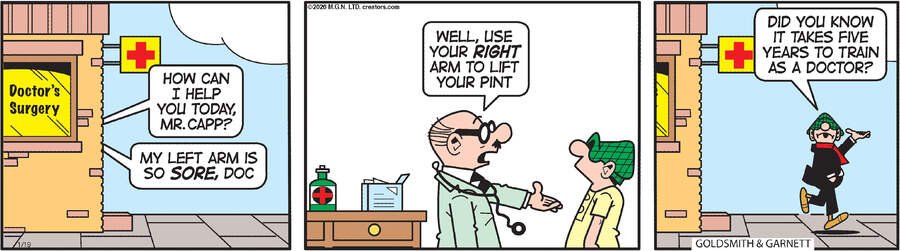
#3
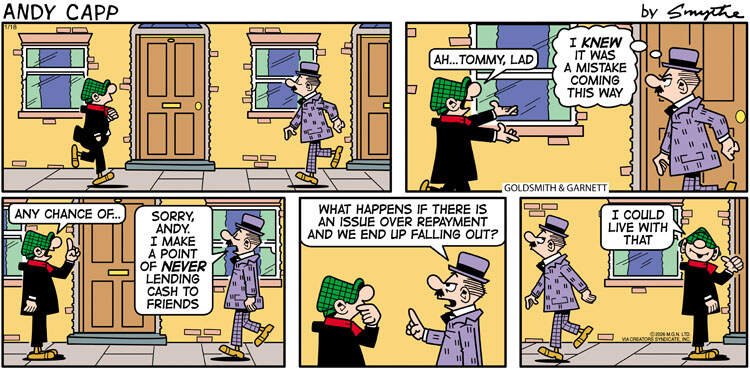
#4
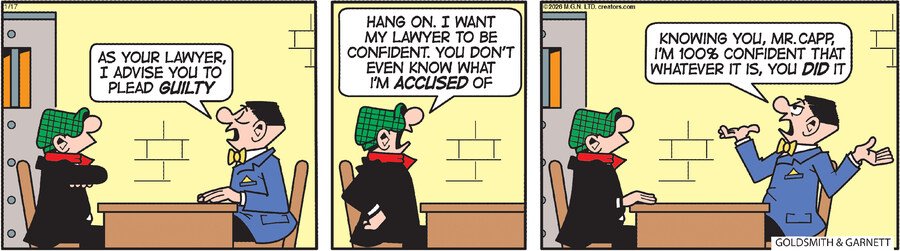
#5
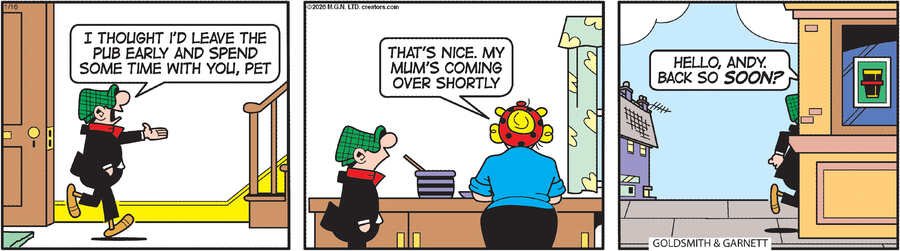
#6
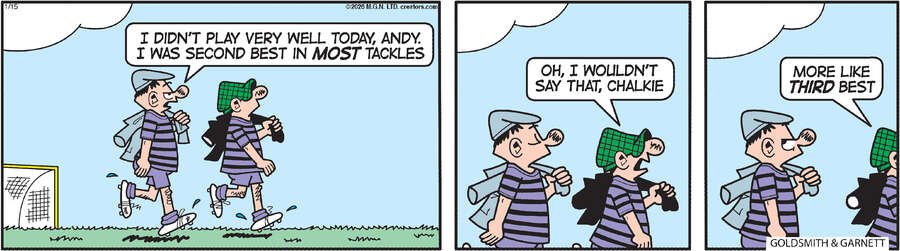
#7
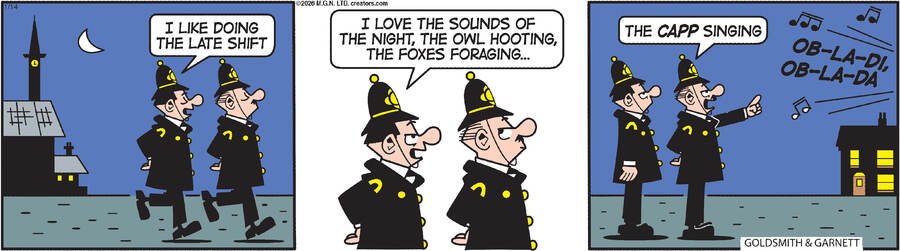
#8
#9
#10
The Birth of a Legend: From a Rainy Football Match to the Daily Mirror
The story of Andy Capp begins with his creator, Reg Smythe, a native of Hartlepool in North East England. Smythe, a former soldier who served in North Africa during World War II, had a knack for capturing the essence of the people he grew up with . In the mid-1950s, the Daily Mirror asked him to create a cartoon character that would appeal specifically to readers in the industrial North. The inspiration struck during a visit back home. Standing at a football match, Smythe saw a man take off his flat cap when it started to rain and tuck it inside his coat. When a young Smythe asked why, the man replied, “You don’t think I’m going to sit in the house all night wearing a wet cap, do you?” . That man’s practical, no-nonsense attitude became the seed for Andy Capp.
The name itself is a clever piece of wordplay. “Andy Capp” is a pun on the term “handicap,” pronounced with a Northern English accent . It perfectly sums up a character who is always at a disadvantage, usually due to his own laziness or love for beer. When the strip launched, Andy was initially drawn as a heavier-set man, but his look evolved into the thinner, sharper figure we recognize today, complete with his signature flat cap and a cigarette dangling from his lips . He wasn’t just a character; he was a stereotype of the work-shy northerner, but he was drawn with such affection and wit that the people he supposedly mocked loved him right back.
A Universal Rogue: Andy’s Personality and His Patient Wife, Flo
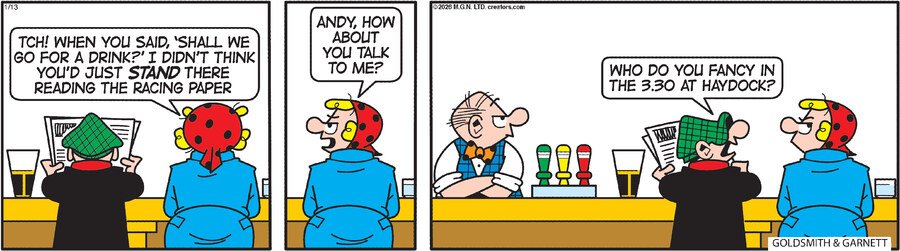
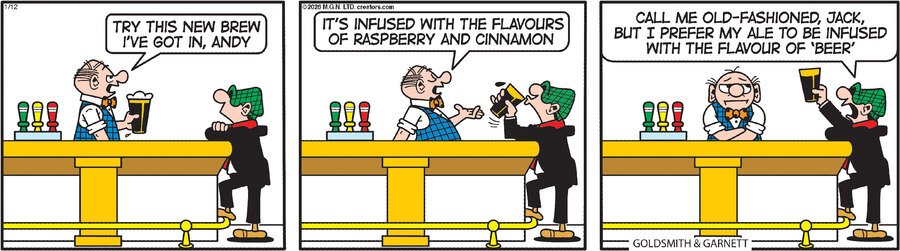
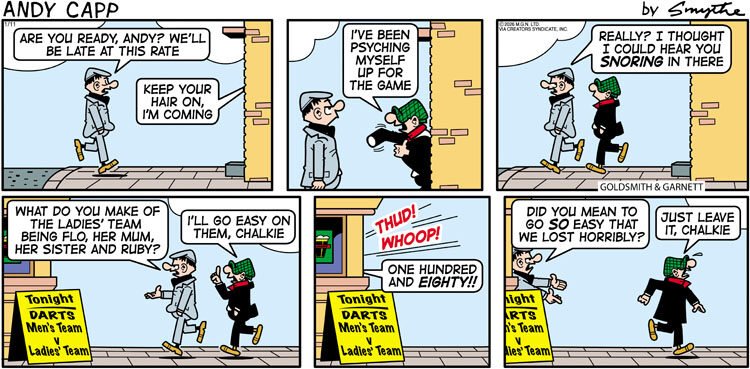
At the heart of the strip’s success is the dynamic between Andy and his long-suffering wife, Florrie, or “Flo.” Andy is unemployed and proud of it. His days are a carefully balanced routine of sleeping on the sofa, avoiding the rent collector (Percy), and propping up the bar at the local pub with his best mate, Chalkie . He loves gambling, playing football (where he is always sent off for fighting), and flirting with the barmaids. Despite all his flaws, Andy is not a villain. He has a soft spot for Flo, whom he always calls “pet,” and he is quick to defend her honor if anyone else dares to be rude . This mix of bad behavior and hidden heart makes him incredibly human.
Flo, however, is the real hero of the story. Smythe named her after his own mother and considered her his favorite character . She works hard cleaning houses to bring in money, which Andy often tries to borrow (or steal) for beer. She goes to bingo with her friend Rube, and she gives as good as she gets. In the early days, the strip famously featured slapstick fights between the couple, which was a reflection of comedy in the 1950s . As times changed, the violence faded and was replaced by verbal sparring and visits to a marriage counselor . Their relationship, though chaotic, is built on a strange, unshakable foundation of love and habit. Readers across the globe recognize this universal battle of the sexes, making them laugh at the familiar struggles of married life.
Conquering the Globe: 1,700 Newspapers and 14 Languages
While Andy Capp’s world is small—usually just his house, the street, and the pub—his reach became enormous. The strip’s genius lies in its simplicity. You don’t need to be from Northern England to understand wanting to sleep in, or the joy of a cold beer after a long week. This universality allowed Andy to travel easily. By the height of its popularity, the strip was published in over 1,700 newspapers worldwide and translated into 14 different languages . It is estimated that at one point, he had a staggering 250 million readers .
To truly become a local, Andy didn’t just travel; he changed his name. In Germany, he is known as Willi Wakker; in Sweden, he is Tuffa Viktor; in Denmark, he is Kasket Karl; in France, André Chapeau; and in the Netherlands, Jan Met de Pet . In Italy, he first appeared in the famous Settimana Enigmistica as Carlo e Alice, though he later kept his original name in other publications like Eureka . This ability to adapt while keeping his core identity intact is a textbook example of how to successfully export culture. He even became the mascot for a line of snack foods, Andy Capp’s fries, proving that his image was instantly recognizable and associated with a certain cheeky, enjoyable quality .
Adapting with the Times: From Smoking to the Modern World
One of the main reasons Andy Capp has survived for so long is his ability—or his creators’ ability—to evolve with society. For decades, Andy’s cigarette was as much a part of his look as his cap. But in 1983, he quit. While fans complained about political correctness, the truth was much simpler: Reg Smythe himself had given up smoking and didn’t want to draw Andy enjoying one if he couldn’t . Similarly, the physical fights between Andy and Flo have disappeared from the strip, replaced by more modern forms of conflict and reconciliation, reflecting changing attitudes toward domestic violence .
When Reg Smythe passed away in 1998, many fans feared the strip would end . However, Smythe had given permission for others to continue his work. The team of Roger Mahoney (artist) and Roger Kettle (writer) took over, followed by Lawrence Goldsmith and Sean Garnett, ensuring the strip remained fresh . In 2007, the people of Hartlepool showed their pride by erecting a bronze statue of Andy near the Harbour of Refuge Pub, cementing his status as a beloved son of the city . While some critics argue that recent years have seen the character “sanitized” by modern culture, the fact remains that he is still appearing in newspapers, proving that there is still an audience for this loveable rogue .
Conclusion
From a simple idea born at a rainy football match to a fixture in newspapers across the globe, the success of “Andy Capp” is a testament to the power of simple, character-driven humor. He is the everyman who does nothing, the husband who drives his wife crazy but whom she secretly adores. By staying true to his roots but gently evolving with the times, Andy and his creator Reg Smythe built a legacy that spans generations and continents . Whether you call him Andy, Willi, or Carlo, the man with the cap and the pint glass remains a beloved figure in the world of comics. So, the next time you see that checked flat cap, remember the long journey from a terrace house in Hartlepool to the hearts of millions worldwide.