For over sixty years, the comic strip Andy Capp has been a staple in newspapers around the world. Created by the brilliant British cartoonist Reg Smythe in 1957, this loveable layabout from Hartlepool, England, quickly became a global icon . With his signature flat cap always pulled over his eyes and a cigarette permanently dangling from his lips, Andy represented a certain kind of working-class bloke who loved his beer, his pigeons, and his sofa in equal measure. But the world didn’t stand still, and surprisingly, neither did Andy. The humor of this classic strip has shifted in some pretty big ways over the decades.
While Andy himself might still prefer a pint at the pub to a day at the office, the topics that drive the jokes have had to grow up. The most noticeable changes involve saying goodbye to his constant smoking and a major shift in how his relationship with his long-suffering wife, Flo, is portrayed. Let’s take a friendly look at how this beloved character adapted to the times without losing the roguish charm that made him famous in the first place .
Andy Capp with 10+ comics
Image Credit : Reg Symthe
#1

#2

#3

#4
#5
#6

#7

#8

#9

#10

A Habit That Had to Go
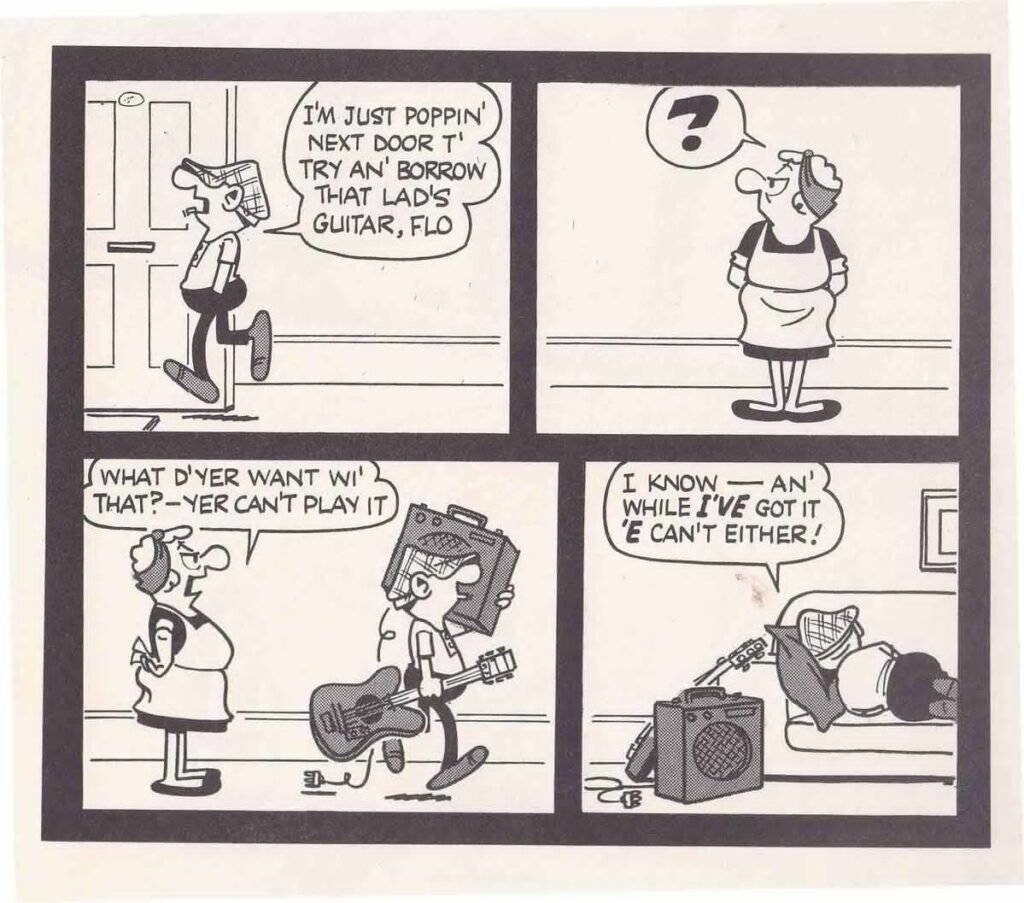
If you think of the classic Andy Capp image, you probably picture him leaning against the bar, pint in one hand, and a lit cigarette in the other. For the first 26 years of the strip, that cigarette was as much a part of his character as his flat cap. It was a visual shortcut that told readers everything they needed to know about his rough-and-tumble, unconcerned attitude . It was simply a product of its time, a reflection of an era when smoking was widely accepted and even glamorized in popular media .
However, by the early 1980s, public attitudes toward smoking had begun to change dramatically. As health reports piled up, smoking became less of a casual habit and more of a public health concern. So, in 1983, something remarkable happened: Andy Capp quit smoking. Many readers at the time assumed the change was forced upon the strip by “political correctness” or pressure from newspaper editors worried about glorifying tobacco .
But the real reason was much more personal and heartfelt. Reg Smythe, the man who drew Andy, was a heavy smoker himself. When he was diagnosed with lung cancer, he made the difficult decision to quit. As Fergus McKenna, a syndication head, later explained, Smythe felt that if he couldn’t smoke, then his famous creation shouldn’t be allowed to, either . It was a deeply human moment where the creator’s real-life struggle directly shaped the fictional world of his character, proving that even the most stubborn comic figures can change .
From Rolling Pins to Relationship Advice
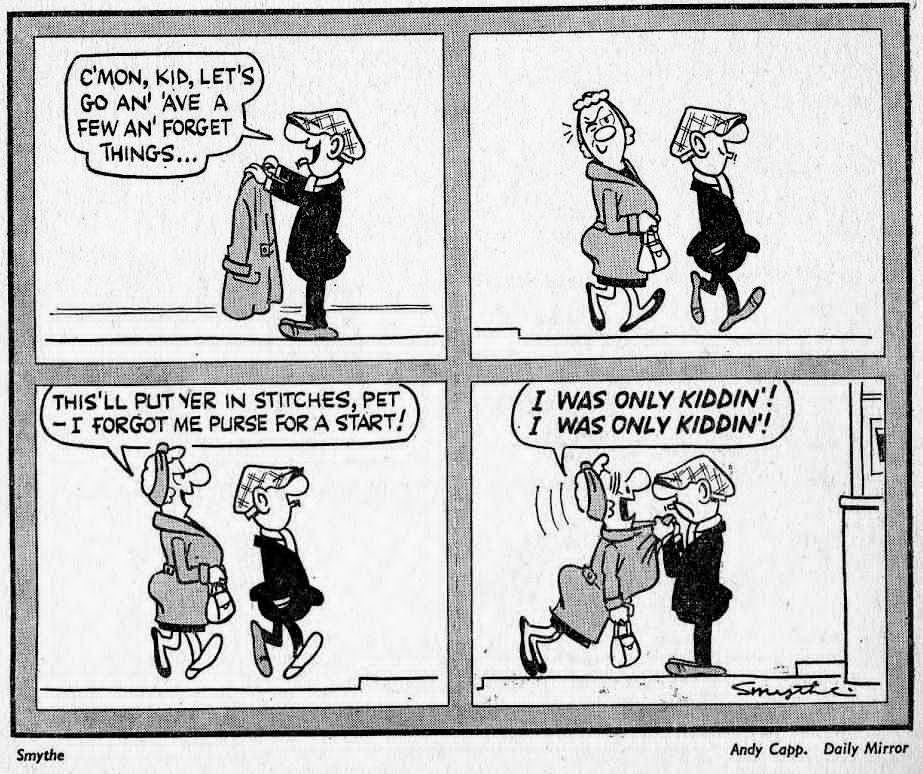
Perhaps the most significant evolution in Andy Capp’s humor has been in his relationship with his wife, Florrie, or Flo. In the early days, their marriage was a comedic battlefield. The humor was slapstick and rough, often featuring Flo hitting Andy over the head with a rolling pin when he stumbled home drunk, or Andy chasing her out of the house in return . While always drawn in a cartoonish and stylized way, this portrayal of domestic strife started to feel less funny and more uncomfortable as society’s understanding of domestic violence grew .
Readers and critics began to speak up. Letters to editors pointed out that the strip seemed to make light of spousal abuse and demean women, painting Flo as a mere tool for Andy’s lazy lifestyle . One frustrated reader wrote that the strip was nothing more than a “daily dosage of disparaging remarks that demoralize and demean women” . The creators listened.
Instead of simply pretending the conflict didn’t exist, the strip took a brilliant and unexpected turn. Andy and Flo didn’t stop fighting, but they changed the venue. They started going to marriage counseling . This shift allowed the humor to evolve from physical slapstick to witty, character-driven observations about the frustrations of a long-term marriage. It was a smart way to acknowledge changing social norms while keeping the core of the characters intact. They are still the same bickering couple, but now they have a mediator .
Growing Up with the Times
The changes in Andy’s habits and his marriage point to a larger truth about long-running comic strips: they have to evolve to survive. Andy Capp began as a cheeky reflection of a specific time and place in Northern England, a lovable anti-hero who defied the stuffy conventions of society . His lack of ambition and fondness for the pub were the punchlines. But as the decades rolled on, the strip’s writers—first Reg Smythe, and after his death in 1998, talented teams like Roger Kettle and Roger Mahoney—faced the challenge of keeping the character relevant .
They managed it by subtly shifting the target of the jokes. Instead of laughing at Andy’s worst behaviors, we now often laugh with the strip as it gently points out his flaws. The humor is less about the shock of his laziness and more about the relatable, everyday struggles of a couple who have been together forever. The introduction of the marriage counselor, for instance, is a clever nod to modern life that Smythe himself reportedly enjoyed .
Even today, with Andy Capp still running in newspapers worldwide, the character remains recognizable. A statue of him was even unveiled in his hometown of Hartlepool in 2007, cementing his place in cultural history . He may have lost the cigarette and gained a therapist, but he’s still Andy—the man who would rather nap on the couch than do just about anything else .
Conclusion
The journey of Andy Capp from a smoking, fighting, pub-crawling rogue to a non-smoking, counsel-seeking husband is a fascinating case study in how comedy adapts. The changes weren’t just about censorship or being “politically correct.” In the case of the cigarettes, it was a deeply personal decision by his creator . In the case of his marriage, it was a necessary evolution to ensure the humor stayed funny and didn’t become hurtful or outdated .
By allowing Andy and Flo to grow (even just a little bit), the strip has secured its place in the funny pages for generations. It proves that you don’t have to completely change a character to stay relevant; sometimes, you just need to help them find a new way to be themselves. Andy Capp may have cleaned up his act in some ways, but his heart—and his love for a cold pint—remains perfectly, wonderfully unchanged