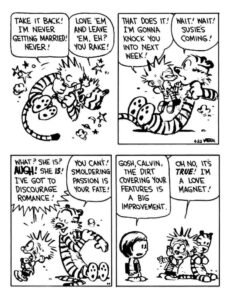
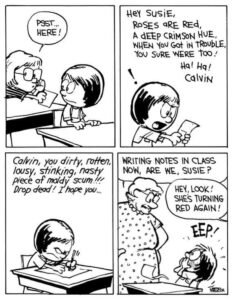
For those of us who grew up between the 1980s and the mid-90s, the funny pages weren’t complete without a glimpse of a spiky-haired six-year-old and his stuffed tiger. Even though the last original strip ran in 1995, the wisdom of Calvin and Hobbes continues to resonate with new generations. Created by the reclusive genius Bill Watterson, this comic strip was never just about a boy and his pet. It was a masterclass in philosophy, a sharp critique of society, and most importantly, a guide on how to view the world through a lens of wonder.
At its core, the strip taught us that reality isn’t as fixed as we think it is. It encouraged us to find magic in the mundane, to question authority with wit, and to hold onto our imagination even as we get older. By looking at life through Calvin’s eyes and listening to Hobbes’ thoughtful responses, we learned to see our own world a little differently .
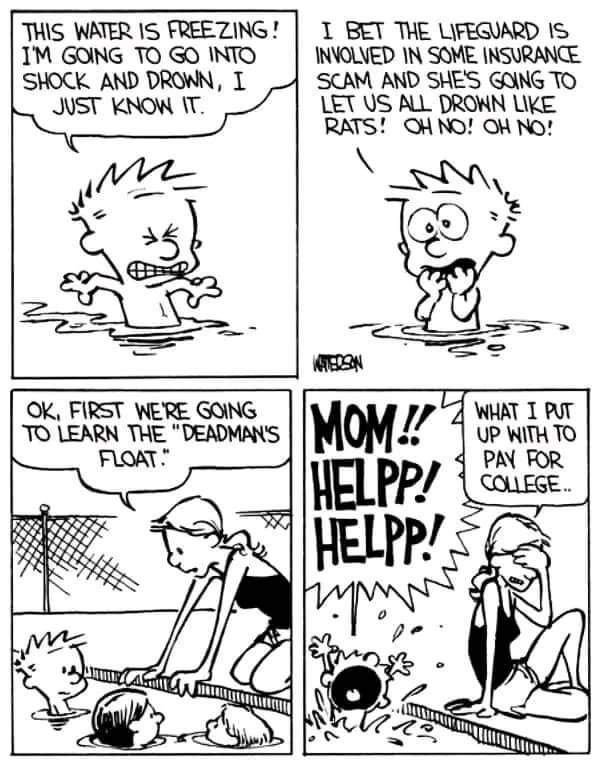
10+ Calvin and Hobbes Comics
Image Credit: Pintrest.com
#1
#2
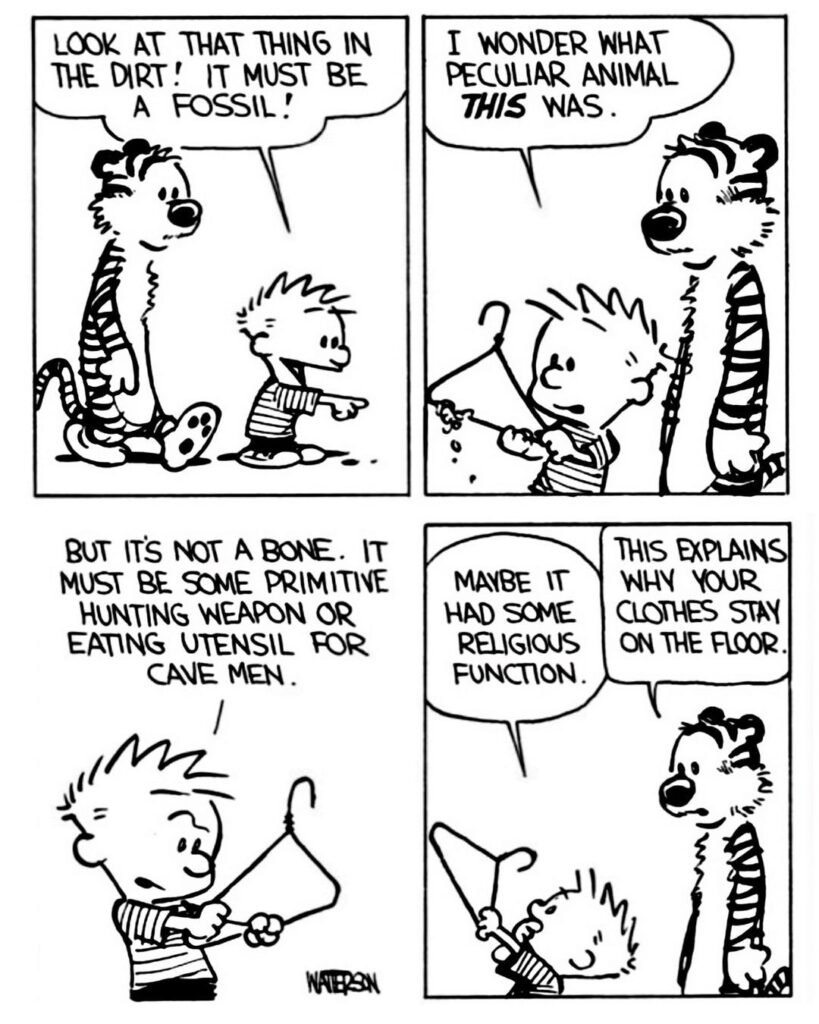
#3
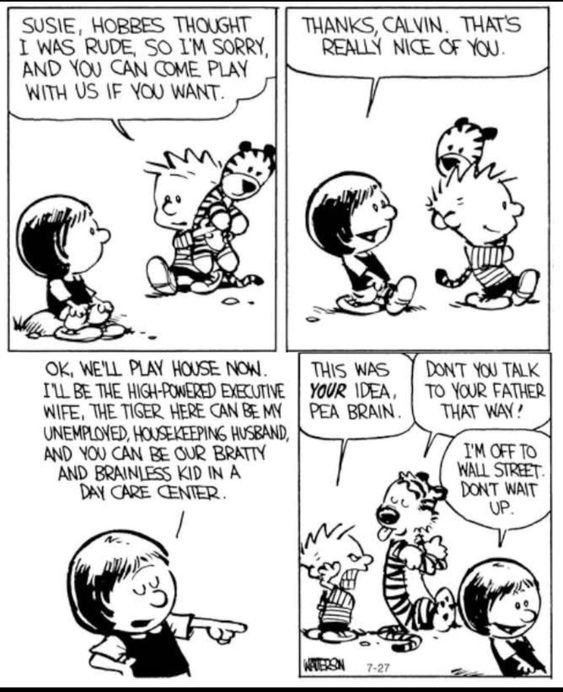
#4
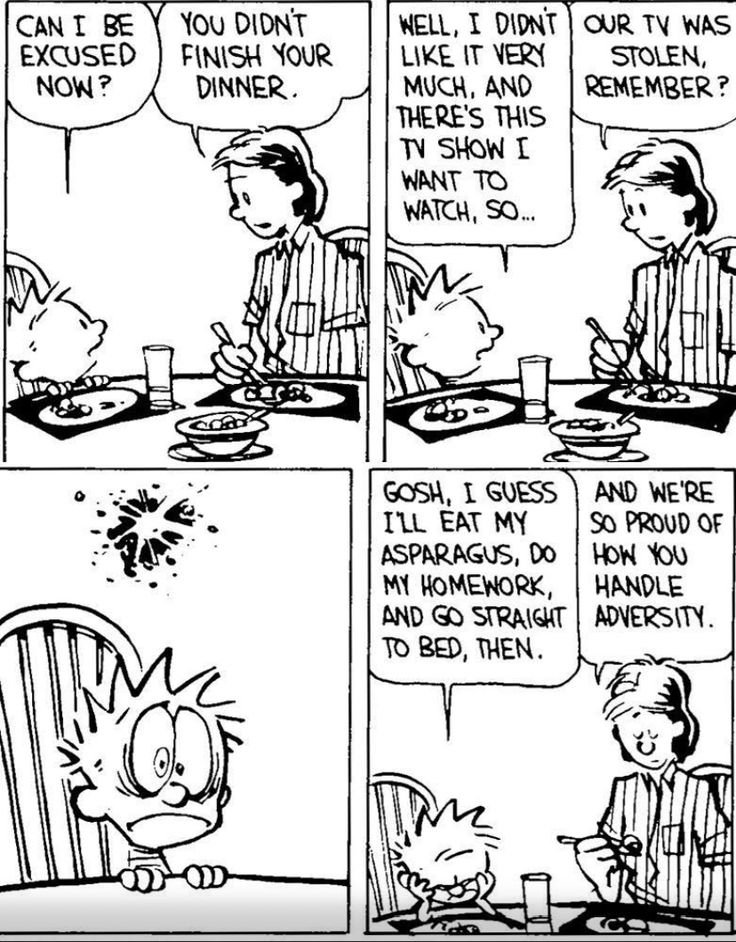
#5
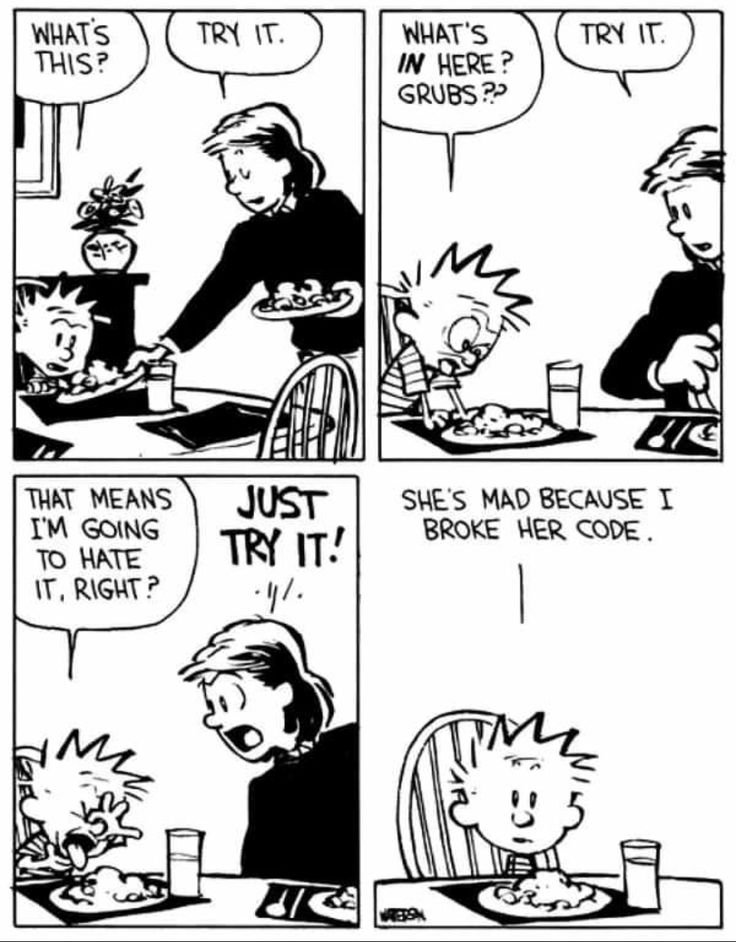
#6
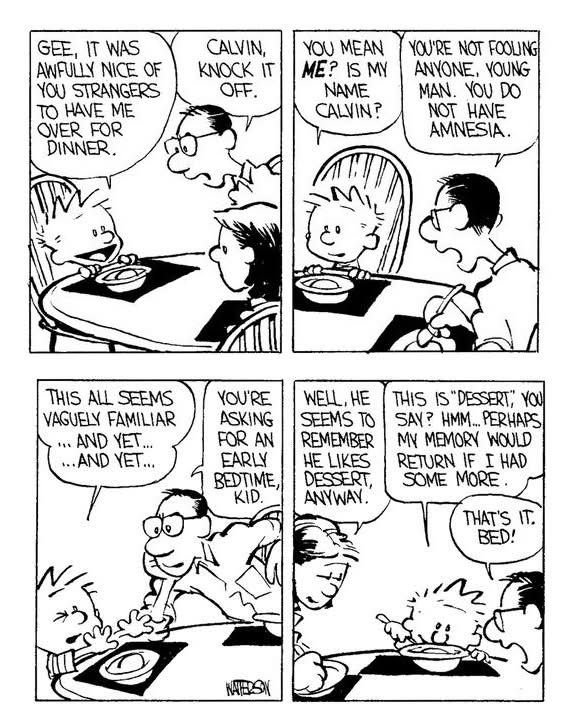
#7
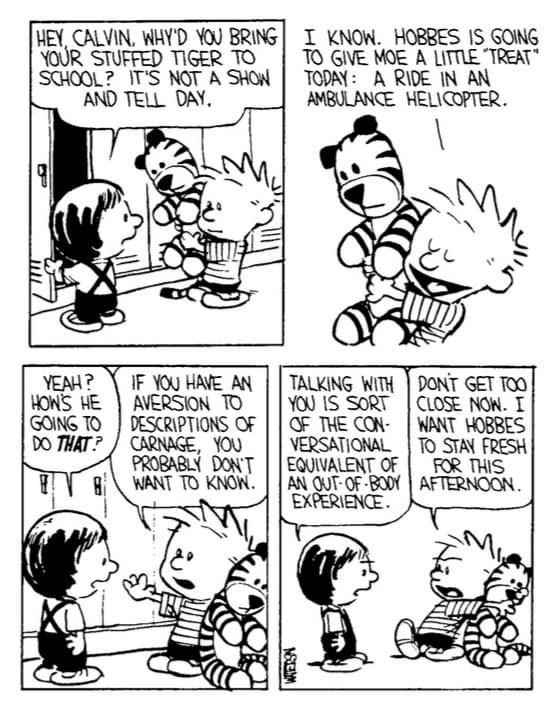
#8
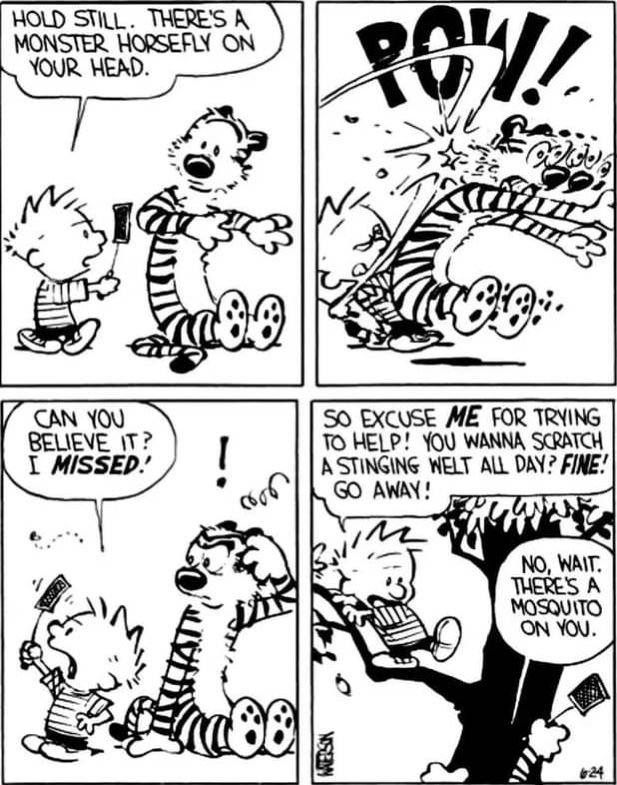
#9
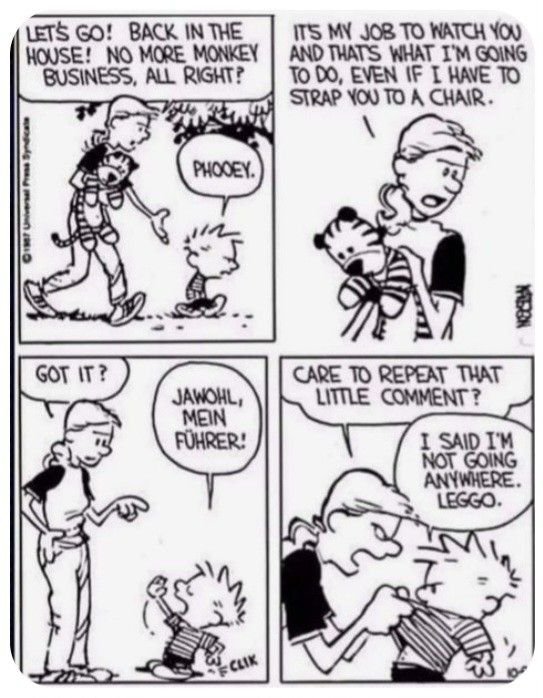
#10
The Power of Imagination: Turning Mundanity into Magic
The most obvious way Calvin and Hobbes changed our perspective was through the sheer power of imagination. To Calvin, a cardboard box was never just trash waiting to be recycled; it was a transmogrifier, a time machine, or a duplicator. A trip to the bathtub was a deep-sea diving adventure, and a simple walk in the woods became a safari through a Jurassic landscape. Watterson showed us that the world is only as boring as we allow it to be .
This perspective was a direct challenge to the “grown-up” way of doing things. Adults look at a snowy hill and see a hazard or a chore. Calvin and Hobbes look at that same hill and see the perfect place for a sled that is probably going to fall apart. They taught us that your equipment doesn’t have to be perfect to have the perfect time. It’s about the joy of the moment, the rush of the cold air, and the company of your best friend .
Furthermore, Watterson brilliantly blurred the lines of reality to make us question our own perceptions. To everyone else in the strip, Hobbes is just a lifeless stuffed animal sitting on a shelf. But the moment the panel focuses on Calvin, Hobbes is a larger-than-life, witty companion. This wasn’t just a visual gag; it was a philosophical statement. Watterson once explained that he was inviting the reader to decide which version of reality was “truer” . This ambiguity taught us that there is more than one way to look at any situation, and that just because something isn’t “real” to everyone, doesn’t mean it isn’t valuable.
Philosophical Wisdom Disguised as Child’s Play
It’s easy to forget that a six-year-old spoke some of the most profound lines in comic strip history. Calvin’s musings, often triggered by a bad grade or a rainy day, delved deep into existentialism. He pondered the meaning of life, the vastness of the universe, and our tiny place within it. In one iconic strip, he screams “I’m significant!” only to follow it up with “…screamed the dust speck,” perfectly capturing the human struggle to feel important in an infinite cosmos .
Hobbes often served as the grounding force to Calvin’s spiraling thoughts, offering simple yet profound clarity. When Calvin wondered why humans evolved to appreciate nonsense and absurdity, Hobbes gently suggested it might be because “if we couldn’t laugh at things that don’t make sense, we couldn’t react to a lot of life” . This taught readers that humor isn’t just a distraction; it is a coping mechanism for the chaos of existence. They helped us understand that it’s okay to not have all the answers, and that sometimes, the best response to life’s confusion is a shared laugh with a friend.
The strip also tackled the pressures of modern life and education. Calvin’s famous rant about memorizing information just long enough to pass a test, only to forget it forever, is a critique that feels more relevant today than ever . He exposed the absurdity of the system, forcing us to question whether we were learning or simply jumping through hoops. Through his rebellious attitude, he gave us permission to question whether the rat race we were being trained for was actually worth running.
The Gentle Art of Social and Cultural Critique
Bill Watterson used his platform to gently (and sometimes not so gently) critique the world adults had built. Through Calvin’s innocent observations, he pointed out the ridiculousness of consumerism, the shallowness of the news media, and the destruction of the natural world. When Calvin demands a logo t-shirt because it shows he “paid the company to advertise their products,” he highlights how we voluntarily turn ourselves into walking billboards just to feel cool .
The strip also fostered a deep love and respect for nature. The two friends spent countless afternoons just exploring the woods, lying in the grass watching clouds, or marveling at a beautiful sunset. In an age of increasing screen time, their adventures remind us of the spiritual renewal that comes from unspoiled beauty. Calvin once noted that society understands the value of timber and minerals but forgets the value of “solitude and spiritual renewal” . This perspective encourages us to value experiences over possessions and to protect the quiet places that feed our souls.
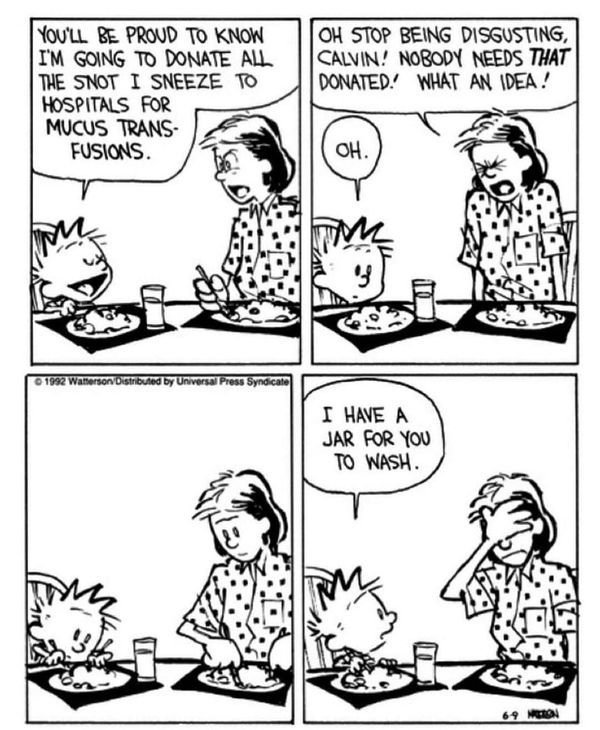
Moreover, the dynamic between Calvin and his parents offered a two-sided view of family life. While Calvin saw his dad as a tormentor who forced him to eat vegetables, the readers could see the love and patience behind the parenting. These interactions taught us empathy. As kids, we related to Calvin’s frustration; as we grew older, we started to sympathize with his parents, realizing that the “rules” weren’t meant to ruin fun, but to guide us safely through life .
The Enduring Value of Friendship
Finally, Calvin and Hobbes taught us how to see friendship. Hobbes is not just a sidekick; he is a conscience, a foil, and a loyal companion. He checks Calvin’s ego and pulls him back from the edge of his worst ideas, but he never judges him for having them. He joins in on every wild scheme, from Calvinball—a game with no set rules except that it can never be played the same way twice—to the elaborate snowman sculptures that met grizzly ends .
This friendship was a model for what true connection looks like. Hobbes accepts Calvin exactly as he is: selfish, brilliant, lazy, and imaginative. In return, Calvin’s world is infinitely richer for having Hobbes in it. The final strip, where they sled into the snow-covered woods after declaring it a “magical world,” is a powerful reminder to cherish those connections. It suggests that while the world might try to make you grow up, your perspective on life—especially if shared with someone you love—can remain forever young .
In the end, Calvin and Hobbes was more than a comic. It was a gentle push to look at the world with fresh eyes. It reminded us that maturity doesn’t have to mean losing our sense of wonder, and that the most profound truths are often found in the simplest moments. So, the next time you see a snow-covered hill or a cardboard box, remember to ask yourself: “What would Calvin do?”