For over sixty years, the gaunt, perpetually hungover figure of Andy Capp has been a staple of newspaper funny pages around the world. With his flat cap permanently pulled over his eyes and a cigarette (once) dangling from his lips, this workshy layabout from Hartlepool, England, became a global icon . He was the anti-hero who did nothing, drank too much, and still managed to make millions of readers chuckle every day. But the world has changed a lot since 1957. Today, we have a much sharper awareness of social issues, and humor that was once considered harmless fun is now often viewed through a more critical lens. This brings us to a fair question: in an age of political correctness, does Andy Capp still have a place in our newspapers, and more importantly, is he still funny?
The debate isn’t new. For decades, Andy has been a lightning rod for controversy, accused of glorifying everything from drunkenness to domestic strife. His fans, however, see him not as a role model, but as a timeless symbol of rebellion, a reminder of a certain kind of humor that doesn’t take itself too seriously. As we look at his journey from a 1950s comic panel to a modern-day survivor, we have to separate the character from his creator’s intentions and understand that his survival depends on his ability to adapt without losing his soul. The question isn’t just about whether his jokes land, but whether we, as an audience, are still willing to laugh at a character who embodies so many of the things we now publicly condemn .
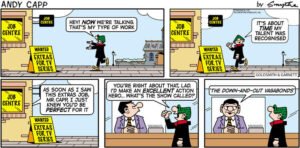
10+ Andy Capp comics
Image Credit : Reg Smythe
#1
#2
#3
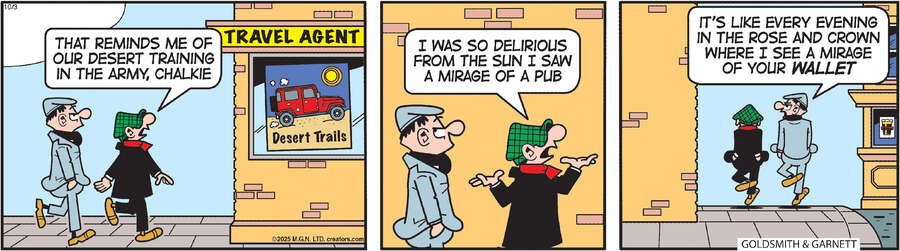
#4
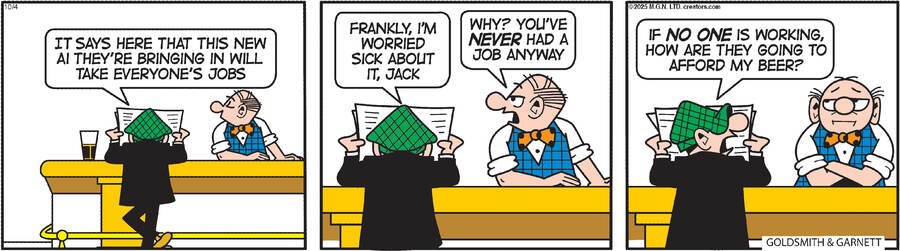
#5
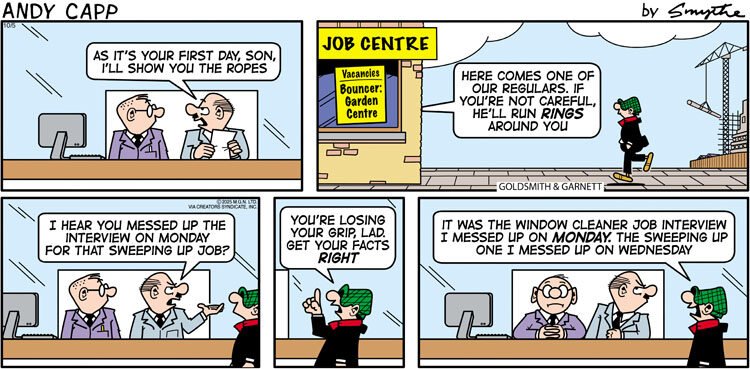
#6
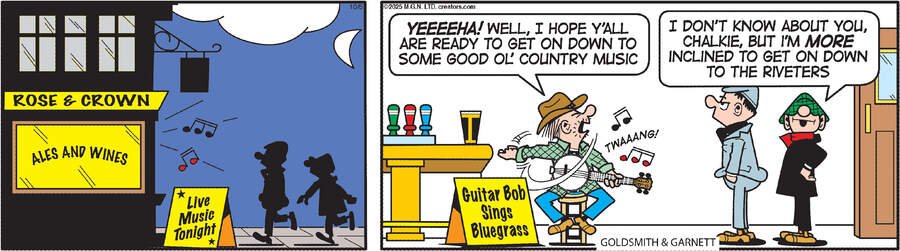
#7
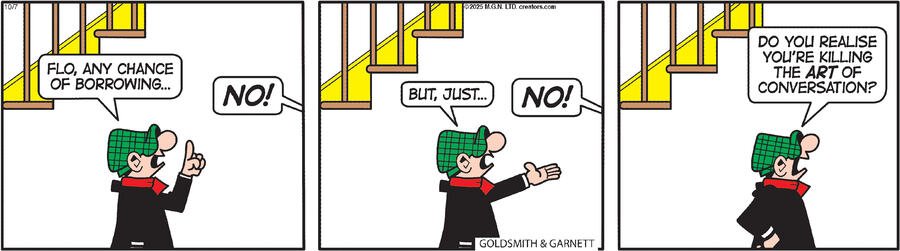
#8
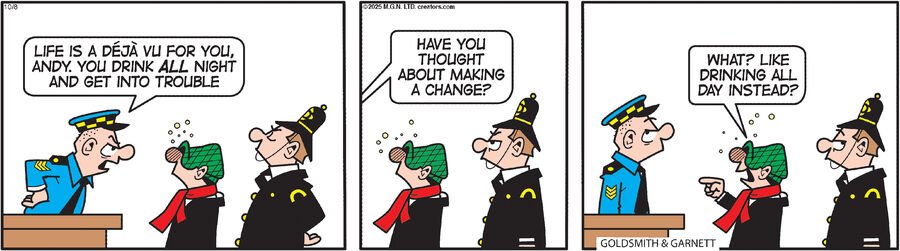
#9
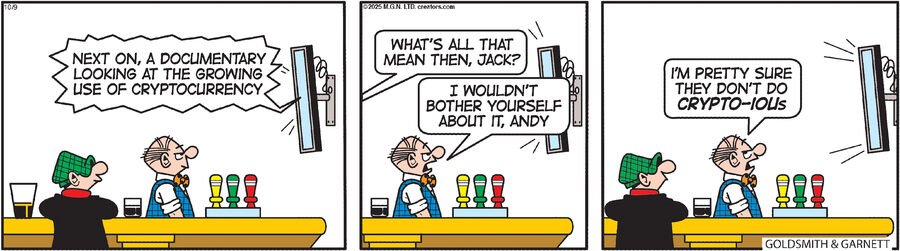
#10
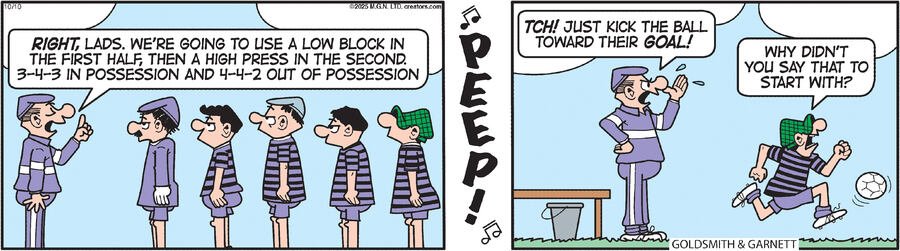
The Unapologetic World of Andy Capp
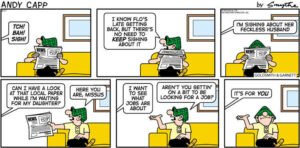
To understand the controversy, you first have to understand Andy’s world. Andy Capp is a man who has turned idleness into an art form. He doesn’t work, has no intention of working, and spends his days betting on horses, playing snooker with his mate Chalkie, and propping up the bar at the local pub . His life is a simple cycle of avoiding the rent collector, scrounging for beer money, and eventually stumbling home to his long-suffering wife, Flo. The strip’s title itself is a pun on the local pronunciation of “handicap,” a nod to his limited view of the world, both literally and figuratively, with his cap covering his eyes .
At the center of this world is his tumultuous relationship with Flo. In the early decades, this was often depicted with startling physical violence. Flo would greet Andy with a rolling pin, and Andy would happily clobber her back. This was presented as slapstick, a comical part of their daily routine . It’s a stark reminder of how different social norms were in the post-war era. Alongside the violence, Andy was almost always pictured with a cigarette, a visual shorthand for his casual, chain-smoking lifestyle. For millions of readers, these traits weren’t offensive; they were just part of the character’s flawed, recognisable charm. He was the ultimate “rotter,” a man you loved to hate, but whose escapades provided a reliable daily dose of working-class humor .
When Political Correctness Came Knocking
As society evolved, so did its tolerance for certain kinds of humor. The comic strip, once a sacred space for mischief, began to face the “sensitivity police,” as one 1996 op-ed bitterly complained . Andy Capp, with his wife-beating and chain-smoking, became a prime target. The first major sign of change came in 1983 when Andy famously quit smoking. Readers were furious, blaming political correctness for forcing the character to ditch his trademark cigarette. However, the real reason was surprisingly personal. Reg Smythe, the creator, had given up smoking himself and famously declared, “There was no way Andy was going to carry on enjoying cigarettes when Reg couldn’t” . It was a rare moment where the creator’s life directly mirrored his creation’s, but the public perception was that the strip was being sanitized.
The bigger issue, however, was the violence. Looking back at early strips can be a jarring experience. Experts who have studied the archives note that a significant number of the early cartoons contain examples of domestic violence . Smythe himself later expressed regret, admitting his character was “too savage, a proper bully” . As charities like Women’s Aid grew in prominence and public awareness of domestic abuse increased, hitting your spouse for laughs simply stopped being acceptable . The strip had to change. The physical fights between Andy and Flo have largely disappeared, replaced by verbal sparring. In a modern twist, the couple has even been shown attending marriage counseling, a clear sign that the strip is trying to reflect a more modern understanding of relationships .
The Enduring Appeal of a Lovable Loser
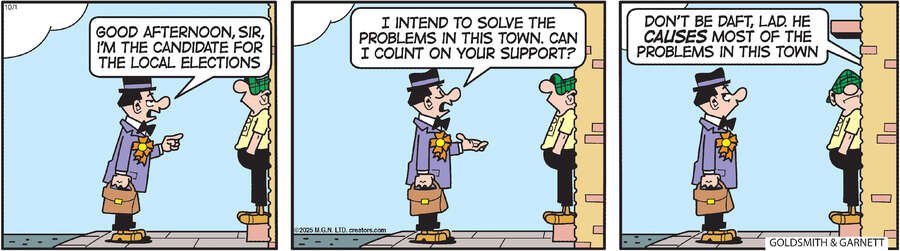
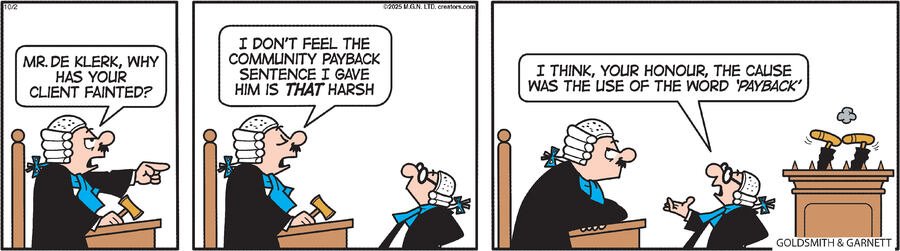
So, if you remove the cigarettes and the violence, what’s left? Surprisingly, quite a lot. The core of Andy Capp’s humor was never really about the smoking or the hitting; it was about his unwavering, almost heroic, resistance to responsibility. He is the ultimate armchair rebel. In a world that demands we be productive, polite, and ambitious, Andy does absolutely nothing, and he does it with a sense of pride. This is a huge part of his universal appeal. As one expert noted, his charm lies in the fact that he “does things that people don’t want to admit they do, like drinking too much, burping and sleeping it off on the sofa” .
Furthermore, Andy is not a one-dimensional monster. Despite his laziness, he has a soft spot for Flo, always calling her “pet,” and he is fiercely protective of her. If anyone else dares to be rude to his wife, Andy is quick to “bop” them . This complexity makes him more than just a bully; it makes him human. He is a paradox: a neglectful husband who is also fiercely loyal, a freeloader who is also a local character. This is why he resonated so deeply, not just in the UK, but across the world in over 50 countries . From Germany to Russia, people recognized a bit of Andy in the bloke down the street, or perhaps, a tiny bit in themselves. He represents a freedom from social expectations that many people secretly fantasize about .
Can a Statue Survive in a Modern World?
The debate over Andy Capp’s place in modern culture reached a symbolic head in the early 2000s. In Hartlepool, the cartoonist’s hometown, a local councillor proposed erecting a statue to honor Reg Smythe. Despite an artist offering to work for free, businesses were reluctant to donate to the £30,000 fund. The reason? They were afraid of being associated with a character seen as an outdated, “male chauvinistic” stereotype who beats his wife . It was a real-world example of the strip’s central dilemma: could a town celebrate a creator by immortalizing a character whose values they no longer wanted to promote?
The campaigners argued that people were missing the point. The statue was meant to honor Smythe, a local boy who made good, not necessarily to celebrate every aspect of Andy’s behavior . Fortunately, common sense and affection for the character won out. In 2007, a bronze statue of Andy was finally unveiled in Hartlepool by Smythe’s widow. Interestingly, the statue shows Andy in his classic laid-back pose, but without the cigarette that defined his look for decades . It stands as a perfect metaphor for the strip itself: instantly recognizable, beloved by the community, but subtly adapted for a new era. It proves that you can acknowledge the past without being trapped by it.
Conclusion: The Verdict on Andy Capp’s Humor
So, is Andy Capp still funny? The answer is yes, but perhaps for different reasons than before. The humor has evolved. We are no longer laughing at a man being hit by a rolling pin or a wife being knocked about. Instead, we are laughing at the timeless, ridiculous dance between a man who refuses to grow up and the world that tries, and fails, to change him . The strip has softened its edges, but its heart—or rather, its lack of one—remains the same. Andy is still the man sleeping on the couch while Flo yells from the kitchen, still dodging work, and still scheming for a pint. That dynamic is universal and enduring .
The fact that Andy Capp is still running in newspapers today, more than 65 years after his debut, is a testament to his resilience. He has survived the death of his creator, the shift in social attitudes, and the decline of the printed comic strip . He works because he is a blank slate onto which we project our own frustrations with modern life. In a world of hustle culture and constant connectivity, Andy Capp remains gloriously, offensively unmotivated. And sometimes, that stubborn refusal to conform is exactly what we need to laugh at. He may be politically incorrect, but he is also, in his own strange way, timeless .