When you picture Australia, you likely imagine a large, powerful kangaroo hopping across a wide, sun-baked landscape. These animals are more than just a national symbol; they are fascinating creatures perfectly designed for a challenging life in the wild. While they might look cute and gentle, kangaroos are complex animals with unique behaviors and survival tactics that allow them to thrive in one of the harshest environments on Earth. From the scorching outback to the grassy woodlands, their daily lives are a constant balance between finding food, staying safe, and raising their young.
Understanding how kangaroos live gives us a deeper look into the delicate balance of nature in Australia. Their bodies and habits have evolved in incredible ways to cope with extreme heat, drought, and predators. Whether you are an animal lover or just curious about wildlife, the story of the kangaroo is one of resilience, family, and surprising intelligence. Let’s hop into the wild world of these amazing marsupials and discover what makes them such successful survivors.
10+ Kangaroo pictures
Image Credit : Pintrest.com
#1

#2
#3

#4

#5

#6

#7

#8

#9

#10

The Hopping Marvel: Built for the Australian Landscape
The most striking thing about a kangaroo is the way it moves. While other animals walk or run, kangaroos hop. This isn’t just a quirky trait; it is a highly efficient way to travel long distances in search of food and water . Their powerful hind legs work like giant springs, storing energy with each landing and releasing it to propel them forward. At slower speeds, hopping is actually the most energy-efficient way for them to move, allowing them to cover vast areas of land without getting too tired. When they need to, they can turn on the speed, reaching over 30 miles per hour and covering more than 25 feet in a single bound .
Their long, muscular tail is just as important as their legs. Often mistaken for a balancing tool only, it acts as a fifth limb. When a kangaroo grazes on all fours, its tail supports much of its body weight, allowing it to move its hind legs forward in a coordinated way . It also acts as a counterbalance when they leap and is a crucial prop when they stand up to fight. However, life in the wild isn’t just about moving; it’s also about coping with the weather. When temperatures soar, kangaroos have a clever trick to stay cool: they lick their forearms . The skin there is thin and covers a dense network of blood vessels. As the saliva evaporates, it cools the blood down, which then circulates through the rest of their body, acting like a natural air conditioner .
Life in the Mob: Social Structures and Survival in Numbers
Kangaroos are rarely alone. They live in groups known as mobs, which can range from just a handful of individuals to groups of fifty or more . Living in a mob offers several advantages. With many pairs of eyes watching for danger, it is harder for a predator like a dingo or a wedge-tailed eagle to sneak up on them. If one kangaroo senses a threat, it will often thump its foot on the ground to warn the others, giving the whole mob a chance to escape. This social structure is key to their survival, especially when they are out in the open grazing.
Within the mob, there is a clear social order, usually led by a dominant male. These “boomers” are the largest and strongest members of the group and are responsible for leading the mob and earning the right to mate with the females . This position doesn’t come easily. During the breeding season, males will spar with each other to establish who is the strongest. They stand on their powerful hind legs and use their tails for support, engaging in what looks like a boxing match. They grapple, punch, and kick at each other until one gives up . These fights are usually more about ritual and strength than causing serious injury, but they determine who gets to pass on his genes to the next generation.
The Secret of the Pouch: A Remarkable Journey to Life
One of the most captivating facts about kangaroos is how they raise their babies, called joeys. A female kangaroo is almost always in a state of motherhood in some form. The entire process is a marvel of nature. The joey is born after a very short pregnancy of only about 30 days . At this stage, it is incredibly tiny—smaller than a grape—blind, and hairless. Using its well-developed front claws, the newborn must instinctively make an incredible journey, climbing through its mother’s fur from the birth canal to the safety of her pouch .
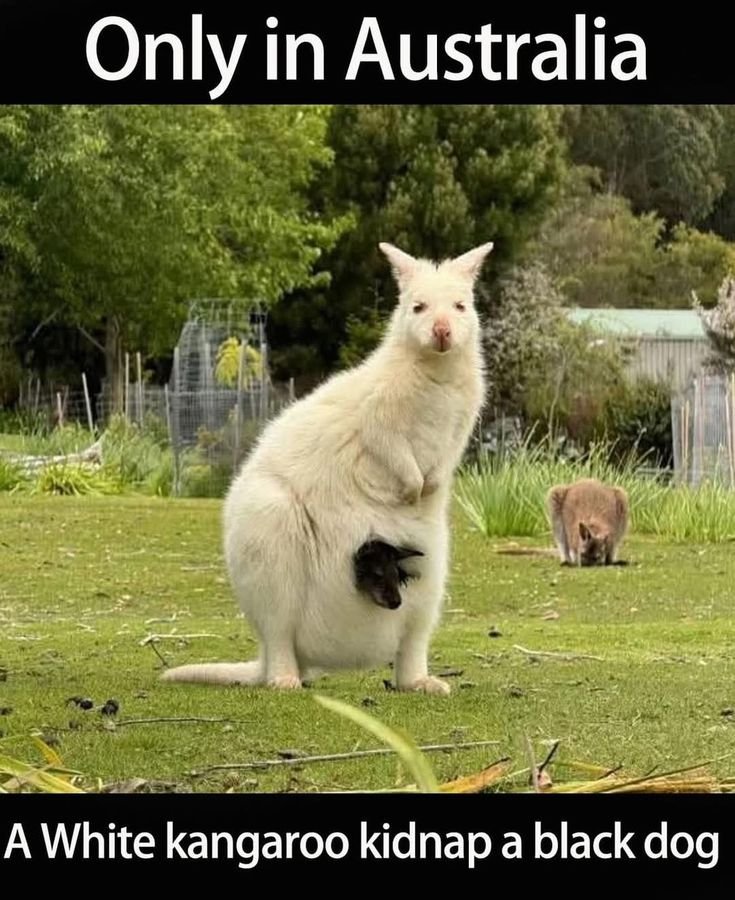
Once inside, the joey attaches itself to a teat, which swells in its mouth to keep it securely in place. Here, it will continue to grow and develop for several months, completely protected from the outside world. It’s a common sight to see a joey peeking its head out of the pouch, curiously observing its surroundings. Even more amazingly, a mother kangaroo can produce two different types of milk at the same time . She might have a tiny newborn joey attached to one teat inside the pouch and an older joey that still pops its head in for a drink from another teat. Each teat produces milk with the perfect nutritional makeup for the specific age of the joey using it.
What’s on the Menu? The Daily Grind of a Grazer
Kangaroos are strict herbivores, meaning their diet consists entirely of plants. Their menu is mostly made up of grass, but they will also munch on leaves from shrubs and low-hanging trees when they are available . Because their food is tough and fibrous and not very rich in nutrients, they spend a good part of their day grazing, usually in the cooler hours of the night and early morning. During the heat of the day, you will find them resting in the shade to conserve energy and stay cool .
Eating this kind of diet is hard on their teeth. Grinding down tough grass all day slowly wears their molars down. To combat this, kangaroos have a unique dental adaptation. As their back teeth wear out and fall out, new teeth gradually grow in from the front and move forward to take their place, much like a conveyor belt . This ensures they always have sharp teeth to process their food. Their digestive system is also specialized. Like cows and sheep, they have a chambered stomach that ferments the grass, allowing them to break down tough plant material and get the most nutrition possible from a meal that would leave other animals hungry .
Conclusion: The Resilient Spirit of the Aussie Icon
From their energy-saving hop to their clever cooling techniques and incredible reproductive strategies, kangaroos are perfectly tuned to the rhythm of the Australian wild . Their lives are a testament to the power of adaptation. Living in mobs keeps them safe, while their unique bodies allow them to find food and water where few others can. They are not just a tourist attraction; they are a vital part of the ecosystem, shaping the landscape they call home .
Next time you see a picture of a kangaroo standing tall in the sun, you will know there is much more going on beneath the surface. They are survivors, fighters, and devoted parents all rolled into one. By learning about these captivating facts, we can appreciate the incredible wildlife we share our planet with and understand the importance of protecting their habitats for generations to come.