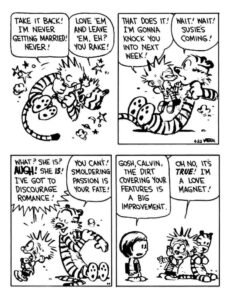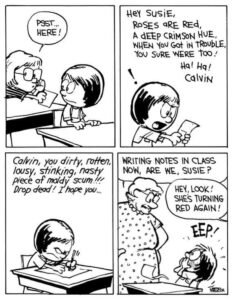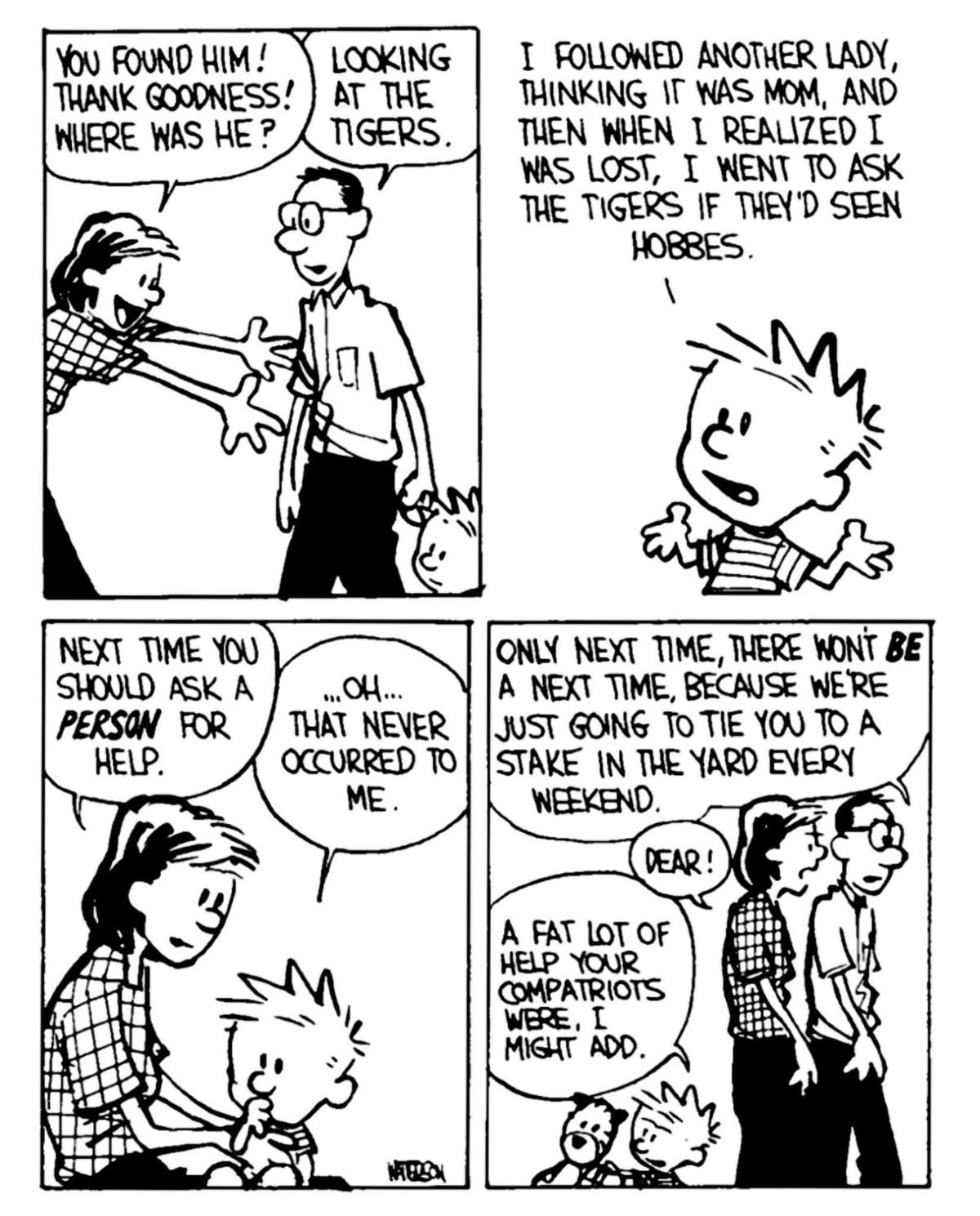
For anyone who grew up between 1985 and 1995, the comic strip section of the newspaper was a sacred space. And sitting at the peak of that space was a mischievous six-year-old with a spiky hair and his faithful tiger. “Calvin and Hobbes” wasn’t just a funny collection of panels; it was a deep dive into what it really means to be a kid. Even though the strip ended decades ago, its portrayal of childhood remains the most accurate and heartfelt version ever put to paper. Bill Watterson didn’t just draw a boy and his toy; he opened a door into the boundless world of a child’s mind, where a cardboard box is never just a box and a best friend is always real, even if no one else can see it .
What made the strip so special was its refusal to talk down to its audience. It mixed wild adventures with quiet moments of wonder, creating a universe that felt both familiar and magical. Whether you were a child reading it for the laughs or an adult reading it for the memories, “Calvin and Hobbes” spoke a universal language. It reminded us that the world is full of possibilities if we only choose to look at it the right way. As Calvin famously said in the final strip, “It’s a magical world, Hobbes, ol’ buddy… Let’s go exploring” .
10+ Calvin and Hobbes
Image Credit: Pintrest.com
#1
#2
#3
#4
#5
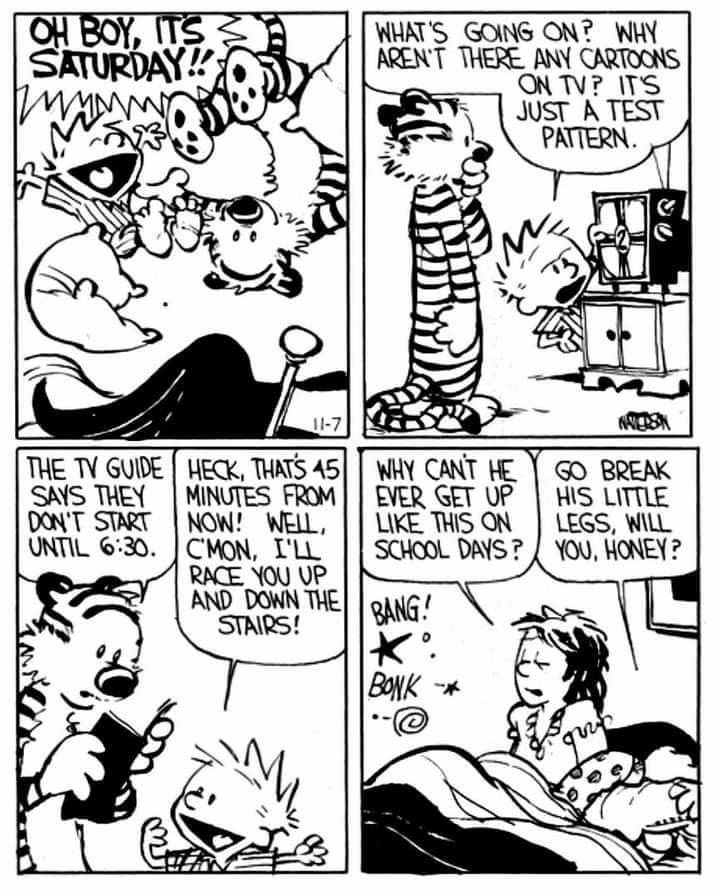
#6
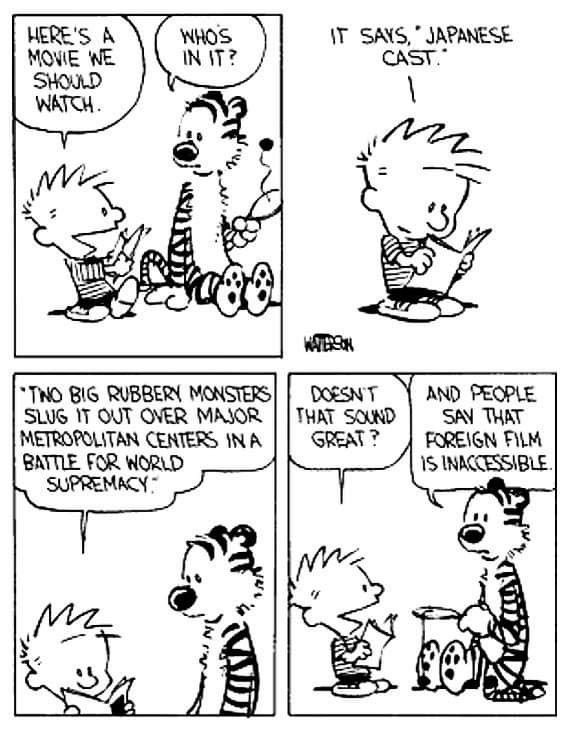
#7
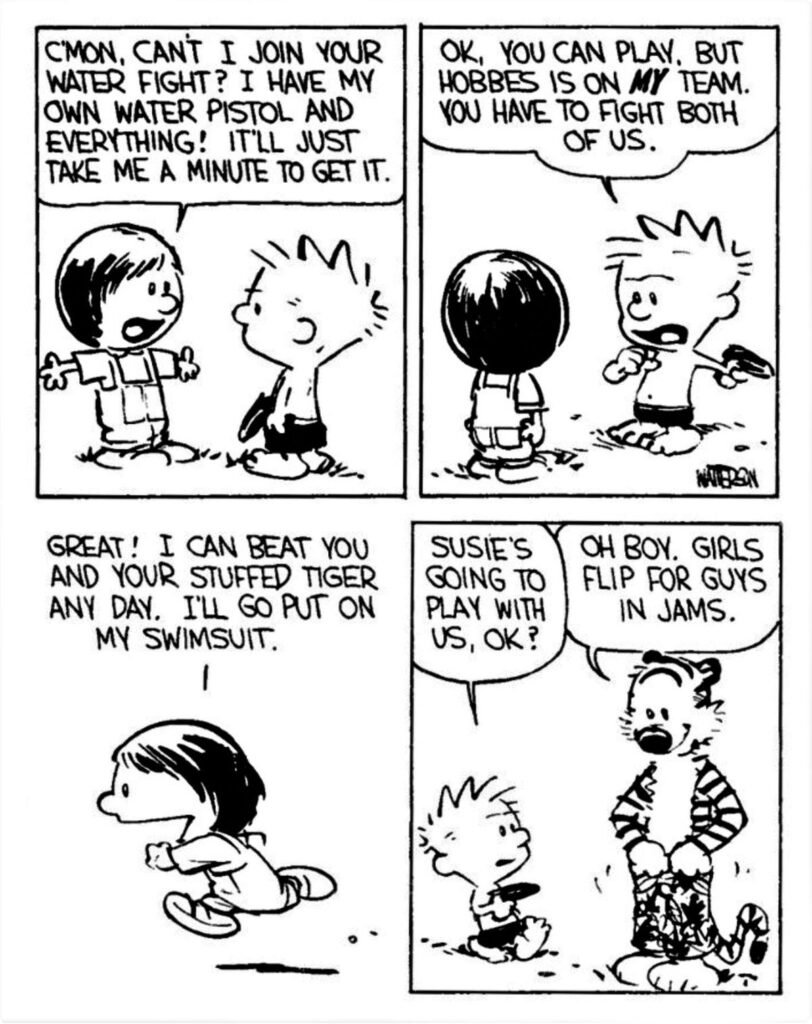
#8
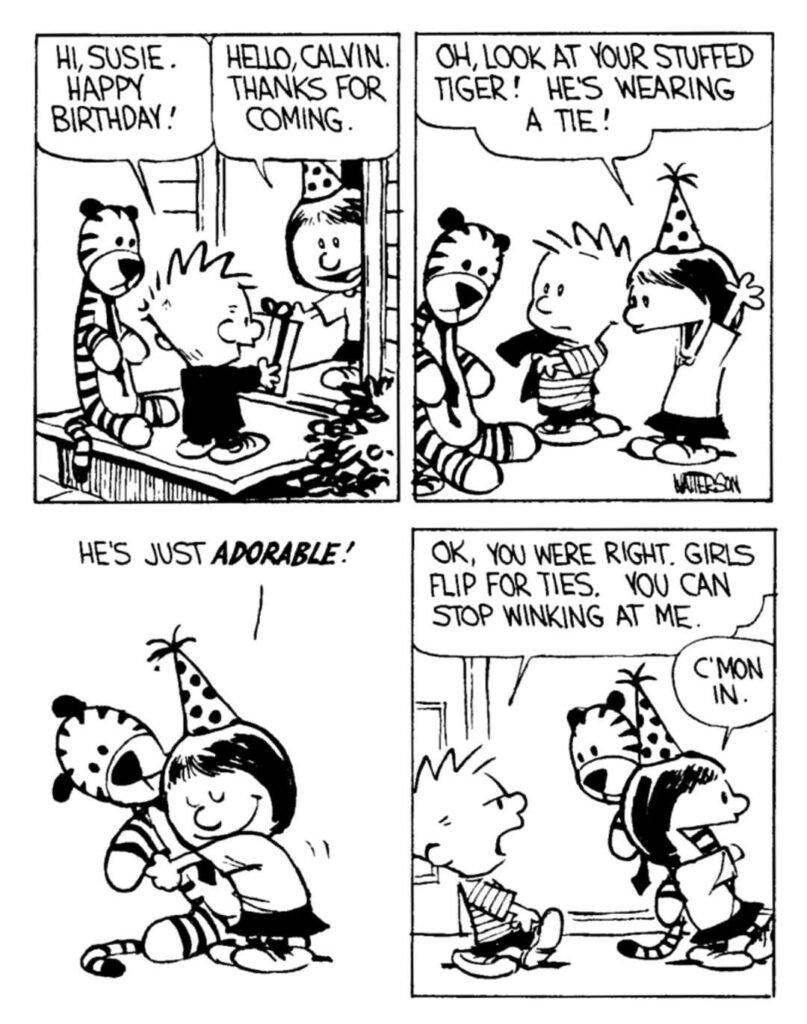
#9
#10
The Reality of a Stuffed Tiger: Seeing the World Through a Child’s Eyes
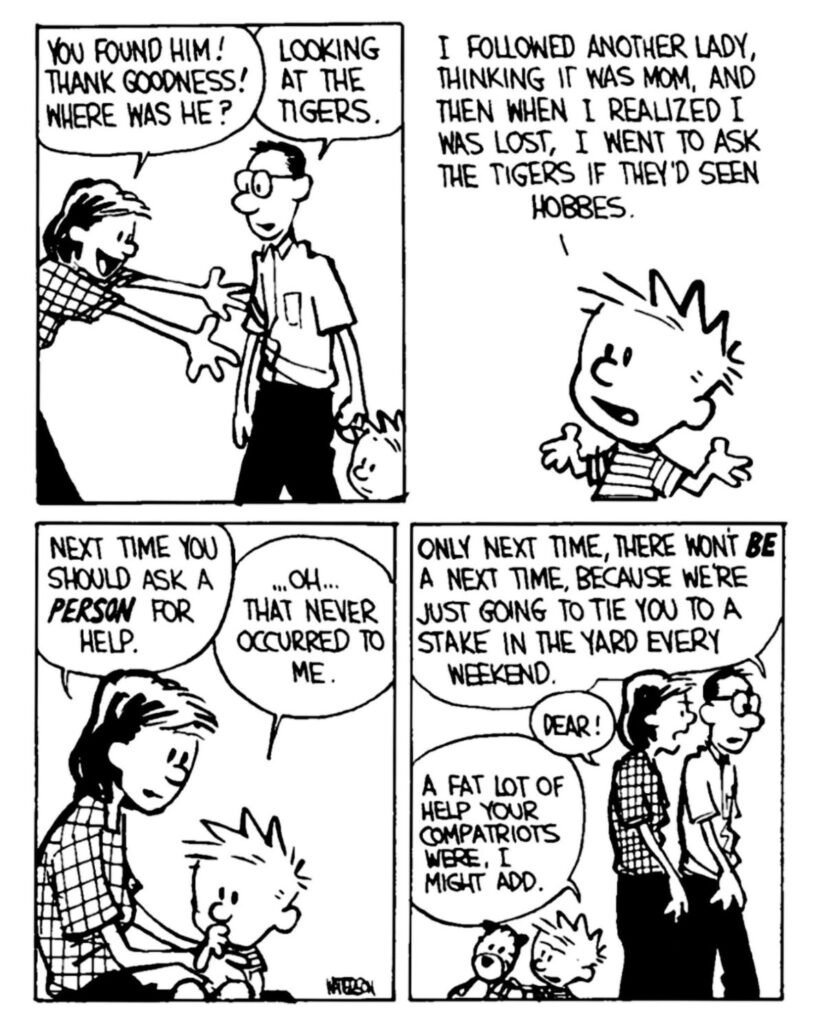
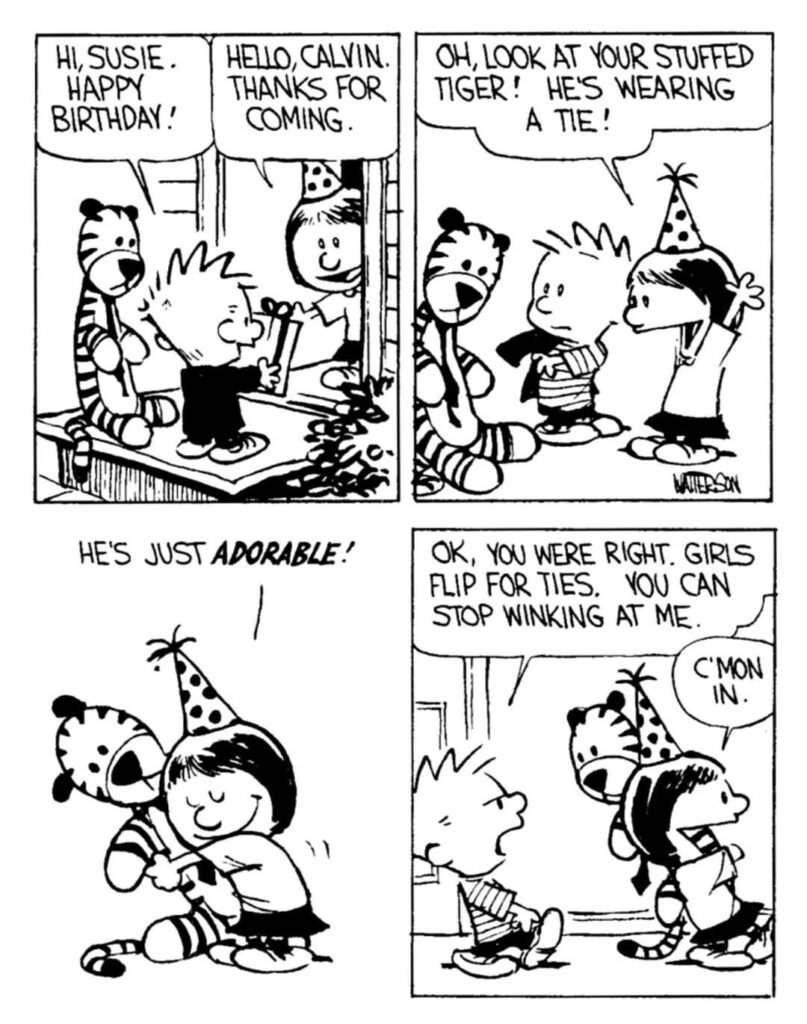
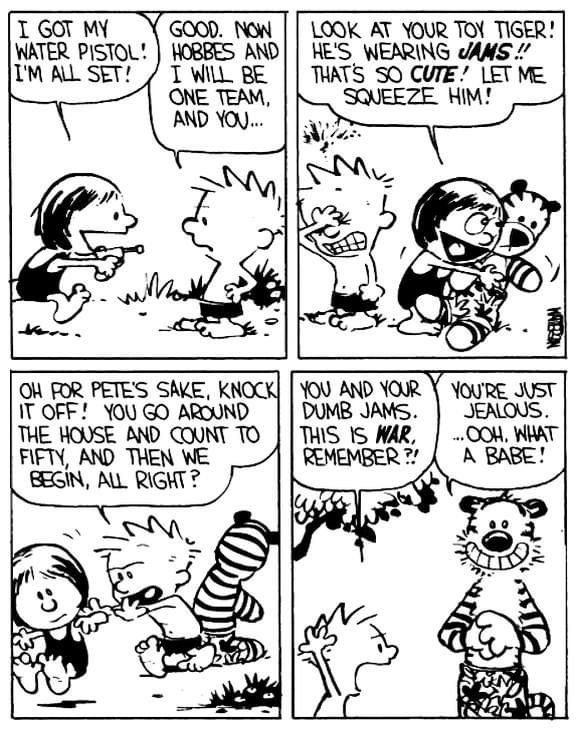
The central magic trick of “Calvin and Hobbes” is the dual reality of Hobbes himself. To Calvin’s parents, the babysitter, and any other adult who walks into the room, Hobbes is simply a stuffed tiger sitting limp on the floor. But to Calvin, and to the reader, Hobbes is a life-size, witty, and thoughtful companion who springs into action the moment they are alone . This isn’t just a gimmick; it is the perfect metaphor for how the imagination of a child actually works. Watterson brilliantly showed two versions of the same world, and both of them are completely true depending on who is watching .
This ambiguity is what captures childhood so perfectly. Every child has had a special toy or an invisible friend that feels completely real. They have conversations with them, go on adventures with them, and blame them when something goes wrong. By showing Hobbes as both a toy and a living creature, Watterson validated that experience. He told young readers that their inner world is just as important as the outside one . It also created a layer of private humor between Calvin and the reader—a secret that the boring adult world just wouldn’t understand.
Because Hobbes exists in this gray area, he also serves as the perfect foil. As Calvin zooms through life on a sugar-fueled rampage, Hobbes is usually there to bring him back down to earth with a dry remark or a gentle reality check. He acts as the conscience that Calvin often tries to ignore . This dynamic reflects the way children learn and process the world—not through lectures from parents, but through play and conversation with their peers. Hobbes is the voice of reason, but because he comes from a friend, the lessons actually stick.
Escaping the Mundane: Turning the Ordinary Into an Epic Adventure
Perhaps the most relatable aspect of Calvin’s childhood is his utter disdain for the boring stuff. Homework, bath time, and school are the enemies of fun, and Calvin fights them with the most powerful weapon he has: his imagination. A walk to the kitchen becomes a safari through the jungles of Africa. A trip to the bathtub is a deep-sea diving adventure. And a boring afternoon at home? That’s the perfect time to become Spaceman Spiff, blasting alien creatures (otherwise known as flies) in the vast expanse of the living room .
Watterson understood that children are not passive consumers of the world; they are active creators of it. When Calvin transforms a cardboard box into a “Transmogrifier” or a time machine, he is demonstrating a fundamental part of childhood . Kids don’t need expensive toys or video games to be entertained. They need the spark of an idea. The strip constantly celebrated this ability to find wonder in the mundane. A snowy hill isn’t just a patch of ice; it’s a portal to gravity-defying speed. A pile of leaves isn’t just yard waste; it’s a dinosaur grave .
This creative energy peaks with the invention of “Calvinball,” the only game that has just one rule: you can never play it the same way twice . It is the ultimate expression of imaginative play. There are no teams, no referees, and no score that makes sense to anyone but the players. In a world that is constantly trying to organize, structure, and standardize childhood, Calvinball stands as a rebellion. It reminds us that the best kind of fun is the kind you make up as you go along, with no goal other than to enjoy the moment with a friend.
Big Questions in a Small World: Philosophy Meets the Sandbox
One of the reasons “Calvin and Hobbes” has aged so well is its surprising depth. For a strip about a six-year-old, it spent a lot of time discussing very grown-up topics. Calvin regularly pondered the nature of existence, the vastness of the universe, and the point of it all. In one famous strip, he screams into the void, “I’m significant!” only to realize he is just a speck of dust in the grand scheme of things . These moments of existential dread are hilarious coming from a kid, but they are also deeply honest.
Watterson used Calvin’s youth as a way to explore philosophy without the pretension. He knew that kids ask the big questions all the time. Why do we have to die? What is the meaning of life? If God made us, who made God? Adults often brush these questions aside, but Calvin faces them head-on, usually with Hobbes by his side to offer a simpler, more comforting perspective . The strip suggests that childhood isn’t just a time of innocence; it’s also a time of intense curiosity about how the world works.
This philosophical bent also extends to a critique of society. Calvin often sees the absurdity in adult behavior. He mocks consumerism by wanting a logo t-shirt just so he can be a walking advertisement . He questions an education system that seems more focused on conformity than on actual learning . And when he sees a forest being cut down for condos, he screams, “Animals can’t afford condos!” . Through Calvin, Watterson held a mirror up to the adult world and showed how silly it often looks from a kid’s perspective. It’s a reminder that growing up doesn’t always mean getting wiser; sometimes it just means accepting the ridiculous.
The Business of Joy: Why Watterson Walked Away
The story of “Calvin and Hobbes” is not just about what happened in the strip, but also what happened because of it. At the height of its fame, Bill Watterson was offered a fortune to license his characters. The world wanted Hobbes dolls, Calvin pee decals for trucks, and Saturday morning cartoons. Most creators would have said yes. Watterson said no, and he kept saying no until the very end . He believed that if Hobbes became a mass-produced doll on every shelf, the magic of the strip would die. The ambiguity of Hobbes’ reality would be solved, and the art would be cheapened.
This decision was a testament to his integrity. He famously said that he didn’t want to run the wheels off the strip until it was a hollow version of itself . In an age of relentless franchising, Watterson’s stand feels almost heroic. He chose the purity of his art over the lure of millions of dollars. This allowed the strip to remain exactly what he intended it to be: a pure expression of childhood joy, untainted by commercial motives. It’s a major reason why the strip still feels so fresh and timeless today .
And then, at the peak of its popularity, he ended it. On December 31, 1995, Calvin and Hobbes went sledding one last time into a pristine, snow-covered landscape. There was no big farewell, no moral lesson, just a shared sense of wonder and possibility . Watterson left the party early, and in doing so, he ensured that his creation would never become stale or tired. He left the characters where they belonged: together, exploring a world of infinite possibility, frozen forever at the perfect age of six .
Conclusion
“Calvin and Hobbes” remains a cultural treasure because it never forgot what it felt like to be young. It captured the confusion, the boredom, the wild joy, and the deep thinking that defines childhood. Through the bond between a reckless boy and his sensible tiger, Bill Watterson gave us a language for imagination. He showed us that growing up doesn’t have to mean giving up on wonder. As long as we can look at a snowy hill and see an adventure, or look at a friend and see a partner in crime, a little bit of Calvin lives in all of us. The strip may be gone from the newspapers, but its invitation remains open: let’s go exploring.