For generations of readers, flipping open the newspaper and finding a single page of four panels meant entering the world of a scruffy man in a flat cap who seemed to do nothing but sleep, drink, and argue with his wife. This man, Andy Capp, became more than just a comic strip; he became a cultural symbol. Since his first appearance in the Daily Mirror on August 5, 1957, Andy has offered a unique window into the British working-class life . Created by the talented Reg Smythe, the character’s name itself is a playful pun on “handicap,” hinting at the many disadvantages his lazy lifestyle brings upon him .
The strip is set in the fictional northern town of Hartlepool, a setting that grounds the humor in a very specific time and place . However, the themes of marriage, money troubles, and the simple desire to avoid work are universal. Andy, with his ever-present cap pulled down over his eyes and a cigarette (or later, just a bare lip) dangling from his mouth, became the lovable rogue that everyone seemed to know. He wasn’t a hero; he was a layabout, but he was our layabout. The humor was dry, physical, and deeply rooted in the everyday struggles of post-war Britain, making it instantly relatable to millions .
What made Andy Capp stand out was its honesty. It didn’t paint a pretty picture of domestic life. Instead, it found the funny side of burnt dinners, unpaid rent, and the constant battle of wits between a husband who wanted to go to the pub and a wife who wanted him to get a job. This gritty realism, mixed with clever wordplay and visual gags, is exactly what defined British humor for the latter half of the 20th century. It was a comedy of situations that were often frustrating, but always familiar .
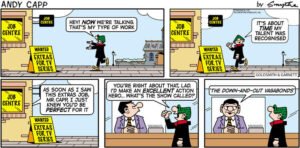
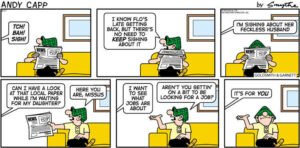
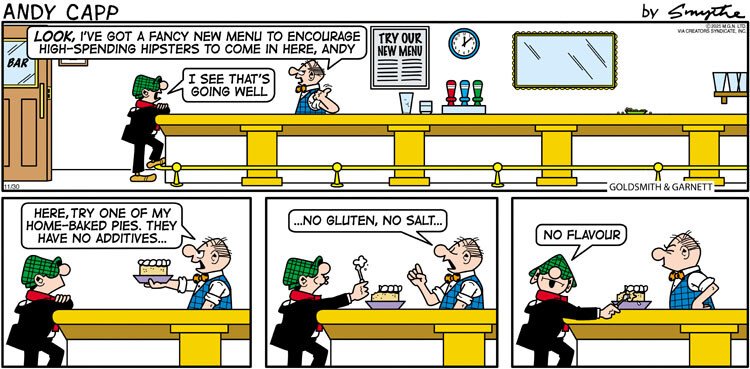
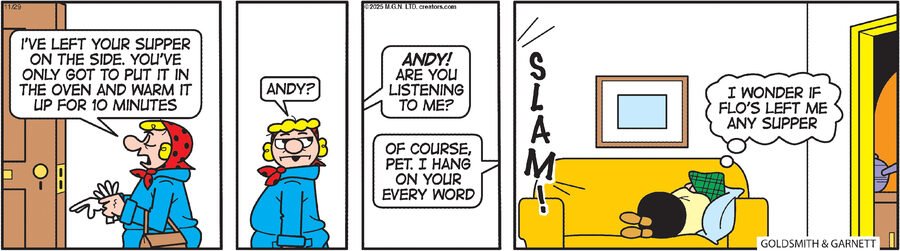
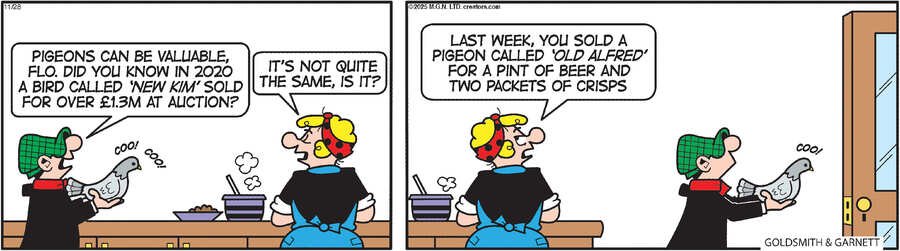
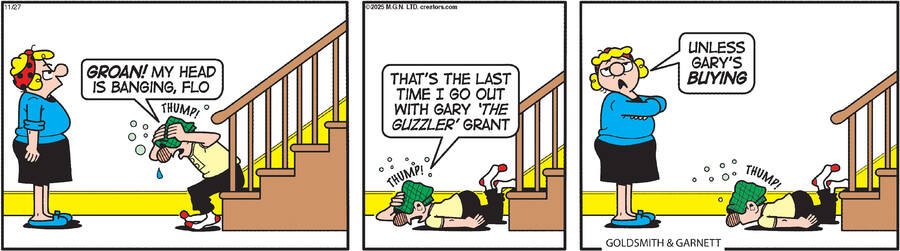
10+ Andy Capp Comics
Image Credit: Reg Smythe
#1
#2
#3
#4
#5
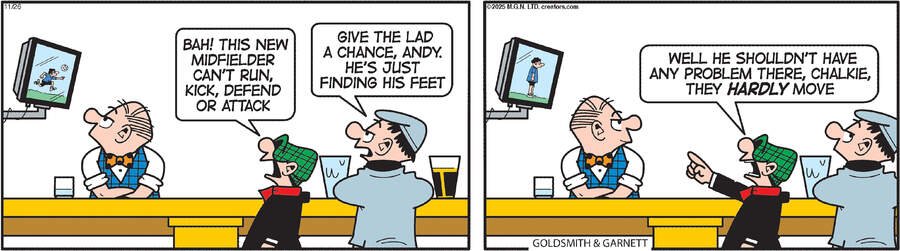
#6
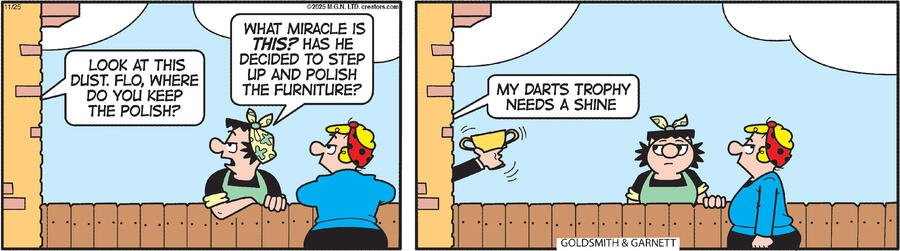
#7
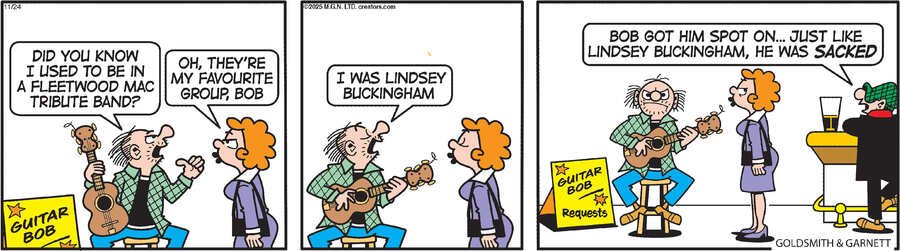
#8
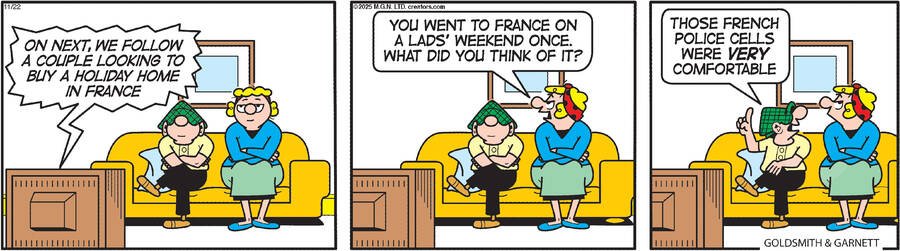
#9
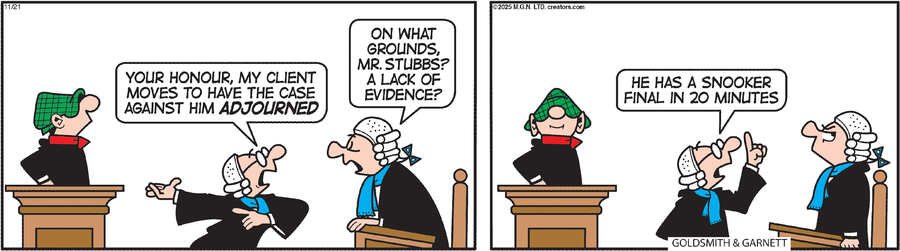
#10
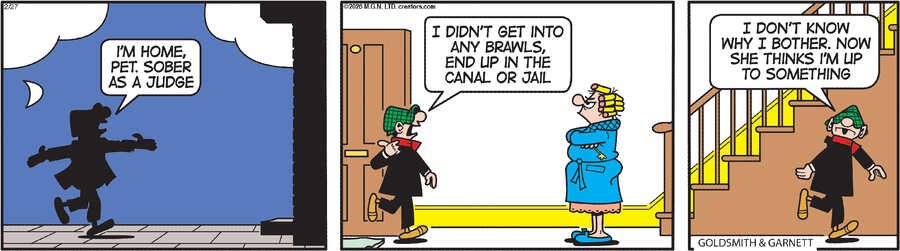
The Unforgettable Duo: Andy and Flo
At the heart of every great Andy Capp strip is the explosive relationship between Andy and his long-suffering wife, Flo. She is the anchor to his ship that’s always drifting toward the pub. Flo is no pushover; she is a sharp-tongued, hard-working woman who spends her days cleaning other people’s houses while trying to keep her own household from falling apart . She is the voice of reason, constantly nagging Andy to find a job and pay the rent, making her the perfect foil to his laziness. This dynamic is the engine of the strip’s humor, providing endless material for conflict and comedy.
Their relationship is complex. While they constantly bicker and fight, there is an unspoken understanding between them. Andy often refers to Flo as “pet,” and despite his flaws, he has been known to defend her honor if anyone else dares to be rude to her . On the flip side, Flo is not afraid to use a rolling pin or a well-aimed frying pan to get her point across, especially when Andy comes home late from the pub. This slapstick violence, while viewed differently today, was a staple of the era’s comedy and highlighted the fiery passion in their marriage .
Flo was actually Reg Smythe’s favorite character, and he even named her after his own mother . This personal connection might explain why she is so well-developed. She isn’t just a nagging wife; she has her own vices, most notably her love for bingo, which she plays with her neighbor Rube as often as Andy visits the pub. This balance makes her relatable; she gives as good as she gets, ensuring that the humor never feels completely one-sided .
A Window Into Working-Class Life
The genius of Andy Capp lies in its authentic depiction of working-class life in Northern England. The setting is almost a character in itself, with the action primarily taking place in three locations: the cramped living room of 37 Durham Street, the local pub called the Lion’s Head, and the street outside . This limited world reflects the simple, routine lives of its characters. Readers recognized their own neighborhoods, their own pubs, and their own struggles in the backdrop of the strip, which created an instant bond between the comic and its audience.
Reg Smythe used humor to touch on very real social issues of the time, such as unemployment and poverty. Andy famously never works, preferring to collect his dole money while coming up with elaborate excuses to avoid job interviews . The constant pressure from the rent collector, Percy Ritson, who has a soft spot for Flo, is a recurring theme that highlights the financial instability of the family . These were not just jokes; they were reflections of the economic realities faced by many readers in post-war Britain, making the laughter a form of shared recognition and resilience .
Even the minor characters add to this rich tapestry of community life. Neighbors like Chalkie and Rube White serve as a Greek chorus, observing and commenting on the Capps’ latest dramas . The local vicar provides moral judgment, while Jackie the barman simply tries to keep the peace. Together, they create a fully realized world where everyone knows everyone else’s business. This sense of community—with its gossip, its friendships, and its petty squabbles—is central to the strip’s charm and its lasting legacy as a record of a specific time and place in British social history .
Timeless Humor and Lasting Legacy
What makes a comic strip about a lazy, drunken man from the 1950s still relevant today? The answer lies in its timeless humor. While some of the social norms have changed, the core comedic situations remain funny. Whether it’s Andy trying to hide his drinking from Flo, cheating at cards in a way that’s obvious to the reader, or falling into the canal on his way home, the physical comedy and witty one-liners transcend generations . The strip’s ability to make us laugh at the absurdities of human nature—laziness, stubbornness, and the eternal battle of the sexes—keeps it fresh.
Over the decades, Andy Capp has evolved to keep up with the times, proving its flexibility. When Reg Smythe quit smoking in the 1980s, he made Andy quit too, much to the chagrin of some fans who blamed “political correctness” . More recently, the strip has even shown Andy and Flo attending marriage counseling, a nod to modern sensibilities . Despite these changes, the core character remains the same: a lovable rogue who somehow survives despite his best efforts to avoid responsibility.
The legacy of Andy Capp extends far beyond the funny pages. He has been syndicated in newspapers across the globe, from North America to Russia, proving that a “bloke” from Hartlepool can find a laugh in Honolulu . The character has been adapted into stage plays, a musical starring Tom Courtenay, and even an animated series . He has lent his name to a line of snack foods, further cementing his place in popular culture. For anyone looking to understand the roots of British humor—the dry wit, the love of the underdog, and the ability to find comedy in hardship—Andy Capp remains the perfect place to start .
Conclusion
Andy Capp is far more than just a comic strip; it is a cherished piece of British heritage. Through the misadventures of its flat-capped hero and his resilient wife Flo, the series captured the essence of a nation with honesty, wit, and an enduring affection for its flawed characters . The strips that defined British humor were the ones that showed a man sleeping on the couch while his wife cleaned around him, or propping up the bar while the rent went unpaid. They were funny because they were real.
Even as society has moved on, the best Andy Capp comic strips remain a time capsule of a bygone era, while simultaneously offering laughs that feel as fresh as the day they were drawn. The dynamic between the characters, the sharp social observations, and the simple, clean artwork ensure that Andy Capp will continue to entertain readers for many years to come. Whether you are a longtime fan or a newcomer, diving into the world of Andy Capp is like sitting down at the local pub with an old friend—comfortable, familiar, and guaranteed to make you smile .