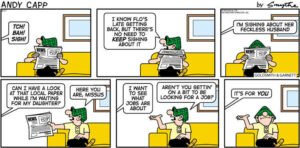
For decades, the Andy Capp comic strip has been a staple in newspapers around the world. At first glance, it seems simple: a lazy, unemployed man in a flat cap spends his days at the pub or sleeping on the couch while his wife, Flo, nags him. But if you look closer, there is a lot more going on in those four small panels. Created by Reg Smythe in 1957, Andy Capp is not just a funny drawing; it is a deep look at working-class life, marriage, and the struggles of a certain era in Britain. The genius of the strip is that it makes you laugh, but it also makes you think about the reality of the characters’ lives .
Many readers miss the sadness and social commentary hidden behind the slapstick humor. Andy isn’t just a loveable rogue; he is a product of his environment. The strip’s title itself is a clever pun on the word “handicap,” pronounced with a northern British accent. This tells you everything: Andy is a handicap to his wife and himself, but also a man handicapped by his circumstances and his own choices . Let’s pull back the curtain on the real meaning of this iconic character.
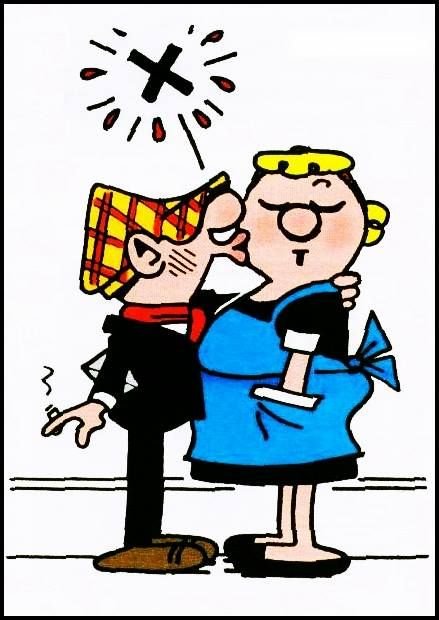
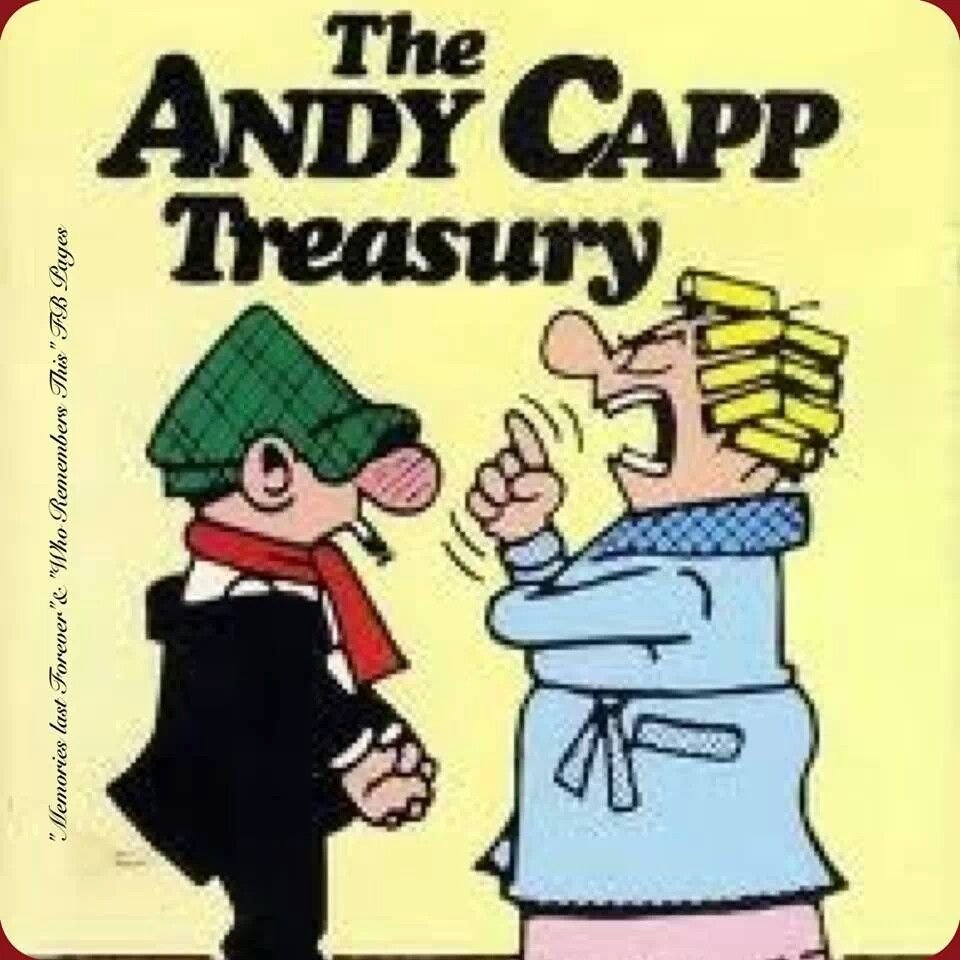
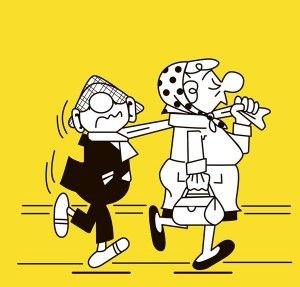
10+ Andy Capp Comics
Image Credit : Reg Smythe
#1
#2
#3
#4
#5
#6
#7
#8
#9
#10
The Hidden Meaning of the Name and the Cap
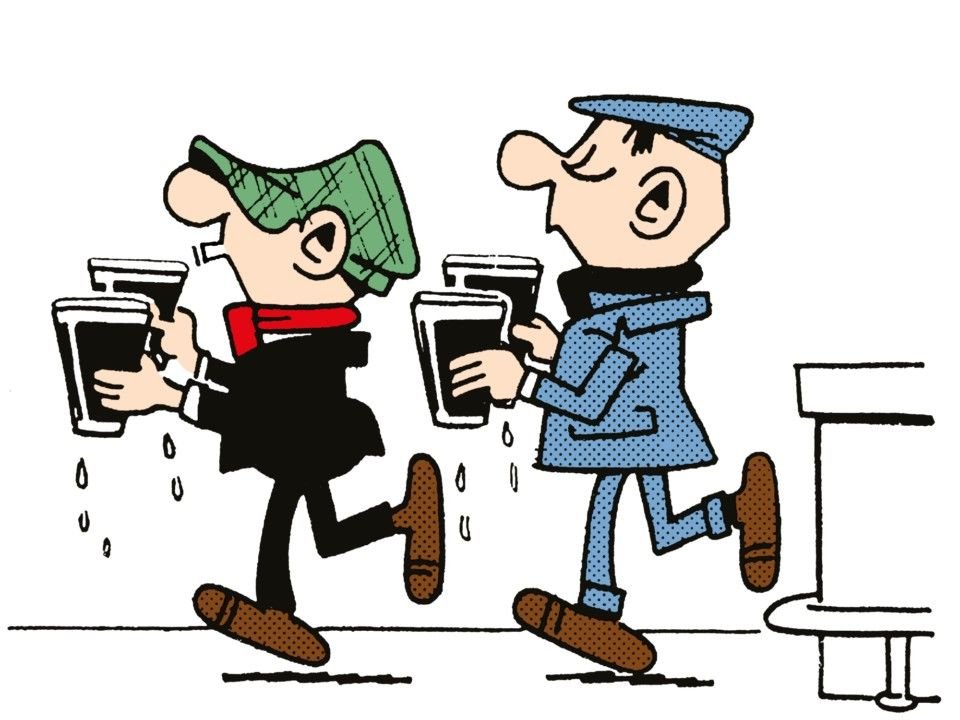
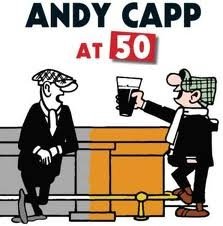
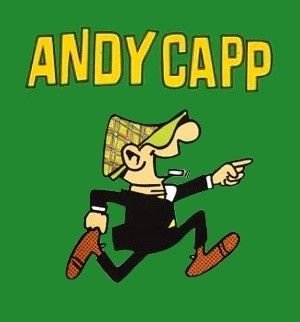
The first thing you notice about Andy is his signature flat cap, pulled down so low it covers his eyes. This isn’t just a fashion statement. The cap acts as a barrier between Andy and the world. By keeping his eyes hidden, he is literally blocking his vision—he cannot see the opportunities around him, nor does he want to. It represents his refusal to look at his own life honestly. He hides behind it, whether he is sleeping off a hangover or avoiding the rent collector .
As mentioned, the name “Andy Capp” is a phonetic spelling of “handicap.” Reg Smythe, growing up in the tough shipbuilding town of Hartlepool, knew this struggle firsthand. The “handicap” refers to the burden Andy places on his wife, Flo, who has to go out cleaning houses just to keep food on the table. But it also reflects the handicap of the industrial working class in post-war Britain, where jobs were disappearing and a sense of hopelessness led many to the same lifestyle as Andy . The cap, therefore, is a symbol of that closed-off, insular mindset. When you see Andy on the couch with that cap over his face, you aren’t just seeing a lazy man resting; you are seeing a man hiding from a world he feels has left him behind .
The Unseen Strength of Flo, the Real Hero
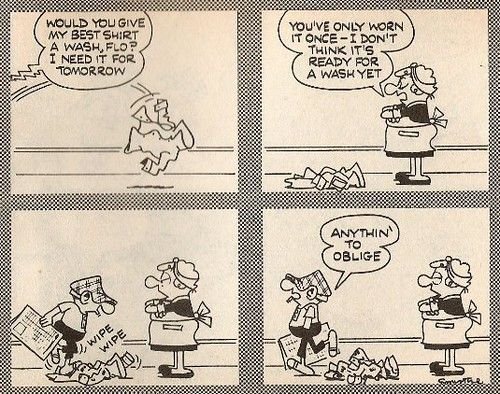
While Andy gets top billing, anyone who reads the strip carefully knows that Florrie “Flo” Capp is the real star. Reg Smythe himself admitted that Flo was his favorite character, even naming her after his own mother . Flo is the backbone of the family. She works as a charwoman (a cleaner) to earn money, tries to keep the house from falling apart, and somehow manages to keep Andy out of serious trouble. She is the one who faces the rent collector, Percy Ritson, and deals with the shame of having their furniture repossessed .
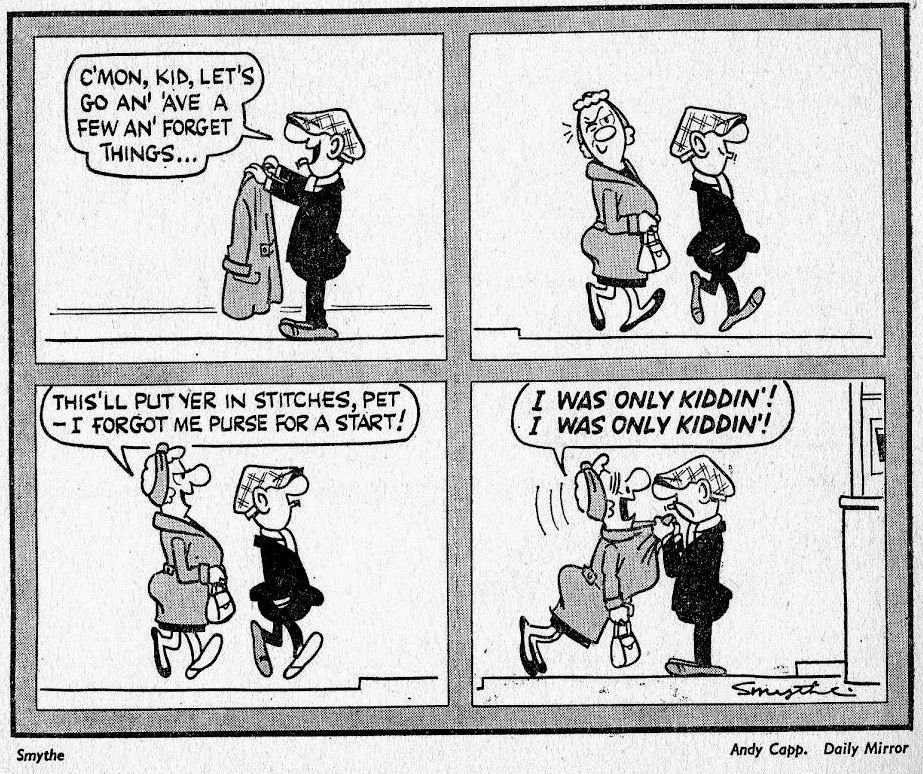
The real meaning of the strip often lies in Flo’s quiet suffering. In the early days, the strip showed a lot of domestic violence, which was, sadly, played for laughs at the time. But even then, Flo was rarely just a victim; she would often give as good as she got, chasing Andy with a rolling pin . As society changed, so did the strip. The violence faded, and the focus shifted to the verbal battles and the silent acceptance of her lot in life . Flo represents the countless women of that generation who held families together despite useless husbands. She stays with Andy not just out of duty, but because deep down, she knows his potential and sees the glimpses of the man he could be—the man who fiercely protects her if anyone else dares to be rude .
A Mirror to Working-Class Life and Pride
Many people outside of the UK saw Andy Capp as just a stereotype of the lazy Northerner. But for those living it, the strip was a mirror, not a joke at their expense. Reg Smythe was one of them. He knew what it was like to be a “canvas shoes kid” and to struggle through long stretches of unemployment . The strip captures the specific culture of the British working class: the importance of the local pub as a social hub, the pride in hobbies like pigeon racing and snooker, and the fierce loyalty to friends like Chalkie White .
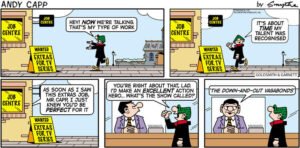
The deeper meaning here is about dignity. Even though Andy is always broke and always in debt, he has his pride. He may not have money, but he has his wits and his refusal to be beaten down by the system. He visits the Job Centre (the “dole office”) but often finds reasons not to take the work, because the jobs offered are demeaning or the pay is worse than his unemployment benefits . This isn’t just laziness; it is a commentary on the system. Smythe once commented on this, suggesting that if the system allows you to get as much money staying at home as working, you would be a “bloody fool” to go to work . The strip questions the “dignity of work” when that work doesn’t pay enough to live on.
How the World Forced Andy to Evolve
Andy Capp started in 1957, and the world of 2025 is very different. To survive, the strip has had to evolve, and this evolution tells us a lot about how society has changed. For decades, Andy had a cigarette permanently dangling from his lip. When he quit in the 1980s, fans were furious, blaming “political correctness.” But the truth was more personal: Reg Smythe had given up smoking and didn’t want to draw Andy enjoying something he could no longer have . This change marked the beginning of Andy reflecting the real world rather than a fantasy.
Today, Andy and Flo attend marriage counseling, something that would have been unthinkable in the 1950s . The domestic violence is gone, and Andy’s come-uppance is more likely to be verbal than physical . Some modern critics argue that the character has been “ruined” by “woke” culture and that he has lost his edge . However, this change proves the strip’s lasting relevance. It shows that the core of the characters—a flawed but oddly lovable couple struggling to get by—is strong enough to survive changing times. The real meaning of Andy Capp today is that while the details of our lives change, the fundamental human struggles with work, money, and love remain the same.
Conclusion
Andy Capp is far more than just a few jokes about a man who likes his beer. It is a document of social history, a character study of a marriage, and a surprisingly sensitive look at poverty and pride. By understanding the meaning behind the name, the strength of Flo, and the cultural context of Hartlepool, we see that the strip is not making fun of the working class—it is holding a mirror up to life. So, the next time you see Andy with his cap pulled down, remember: there is a lot going on under that cap that you might have never noticed before. He is not just a layabout; he is an icon.