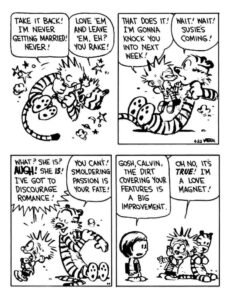
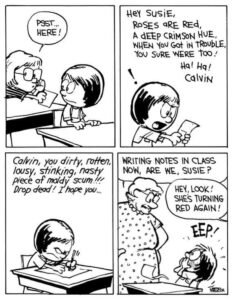
For a decade, from 1985 to 1995, journalist and cartoonist Bill Watterson invited us into the world of a mischievous six-year-old boy and his stuffed tiger, Hobbes, who magically came to life whenever the two were alone. At first glance, Calvin and Hobbes is a hilarious look at childhood, filled with snowball fights, transmogrifiers, and the perfectly chaotic game of Calvinball. But for those who read between the lines, the comic strip is so much more .
Beneath the surface of a kid who hates baths and homework lies a deep well of philosophy, wit, and unexpected truth. Whether he was questioning the nature of reality or just trying to get out of eating his vegetables, Calvin had a way of cutting through the nonsense of the adult world. Even today, years after the last strip ran, the wisdom shared between a boy and his tiger continues to resonate, offering us simple yet profound lessons on how to live a better, more meaningful life .
10+ Calvin and Hobbes
Image Credit:Pintrest.com
#1
#2
#3
#4
#5
#6
#7
#8
#9
#10
The True Value of Friendship and Loyalty
At its heart, Calvin and Hobbes is a story about friendship. Hobbes is more than just a stuffed animal; he is a confidant, a conscience, and a partner in crime. Through their bond, Watterson shows us what it means to have someone who accepts you exactly as you are—spaceman Spiff alter-ego and all. Hobbes is always there to ground Calvin when his imagination runs too wild, and he is equally ready to enjoy a wild sled ride down a dangerous hill .
Life can be pretty scary when you are facing it alone. Whether it is a tough day at school, a run-in with the babysitter, or just the existential dread of a Monday morning, having a best friend makes it all bearable. As Calvin himself once said, “Things are never quite as scary when you’ve got a best friend” . This lesson is crucial for adults who often try to shoulder burdens by themselves. The strip reminds us to cherish those people in our lives who stick with us through the ups and downs, and to be that steady, loyal presence for someone else, just like Hobbes is for Calvin.
Never Let Go of Your Imagination
One of the most beautiful lessons from the comic is the power of imagination. While the adults around him see a grubby cardboard box, Calvin sees a portal to other dimensions, a time machine, or a powerful duplicator. His imagination isn’t just a way to pass the time; it’s his way of making sense of a confusing world. It allows him to transform the mundane into the magnificent, turning a boring afternoon into a thrilling adventure in the jungles of Yukon or a battle against alien invaders .
As we grow up, society often tells us to put away such childish things and focus on reality. But Watterson argues that imagination is what keeps life magical. It fuels creativity, helps us solve problems, and allows us to see possibilities where others see dead ends. Calvin’s world teaches us that while we have to live in the real world, we don’t have to be trapped by it. We should find time to dance like no one is watching, to build a snowman that looks like a monster, and to remember that a simple walk in the woods can always be an exploration of a magical world .
Questioning Everything (Even the Rules)
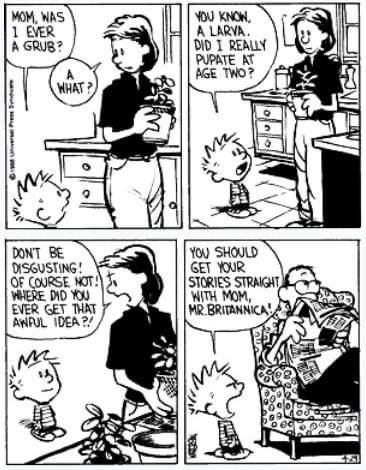
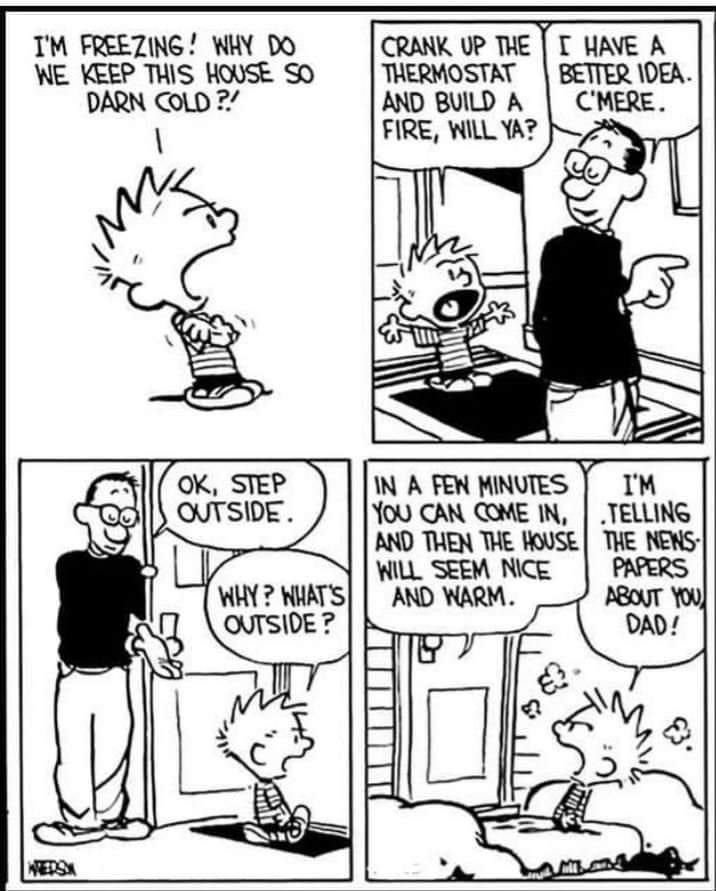
Calvin is perhaps the world’s greatest skeptic. He questions homework, he questions politics, he questions why he has to go to bed when he isn’t tired. He famously critiqued the education system by pointing out the flaw in memorizing facts just to pass a test and then forgetting them forever . He also brilliantly observed the absurdity of life, noting that “the world is a stage, but obviously the play is unrehearsed and everybody is ad-libbing his lines” .
This constant questioning isn’t just about being difficult; it’s about being engaged. Calvin refuses to accept things at face value. He demands to know the “why” behind the rules. As adults, we often stop asking questions and just go through the motions. We accept the status quo because it’s easier. Calvin’s rants remind us that it’s okay to question authority, to challenge systems that don’t make sense, and to think for ourselves. It encourages us not to be “willfully stupid” just to avoid the hard work of fixing problems .
The Importance of Living in the Moment
For a kid who spends a lot of time complaining, Calvin actually knows a lot about being present. Whether he is rolling around in the leaves, building a fort in the snow, or just lying in the grass watching clouds with Hobbes, he understands the value of soaking in the moment. Hobbes wisely noted, “Sometimes I think we dream so we don’t have to be apart for so long. If we’re in each other’s dreams, we can play together all night” . This beautiful thought captures the desire to hold onto the good times and the people we love.
In our busy, always-connected world, we are constantly thinking about the next thing on our to-do list. We scroll through our phones during dinner and worry about work on the weekends. Calvin and Hobbes remind us to slow down. They show us that happiness is often found in the simplest things—a warm blanket, a good book, or a friend by your side . They teach us that weekends don’t count unless you spend them doing something completely pointless. So, take a lesson from Calvin: put away the distractions, go outside, and build a snowman. Just be careful it doesn’t turn into a terrifying snow goon .
Conclusion: Let’s Go Exploring!
The wisdom of Calvin and Hobbes is timeless because it speaks to the child in all of us. It reminds us that life is a mix of tragedy and farce, and that sometimes all you can do is laugh and look for the next adventure. The final strip, published on December 31, 1995, ended on a note of perfect optimism. As Calvin and Hobbes sled down a fresh slope of snow, Calvin declared, “It’s a magical world, Hobbes, ol’ buddy… Let’s go exploring!” .
That single line sums up the entire philosophy of the strip. Despite the homework, the bad news, and the long division, the world is still a magical place. There are still hills to sled down and mysteries to uncover. By looking at life through the eyes of a six-year-old and his tiger, we learn that the best way to navigate this crazy world is with an open mind, a loyal friend, and a willingness to explore.