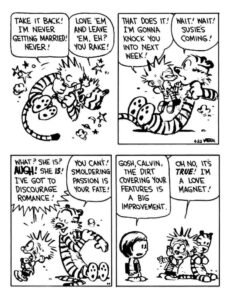
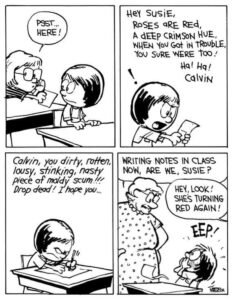
There are certain books and comics we cherish as kids, but we often leave them behind on the shelves of our memory as we grow up. We assume they were just fun stories to help us pass the time during rainy afternoons. For me, one of those treasures was the comic strip Calvin and Hobbes by Bill Watterson. I remember laughing at the simple, silly adventures of a mischievous six-year-old and his stuffed tiger. But recently, I decided to revisit the collection on a quiet weekend. I wasn’t prepared for the emotional journey I was about to take.
Sitting on my couch, flipping through the yellowed pages of my old books, I realized that I wasn’t just reading a children’s comic anymore. I was reading a profound commentary on life, creativity, and the strange world of adults. The humor was still there, sharp and witty, but underneath it, I found layers of meaning I had completely missed as a child. It felt like I was meeting old friends for the first time as an adult, and they had a lot more to say than I ever gave them credit for.
This re-reading experience taught me that we never really outgrow the stories we love; we just grow into them. The lessons about childhood that Bill Watterson hid between the panels are now crystal clear to me. They serve as a beautiful reminder of what we lose when we “grow up” and why it’s so important to try and get a little bit of it back. Here is what this timeless strip taught me about the nature of being a child.
10+ Calvin and Hobbes
Image credit : Pintrest.com
#1
#2
#3
#4
#5
#6
#7
#8
#9
#10
The Pure, Unfiltered Power of Imagination
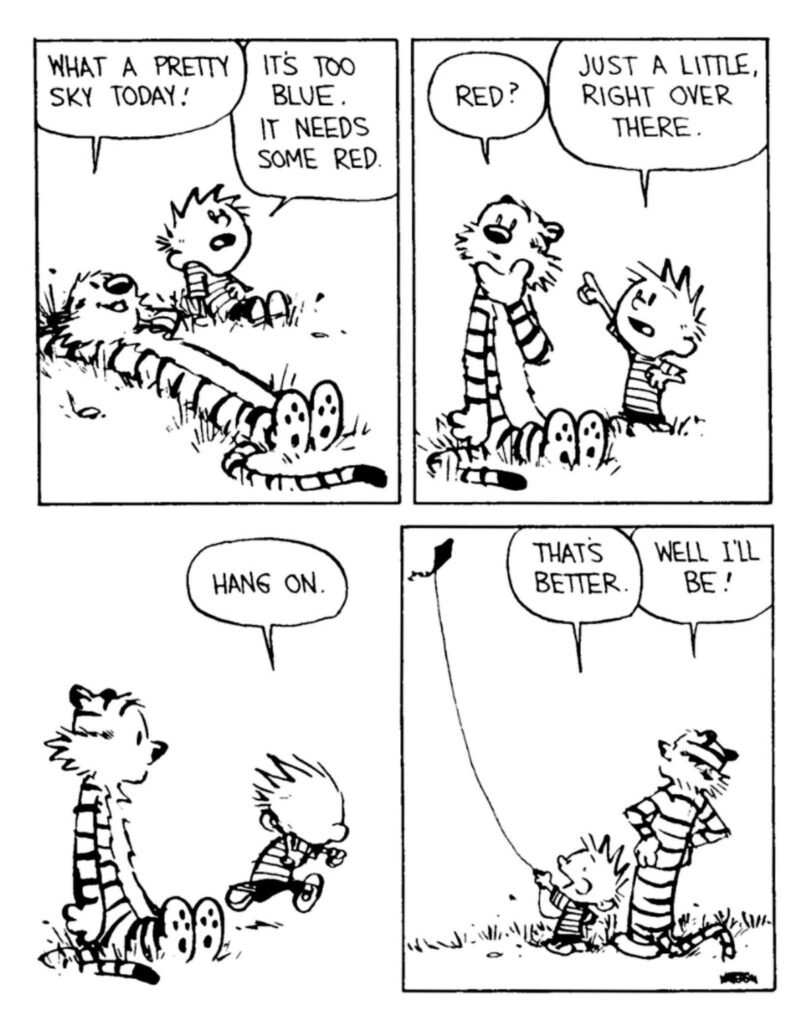
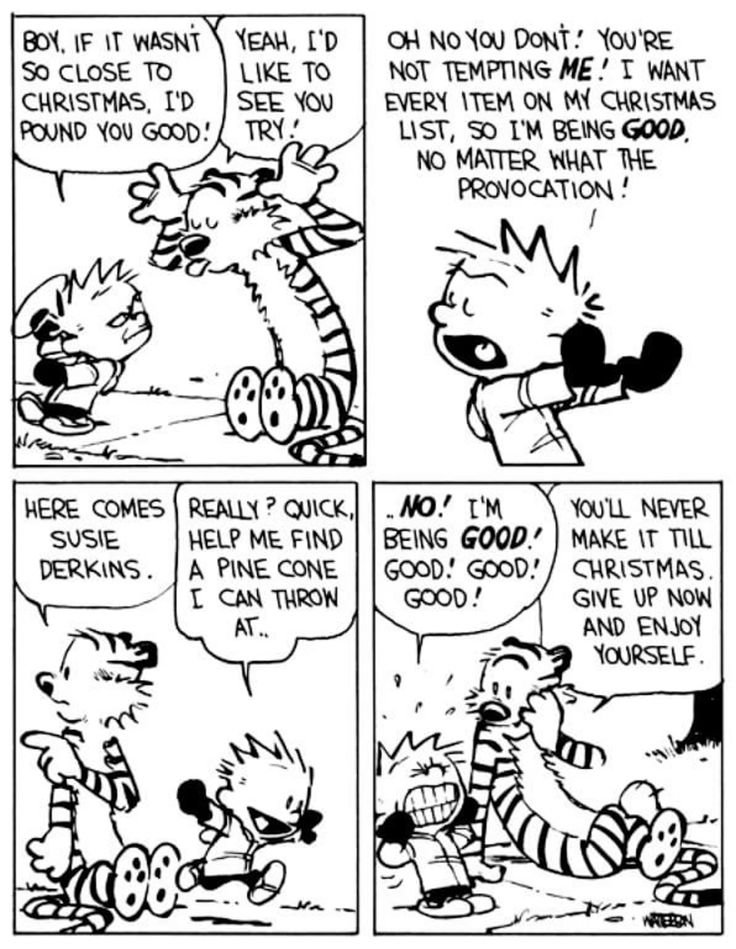
The most magical element of Calvin and Hobbes is, of course, the fact that Hobbes is a real companion to Calvin and a stuffed toy to everyone else. As a kid, I accepted this without question. It was just a cool trick. But as an adult, I realized that this dynamic is the heart of the strip. It is a visual representation of how a child’s mind actually works. To a six-year-old, the line between reality and fantasy is incredibly thin, and that is a superpower.
When Calvin swings a rope swing into the woods, he isn’t just playing in the backyard; he is Spaceman Spiff crash-landing on an alien planet. When he builds a snowman, he isn’t just piling snow; he is creating grotesque, hilarious sculptures that comment on his parents’ rules. As an adult, we see these actions as “playing pretend.” But through Watterson’s art, we are reminded that for a child, this is a deeply real and necessary part of processing the world.
Reading this now, I felt a pang of nostalgia for that kind of immersive creativity. As adults, we are trained to be logical. We look at a cardboard box and see a container. A child looks at a cardboard box and sees a time machine, a fort, or a race car. Re-reading Calvin and Hobbes reminded me that imagination isn’t just an escape; it’s a way of interpreting life. It’s a tool for joy that we too often pack away, and watching Calvin wield it so freely made me want to find my own cardboard box again.
The Relentless Pressure of the Adult World
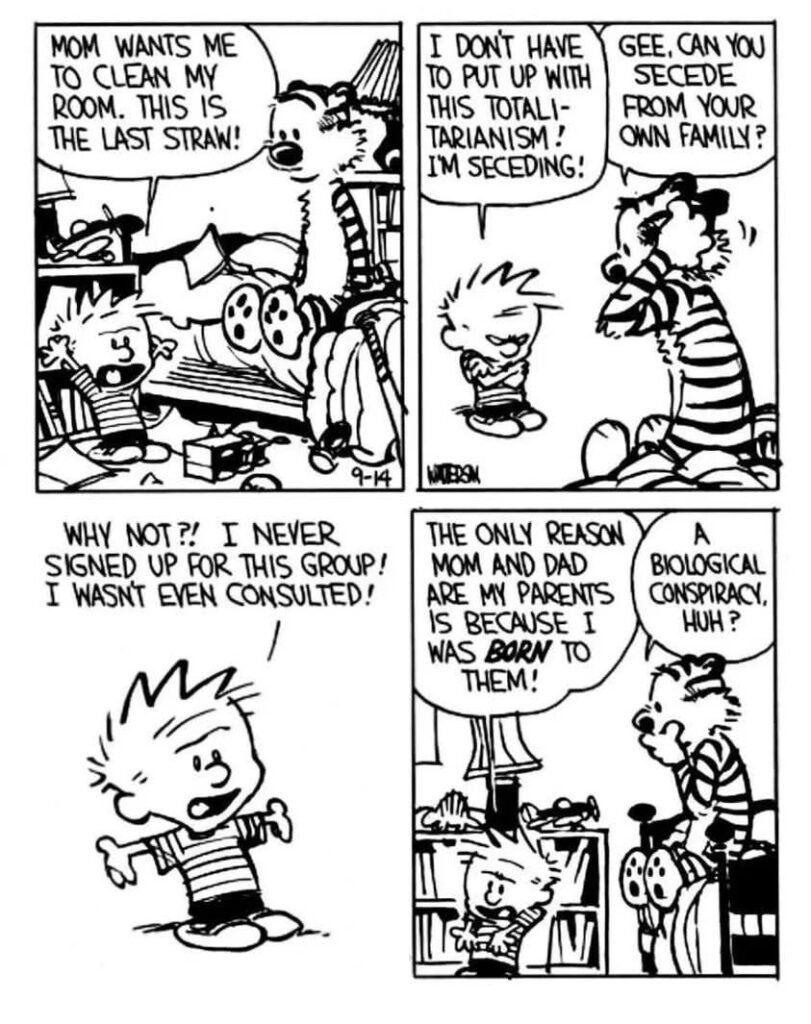
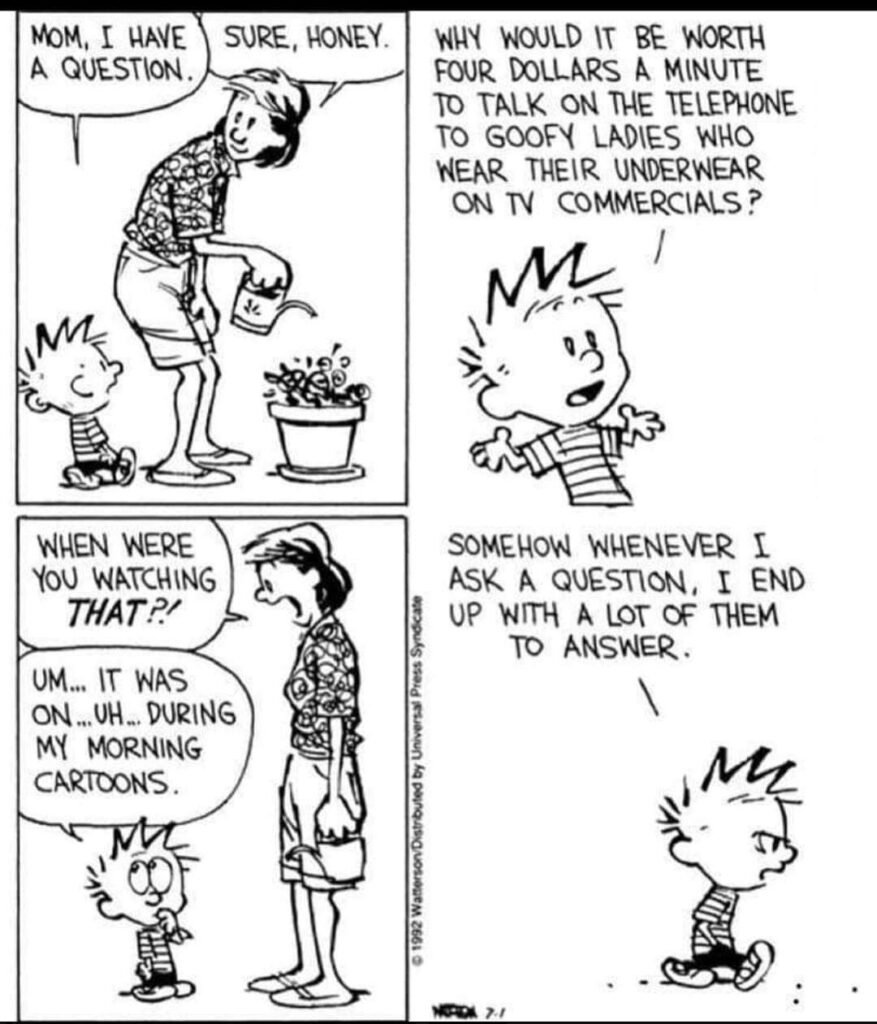
While Calvin lives in a world of wonder, his parents are firmly rooted in reality. As a kid, I thought his parents were mostly just the “bad guys” who made him go to school and turn off the lights. Now, as an adult, I see them completely differently. I see the exhaustion. I see the worry. I see two people trying their best to raise a feral genius while managing the mundane chores of laundry, bills, and work.
Calvin’s dad, in particular, became a hero to me upon re-reading. His famous tactic of giving Calvin absurd answers to his questions (like “Why is the sky blue?” “Because we live on the inside of a orange.”) isn’t just funny. It’s a survival mechanism. It’s a tired parent trying to inject a little bit of playfulness into the grind of daily parenting. The strip perfectly captures the tug-of-war between the carefree nature of a child and the crushing responsibility of the adults who love them.
We see the parents yearning for quiet, for a vacation, for just five minutes without a disaster. Yet, we also see their deep, quiet love for their son. They build him a cardboard box house when he wants to move out. They worry when he is sad. They trudge out in the snow to find him when he runs away. As an adult, the comic isn’t about Calvin’s mischief anymore; it’s about the invisible labor of parenthood. It gave me a new appreciation for my own parents and a knowing nod to the challenges of raising kids in a chaotic world.
Life Moves Fast, So We Must Savor the Seasons
Bill Watterson had a unique talent for drawing the passage of time. The Calvin and Hobbes strip follows the cycle of the seasons religiously. There is the thrill of the first snowman, the boredom of spring cleaning, the adventure of summer vacation, and the dread of heading back to school. As a kid, I just enjoyed the specific gags—like Calvin sledding down a hill or building a fort in the woods.
As an adult, reading these seasonal arcs in sequence felt like watching a time-lapse video of life. Watterson captures the bittersweet feeling of time slipping away. Calvin is always wishing his life away—wishing for summer, wishing for Christmas, wishing he was older. Meanwhile, his parents are often seen looking at old photos or commenting on how fast he is growing. This dynamic hit me hard this time around.
The strip reminds us that childhood feels eternal when you are in it, but in reality, it is a fleeting moment. The wagon rides, the treehouses, the lazy summer afternoons catching fireflies—these are not just fun activities; they are the building blocks of memory. Re-reading the comics made me want to slow down in my own life. It made me appreciate the current season I am in, whatever it may be, because just like Calvin, we often don’t realize we are in the “good old days” until they are gone.
Authenticity is the Best Gift You Can Give
Perhaps the most profound lesson I learned as an adult from Calvin and Hobbes is about staying true to yourself. Bill Watterson famously fought against the commercialization of his characters. You won’t see Calvin peeing on a Ford decal or Hobbes holding a Happy Meal toy, and that was a very intentional choice. Watterson believed that if the strip was just a marketing tool, it would lose its soul. As a kid, I never noticed this. As an adult, I find it incredibly inspiring.
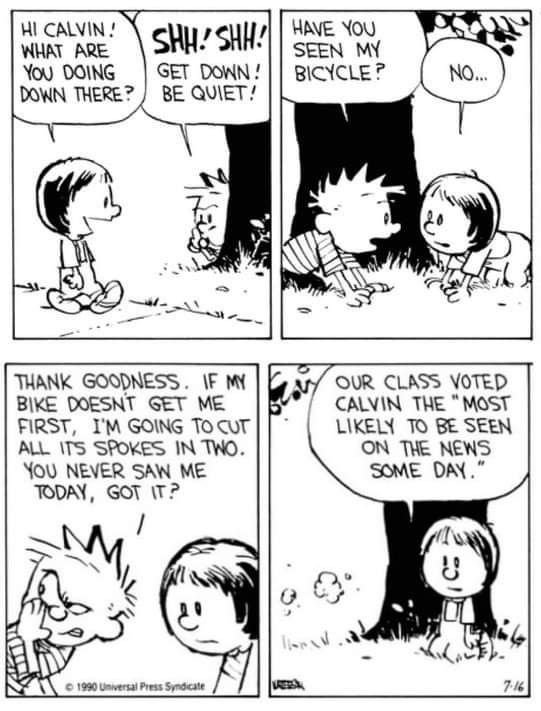
This philosophy bleeds into the characters themselves. Calvin is unapologetically himself. He is loud, obnoxious, creative, curious, and stubborn. He doesn’t try to fit in with the other kids, and he certainly doesn’t try to please his teacher, Miss Wormwood. He is a chaotic force of nature, and while this gets him into trouble, it also makes him free. Hobbes loves him not because he is good, but because he is real.
In a world where adults are constantly trying to curate their lives for social media or fit into a specific mold at work, Calvin is a breath of fresh air. He reminded me that the goal isn’t to be liked by everyone; the goal is to be genuine. It’s better to have one tiger who thinks you are the greatest friend in the world than to have a hundred acquaintances who only know a fake version of you. Watterson’s fight to keep the strip pure taught me that the things we create and the way we live our lives should be done for the love of it, not for the money or the fame.
Conclusion
Closing the final book of the complete collection, I felt a strange mix of joy and sadness. I was sad because I had finished the journey, but I was overwhelmingly joyful because I had gotten to see it through new eyes. Calvin and Hobbes is not just a comic about a boy and his tiger. It is a guidebook to living a good life. It teaches us to hold onto our imagination, to have empathy for the tired adults around us, to cherish the changing seasons, and to always stay authentic.
If you haven’t picked up a Calvin and Hobbes book since you were a kid, I highly recommend you do so. You might be surprised to find that you aren’t just re-reading an old comic strip; you are re-discovering a part of yourself that you thought you had lost. You might just learn, like I did, that the world looks a little brighter, a little more magical, and a little more manageable when you try to see it through the eyes of a six-year-old and his best friend.