So, you’ve decided to finally see what all the fuss is about. Maybe you’ve seen the quotes online, or a friend keeps telling you about a mischievous boy and his tiger. Welcome! You are about to embark on one of the most rewarding reading experiences a book lover can have. Calvin and Hobbes isn’t just a comic strip; it’s a journey into the mind of a six-year-old who thinks he has it all figured out, guided by a stuffed tiger who, in Calvin’s eyes, is very much alive and full of wisdom.
But with a comic strip that ran for ten years and filled dozens of books, the big question for any new reader is simple: Where do you even start? The beauty of Calvin and Hobbes is that you can technically pick up any collection and start laughing. However, to really understand the magic—the mix of wild imagination, sharp humor, and touching moments—it helps to know the storylines that define the series. Bill Watterson didn’t just write one-off gags; he often wove multi-day stories that showed the depth of his characters .
These story arcs are the perfect entry points. They give you a full taste of everything the strip has to offer: the science fiction adventures, the battles with parents, the philosophical talks, and the surprisingly tender moments. We have put together a guide to the best Calvin and Hobbes storylines that are perfect for someone just getting started. Get ready to meet your new favorite six-year-old.
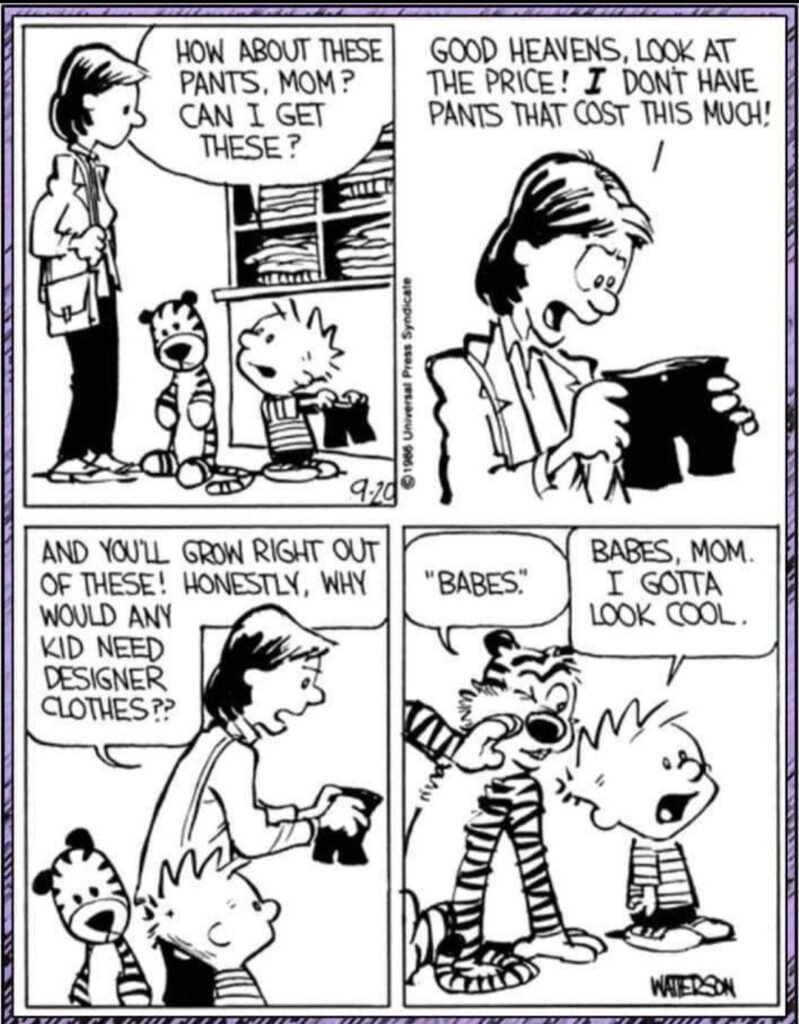
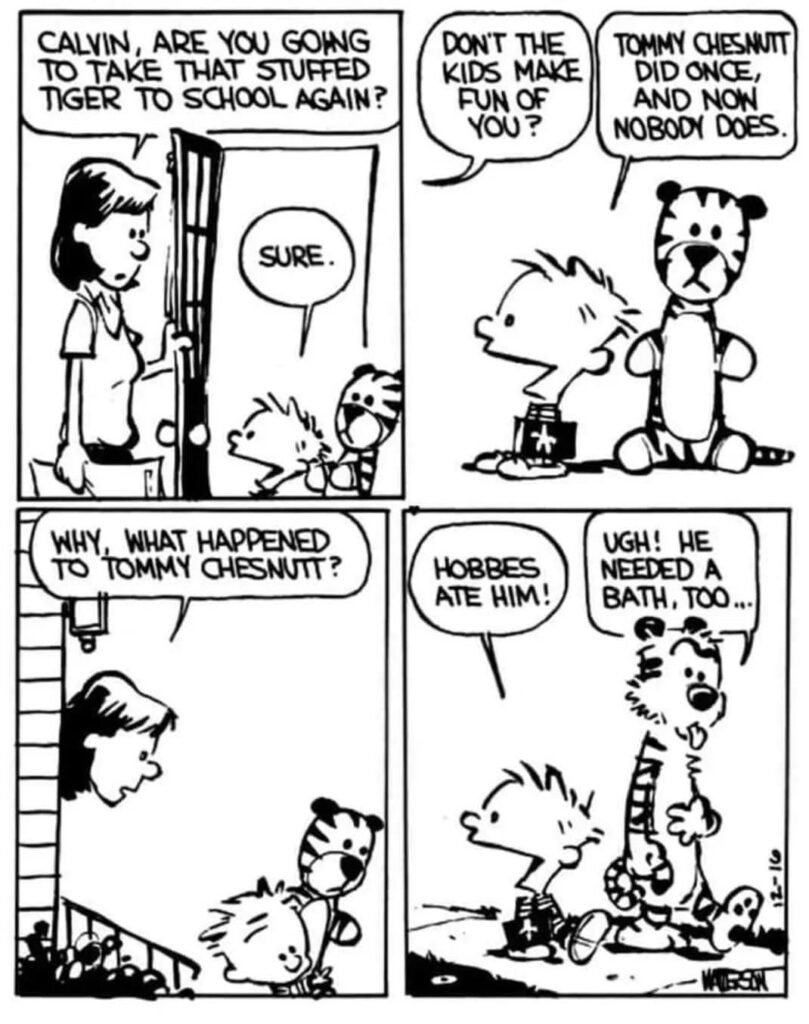
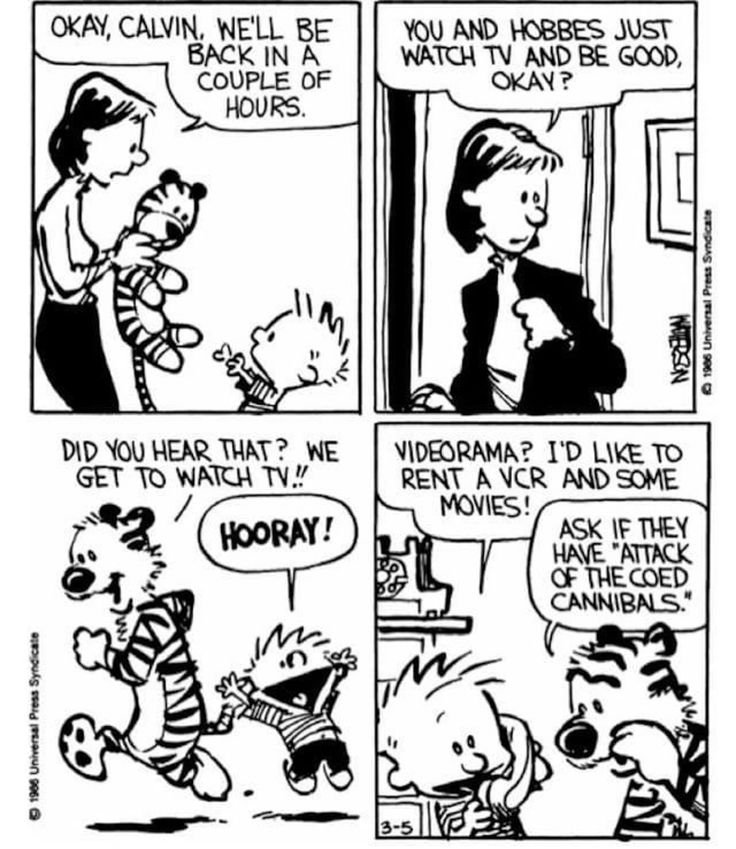
10+ Calvin and Hobbes Comics
Image Credit: Pintrest.com
#1
#2
#3
#4
#5
#6
#7
#8
#9
#10
The Adventures of Spaceman Spiff and the Time Machine
If you have seen any image of Calvin, you have probably seen him wearing a helmet and pointing a “ray gun.” This is Spaceman Spiff, Calvin’s most famous alter-ego, and it usually comes out when he is bored out of his mind in class. For new readers, the storylines where Calvin uses his imagination are the quickest way to understand how his brain works. He doesn’t just daydream; he completely escapes reality. The world becomes a desolate alien planet, and his teacher, Miss Wormwood, turns into a slobbering alien monster . These stories are hilarious because we see the boring classroom reality, but Calvin’s narration treats the situation with life-or-death seriousness.
One of the absolute best arcs for a beginner is the time travel story, often referred to by fans as “The One Where 6:30 Calvin and Hobbes Time Travel and Meet 8:30 Calvin and Hobbes” . In this classic, Calvin has to write a story for school. Instead of just doing it, he decides to use his cardboard box time machine to travel two hours into the future to get the finished homework from his future self. When he gets there, the future homework isn’t done yet, so the two Calvins travel back in time to convince the Calvin in between them to do it. It gets wonderfully confusing and silly.
This storyline is a perfect introduction because it packs in everything great about the duo. You see Calvin’s incredible laziness and his refusal to do things the easy way. You see Hobbes as the rational voice, who is just there to enjoy the chaos and ultimately make Calvin look silly . And the ending is classic Watterson: Calvin turns in the story, which is about this exact adventure, and gets an A+ for creativity, even though the story makes fun of him. It shows you that while Calvin might be a “bad” kid, he’s never boring.
The Horror and Humor of the Snow Goons
Winter is a huge part of the Calvin and Hobbes world. No one—and we mean no one—has ever built snowmen quite like Calvin. While other kids roll three perfect balls of snow and use a carrot nose, Calvin creates bizarre, twisted, grotesque snow sculptures that are a satire of modern art and society. These daily strips are funny on their own, but Watterson took the concept to a new level with the epic storyline: “Attack of the Deranged Mutant Killer Monster Snow Goons” .
This multi-week arc is a must-read for anyone new to the series. It starts with Calvin building a snowman and, in a moment of boredom, shouting, “Now… LIVE!! ” To his shock (and ours), the snowman actually comes to life. But this isn’t a friendly Frosty. This is a monster, and it immediately starts chasing Calvin and Hobbes through the yard. When Calvin tries to fight it by throwing snowballs, the snow goon just absorbs the snow and grows bigger, sprouting extra heads and arms. Soon, the entire front yard is populated by an army of these terrifying creatures .
What makes this arc so special for a beginner is how it perfectly balances the imaginary with the real. To Calvin, this is a genuine horror movie, and Watterson draws it with dynamic, scary angles. To the reader (and eventually to Calvin’s dad), it looks like a kid running around the yard and spraying the hose everywhere. The ending is a masterclass in comedy: Calvin’s dad slips on the ice, and Calvin yells, “Run, Hobbes! Dad’s a Snow Goon too!” . It is silly, creative, and visually stunning, showing you that in Calvin’s world, anything is possible—and usually, it backfires on him.
When Calvin and Hobbes Got Serious: The Baby Raccoon
Now, if you ask longtime fans about the moment the strip changed from just a funny comic to something truly special, most of them will point you to one specific storyline. It is not funny. There are no jokes about school or parents. It is the story where Calvin and Hobbes find a baby raccoon . This arc, which came early in the strip’s run, is essential reading because it proves that Calvin is more than just a selfish brat.
In this story, Calvin and Hobbes are playing in the woods when they discover a tiny, injured baby raccoon. For the first time, we see Calvin drop all his usual bluster and ego. He runs to get his mom, who gently takes the raccoon in and sets it up in a box in the garage. The next few strips show a side of Calvin we rarely see: he is gentle, patient, and genuinely caring. He wants nothing more than to nurse this little creature back to health. It shows that deep down, despite all his fights with his parents and his schemes to avoid homework, he has a huge heart .
But the story takes a heartbreaking turn. The next morning, Calvin runs to the garage to check on his new friend, only to find that the baby raccoon has died during the night. Watterson handles this moment with incredible sensitivity. Calvin is devastated. He buries the raccoon and questions why he even bothered to make a friend if he was just going to lose him . It ends with his mother sitting with him, trying to explain the hard truths about life and death, and Calvin finding comfort in the fact that he still has Hobbes. For a new reader, this arc is vital. It shows you that the world of Calvin and Hobbes has real stakes and real emotions, making the silly adventures feel even more meaningful.
The Invention of the Greatest Game Ever: Calvinball
Every kid knows that the worst part of playing a game is the arguing. “You’re out!” “No, I’m safe!” “That’s not fair!” Bill Watterson took this universal childhood frustration and created the ultimate solution: Calvinball. And the storyline where Calvin quits baseball and invents his own game is one of the best introductions to the social world of the strip .
This arc begins with Calvin realizing he is the only boy in his class not signed up for the recess baseball team. After getting teased by bullies, he reluctantly joins. What follows is a painful, relatable look at what it feels like to be bad at something everyone else expects you to be good at. His dad tries to teach him to catch, and the ball hits Calvin right in the nose. During the actual game, Calvin is so confused that he helps the other team and makes his own teammates lose. They yell at him, and the coach scolds him for having a bad attitude . It is a raw look at the pressure of organized sports.
Feeling humiliated, Calvin quits. But instead of just giving up, he and Hobbes create something new. They invent Calvinball . The beauty of Calvinball is that the rules are made up as you go along, and they can never be used twice. You might score points for wearing a mask, or you might have to sing before you run the bases. It is the purest form of having fun. For a new reader, this story explains so much about Calvin’s character. He doesn’t fit into the boxes that society (school, sports, rules) tries to put him in. So, he builds his own box, and it’s way more interesting.
Why You Should Just Start Reading Today
While story arcs like the ones above are fantastic, here is the best advice for a new reader: don’t overthink it. The magic of Calvin and Hobbes is that you can jump in anywhere. The characters are timeless, and the humor holds up decades later because it is about human nature, not current events . Whether you are reading about Calvin trying to get out of taking a bath or having a deep conversation about the meaning of life, you are in for a treat.
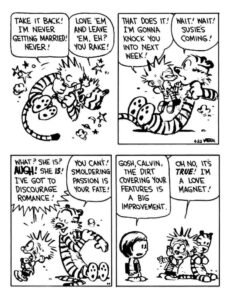
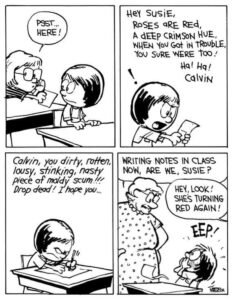
If you want a physical book to start with, look for “The Essential Calvin and Hobbes” or the first “Calvin and Hobbes” paperback collection . These contain the early strips where the characters are first introduced. You’ll get to see the exact moment Hobbes springs out of a trap baited with a tuna fish sandwich and enters Calvin’s life. You’ll meet Susie Derkins, the girl next door who drives Calvin crazy, and Moe, the bully who takes his lunch money .
In the end, Calvin and Hobbes is about friendship. It is about looking at the world through curious eyes and refusing to let the boring, “grown-up” version of reality win. Hobbes once said, “It’s not denial. I’m just selective about the reality I accept.” That is the perfect motto for this strip. So, pick up a book, start anywhere, and get ready to laugh, think, and maybe even tear up a little. Calvin and Hobbes are waiting to take you on an adventure.